
Have you visited a museum, gallery, heritage site and monument anywhere in the world and enjoyed your experience? Have you wondered how those on wheelchairs or with any difficulties access these spaces? Have you wanted to share your joy with those left behind?
Keeping these thoughts in our minds, ‘The Museum Memories Project’* introduced the vertical ‘Jadughar Journeys’ in 2023 where the museum and heritage space experience would reach those who are unable to access these spaces. The vision is to help people transform their own space into something accessible, inclusive, intellectual, emotional and magical, within the realm of cultural heritage. Since we are serious about realising our vision, last year we formed a panel of 5 Jadughar Experts for our project.
Why the term ‘Jadughar’? We are inspired that museums in most parts of India were called a ‘Jadughar’ or ‘Ajaibghar’ meaning a physical space of magic. Cool, ain’t it?
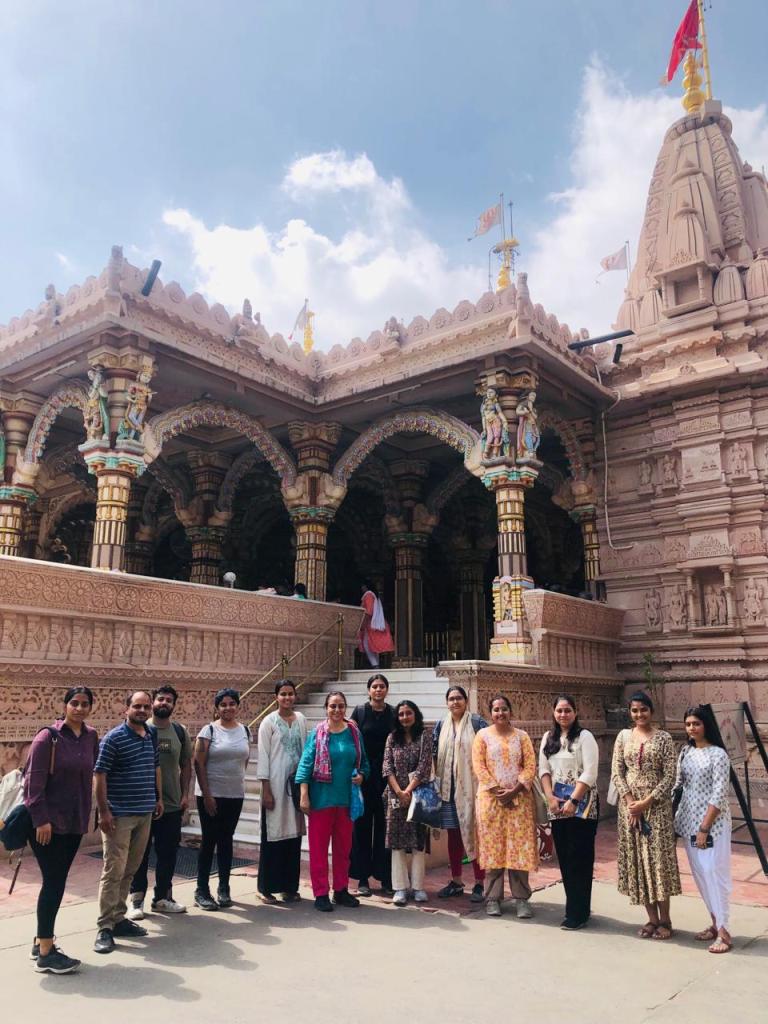
This blog is dedicated to the 2nd adventure of ‘Jadughar Journeys’. In June 2024, I was lucky to get the opportunity to teach the summer course ‘Jadughar Journey’ – curation of stories of magical Ahmedabad for a disabled audience to students from different disciplines of CEPT University, Ahmedabad.
I had planned it as a cultural heritage project enabling young creative professionals to discover and share stories of Ahmedabad, India’s first UNESCO World Heritage City, to a disabled audience, who for various reasons were unable to access these historical parts. Once this bridge is made, then hopefully a lifetime of empathy, sensitivity and creativity would enable the design of an universally accessible and inclusive world.
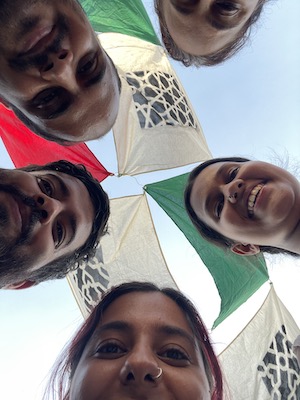
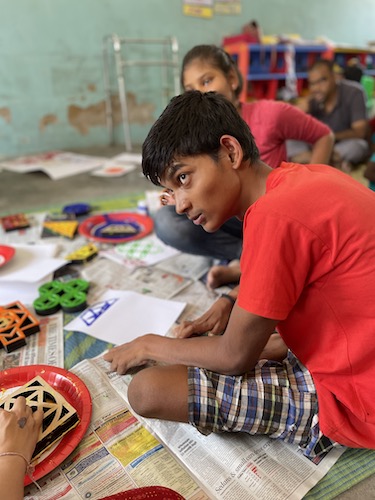
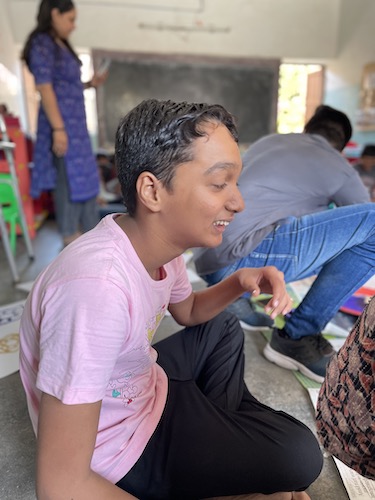
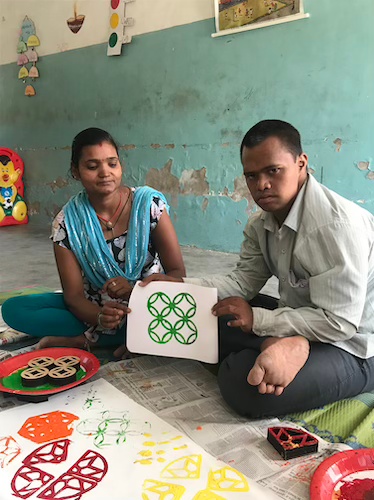
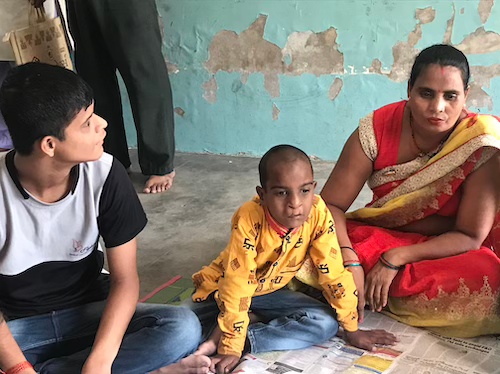
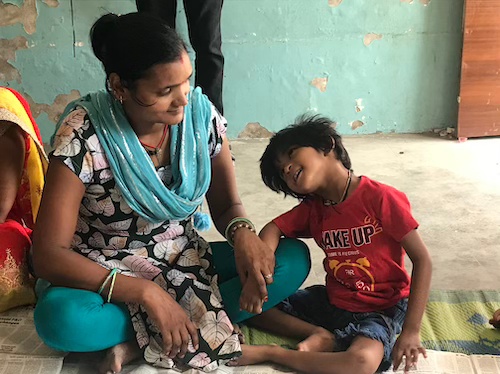
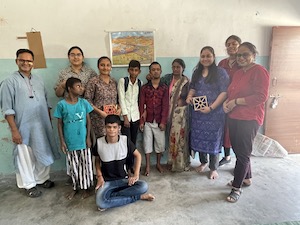
The students brought old Ahmedabad’s famous ‘jali’ into the NGO in various forms, creating a happy and safe space where even the families of the children bonded, an extra benefit of the course 💓💓💓
Work Plan:
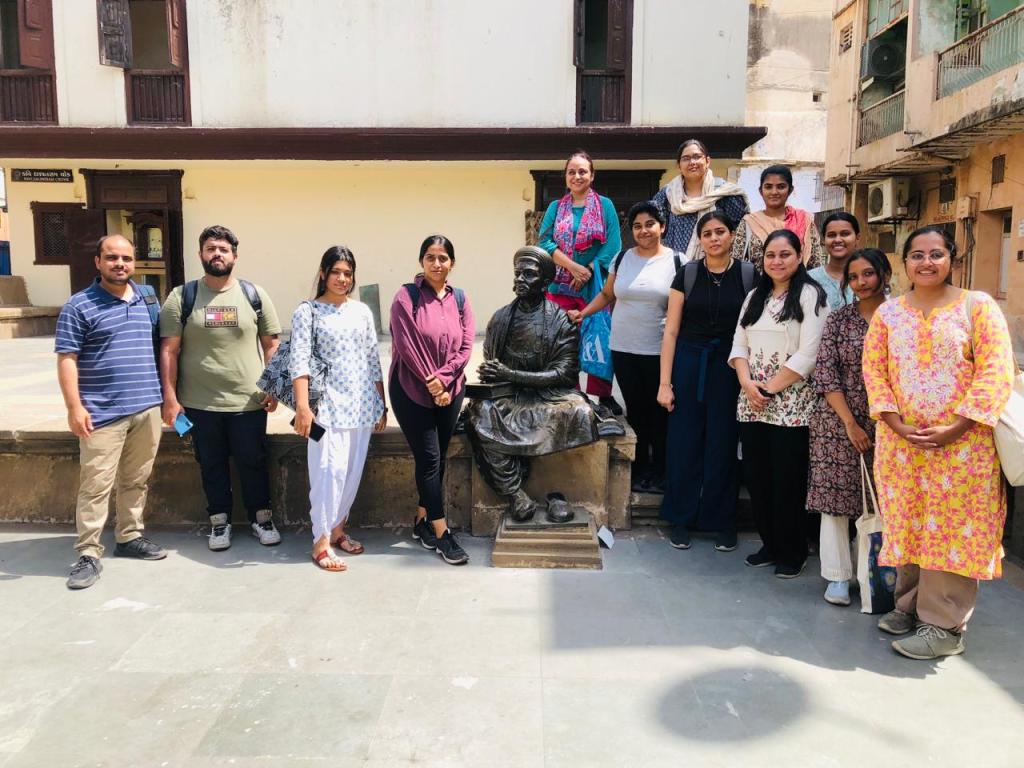
Day 1: Introductory session, Visit old city Ahmedabad and research on heritage sites
Day 2: Visit Sarkhej
Day 3: Visit Prabhat Education Foundation to meet the organising committee and staff and understanding their needs
Day 4 &5: Ideation visualisation and design, preparation of final designs for bridging Prabhat’s needs with old Ahmedabad’s cultural heritage
Day 6: Share final designs and prototypes with Prabhat Education Foundation
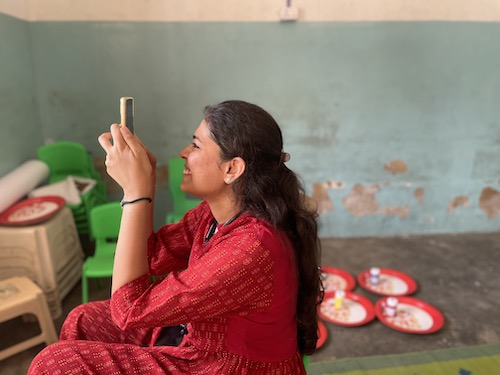
This blog post describes the adventure of the students, their thought, ideation, learning process and their final deliverables (all working prototypes). The video includes my brief recap of Jadughar Journeys and introduction to the course followed by the students explaining their work and learning. The videos were taken on mobile phones and painstakingly edited by Deeptanshu Sanyal. We, through each endeavour, keep trying to become more accessible. Do comment on the blog post, please continue to inspire and motivate us, and be slow with harsh criticism. Thank you 💓
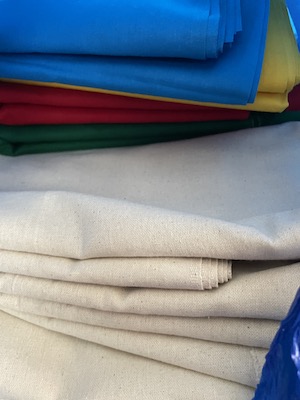
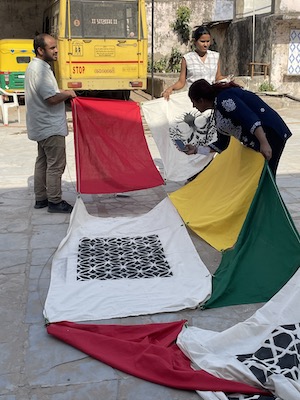
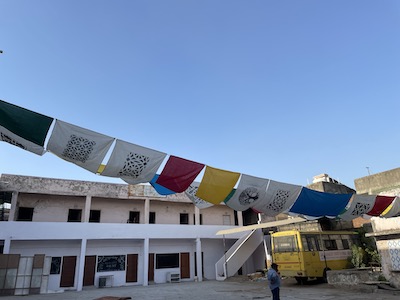
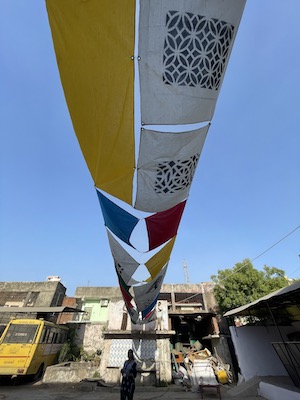
Group 1: ‘Jhalak’ – Textile shading device covering pathway from classrooms to toilet and drinking water are, using handmade cotton fabric
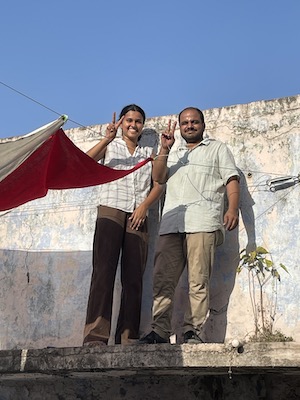
Angad, Ammu, Mayank, Malvika, Samreen
Below the students discuss their understanding of access, inclusion, disability awareness, how one can incorporate provisions and facilities to make cultural heritage accessible to all. They have also elaborated their thought, design and work process.
Ammu:
- What made you select this course? The course description aligned with my interest of creating accessible spaces for differently abled. As an Urban designer, creating those accessibility through the memories of old city of Ahmedabad in the form of art, drama or any medium tangible or intangible made me inspired.
- What knowledge or understanding of disability did you have at the beginning of this course?
I have been to other schools for differently abled, I did know that their basic needs are extremely different from others and most of the divergent people are extremely creative and bright. The sympathy towards them has been rooted in us from the childhood itself. But I couldn’t understand what I can actually do to help them. I have distant family members who are differently abled facing challenges even at their home, needing to adjust to needs of “normal”. - Has this course impacted this ? In what ways? The biggest transformation that has happened is the change from sympathy to empathy. Making the differently abled self-reliable and independed is the biggest gift we can give them. I came to the first 3 days of the course with a lot of expectations and visions. But the moment we interacted with Prabath, it grounded us to make us understand, what is actually important.
- What, in your experience, are the challenges for the disabled? In my experience, challenges for the differently abled are multifaceted, encompassing physical, social, economic, systemic barriers etc. But while talking about any kind of barriers, the most challenging is of course is the physical accessibility to basic needs. Be it toilet, drinking water, food or shelter.
- What in your experience, are the challenges for the disabled in old Ahmedabad? The biggest challenge would be physical access and social access. The narrow streets are always filled with vehicles making them unwalkable. People do not follow traffic rules or they are insensitive to the pedestrians itself. Most of the monuments has level differences that do not allow physical disabled people to use. Providing ramps here becomes difficult due to the lack of space.
- Have you seen/faced similar challenges in your city/surroundings? In Trivandrum and similar urban areas, the challenges may mirror those in Old Ahmedabad. Narrow, crowded streets with vehicular congestion, Poor implementation of traffic regulations for pedestrian safety, Public buildings and monuments lacking accessible entry points like ramps or elevators. And likeevery Indian city- General public are insensitive to the needs of the differently abled.
- Explain your final understanding of the course. The course “Jadughar Journey” focused on curating memeories of Ahmedabad’s rich cultural heritage for a differently abled audience. Generally, exploring this heritage part has always been for the elite. I have come to understand that the importance of making cultural heritage accessible and inclusive, fosters a deeper connection and sense of belonging for all individuals, regardless of their abilities. Every human has the right to connect to their city, to their home.
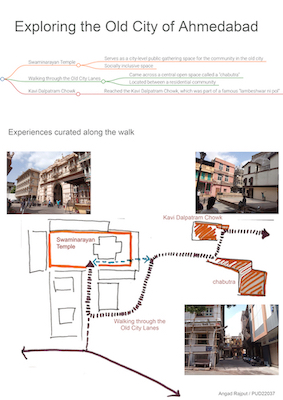
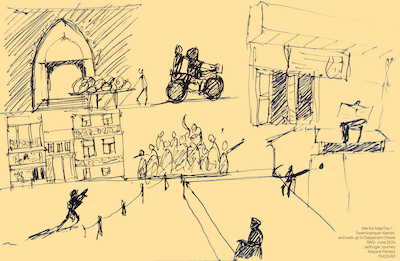
- What is your thought process for the course – from the day 1 & 2 site visits to the final day? During the site visits, I kept a keen eye on all the senses. On day 1 at Swami Narayan Temple, the experience of seeing a massive monument, the nurtured feeling from the narrow space through visual sense, the devotional music playing from the houses, and the bells creating a sense of happiness and spirituality were all captivating. The sound of kids playing was a treat. On day 2 at Sarkhej Roza, it felt like stepping into history itself. The scale of the monument was astonishing, and I wondered if this was how the Parthenon felt. The public nature of the space, like the water reservoir, made me think of the multi-utility of these spaces. On day 3, interacting with Prabhat Foundation constantly reminded me of the daily challenges the differently-abled kids face. It was heartening to see the changes in the kids due to the hard work and dedication of the Prabhat team. On the 4th and 5th days, I revisited the vibrant streets of old Ahmedabad to gather materials for our project. The variety of shops and the affordability of materials for artists made it feel like heaven for those who can access it.
- What are the challenges you addressed and how? After visiting the school during the peak temperature, we noticed that the path towards the class rooms to the basic amenities like wash and toilets as extremely hot to reach and walk to. We decided to create a shading device that can help students not only by creating a shaded pathway but also as a way finder to toilets and wash. The shaded path also had motifs from the historic monuments we visited, thereby casting its shadow on to the ground.
- What is your design process? As an individual and in the group. As a group we decided to make a prototype of this shading device. The other ideas included creating sensory abacus and tactile flooring. We figured out the patterns, design and order of the overall structure. As an individual, I figured out and purchased all the hardware and fixtures needed to make the prototype, and brainstormed with the team to create a prototype which can be used as it is for atleast 6 months.
- What is your learning from this course – how will you create inclusive and accessible spaces/concepts in your work from now, after this course? This course profoundly influenced my approach to inclusive urban design. Throughout my career,one of my biggest goal would be to create accessible spaces. I learned that true accessibility requires empathy and understanding of differently-abled individuals’ needs. The “Jadughar Journey” course highlighted the importance of making cultural heritage accessible, fostering a sense of belonging for all. I will prioritize designs that promote independence, addressing physical and social barriers. My design process will be collaborative, ensuring user needs are central. Integrating sensory elements and multi-utility feature will help create functional, enriching, and inclusive urban spaces.
Angad:
- What made you select this course?
I selected this course because, as an urban designer, I have always been keen on creating new experiences. Designing for disabled individuals intrigued me as it presents unique challenges and opportunities to enhance inclusivity in urban spaces. - What are your favourite parts about old Ahmedabad and why? Narrate the experience/s. My favourite parts about old Ahmedabad are the shaded areas created by the close-knit buildings and the vibrant life between these structures. The narrow lanes facilitate constant interaction among people, creating a lively and engaging environment. Walking through these lanes, I felt a strong sense of community and connection, with bustling markets, friendly conversations, and historical architecture enriching the experience.
- What, in your experience, are the challenges for the disabled in old Ahmedabad?
In old Ahmedabad, the challenges for the disabled are more pronounced due to the narrow lanes, uneven surfaces, and historical structures that were not designed with accessibility in mind. Navigating through these areas can be difficult for individuals with mobility issues, and the lack of proper facilities further exacerbates their struggles. - Have you seen/faced similar challenges in your city/surroundings?
Yes, I have observed similar challenges in my city and surroundings. Physical accessibility remains a significant issue, particularly for elderly family members like my grandfather and grandmother. Public spaces, transportation, and buildings often lack the necessary accommodations to make them accessible for everyone. - What are the challenges you addressed and how?
The primary challenges we addressed were related to physical accessibility. We focused on making essential parts of the school, such as toilets and drinking water areas, accessible from classrooms. We proposed a shading device with a tiled walkway to facilitate easier movement for disabled students. Additionally, we incorporated patterns inspired by traditional Gujarati architecture to create a familiar and engaging environment. - What is your learning from this course – how will you create inclusive and accessible spaces/concepts in your work from now, after this course?
This course has taught me the importance of considering the diverse needs of all users in urban design. Moving forward, I will prioritize inclusivity and accessibility in my work by incorporating universal design principles, engaging with disabled individuals to understand their needs, and creating spaces that are welcoming and usable for everyone. My designs will aim to break down barriers and foster a more inclusive urban environment.
Mayank:
- What made you select this course? My interest in storytelling through my experience in poetry, creative writing and theatre propelled me to select this course, expanding to an audience with special needs.
- What are your favourite parts about old Ahmedabad and why? Narrate the experience/s. Jama Masjid due to the peace and tranquillity it offers. Lucky tea stall due to its location at a busy junction, MF Hussain’s painting and the two graves within the stall. Ratan Pol due to the authentic market experience it offers.
- What would you like to share about these parts and experiences? Jama Masjid is like a world inside the world. The architectural design creates a humbling environment due to the scale and design details. The central court is a confined space, yet its proportions and being open to sky with low height corridors all around, punctuated by intricate columns, create the feeling of being very free within that space. Lucky tea stall feels like a train compartment, full of strangers, yet a common experience and connection that can be felt due to physical closeness and proportions and sizes of the furniture. The vibrant display of colors and mutually shaded pathways are the highlight of Ratan Pol
- What, in your experience, are the challenges for the disabled?
Challenges for the disabled are very specific to the kind of disability a person has. First and foremost are the visible challenges in physical accessibility of basic amenities like use of toilets, drinking water, reading, writing, speaking, walking, running etc. Associated with these are the social challenges of acceptability. The mental and emotional trauma is another layer of challenges that remains largely unnoticed. - What, in your experience, are the challenges for the disabled in old Ahmedabad? Adding to the list above, the physical accessibility is lesser due to tight lanes of old Ahmedabad, where pedestrian and vehicular traffic merges. Within complexes too, accessibility is offered to a limited degree only. Social challenges of acceptability are higher in societies that maintain a taboo and create labels for the disabled. Mental and emotional trauma can also be assumed to be present due to the reasons mentioned.
- Have you seen/faced similar challenges in your city/surroundings? Not directly, but a parallel can be drawn through the lack and neglect of pedestrian pathways in cities.
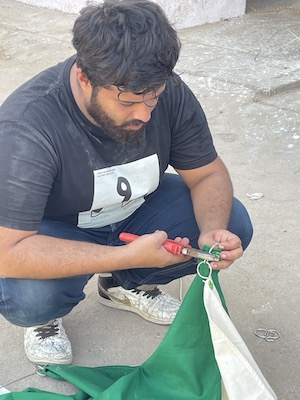
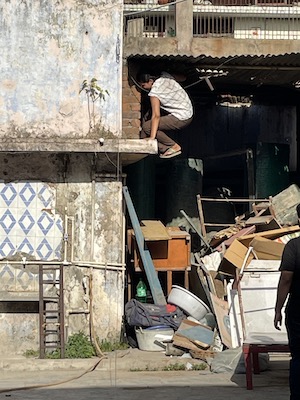
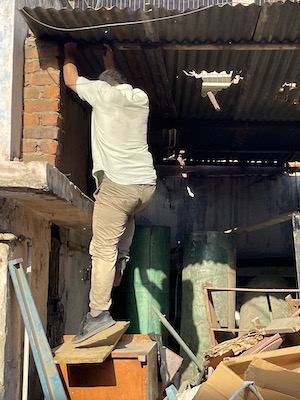
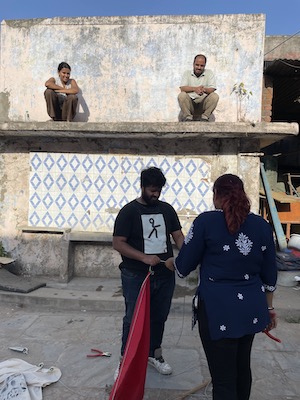
- What are the challenges you addressed and how? One of the challenges was to create an executable prototype for the 15 meters stretch within the budget assigned, within the period of 4 days. This was overcome by using simple materials that are easily available in the market, like fabric, strings, and other over the counter available hardware.
Next challenge was developing the individual parts of the installation and was done through resources available at hand. Assembly of various parts was achieved through teamwork as a group. Another challenge was to install the prototype on site, which was overcome by teamwork by the group as well as the support of the team of skilled craftsmen available on site. - What is your design process? As an individual and in the group. The design process began with assimilating experiences and information during the field visits to old Ahmedabad, observing the essential elements of the experience. Upon visiting the school, problem identification was the next step, after understanding the contextual needs of the school children. One of the highlighting needs that emerged was lack of a shaded pathway from the classrooms to basic amenities of drinking water point and toilets. This was chosen as the project to be developed. As a process, initially it was decided to develop the design details and costing but later, it was decided to develop a prototype for demonstration. The challenge was to develop an actual shading device prototype that works. Design and material selection was the next challenge, overcome through the combined design skills and work experience of the group members. Final challenge was installing the prototype on site, overcome by collaborative effort group members and on site team of craftsmen. As an individual, the challenge was to understand the specific needs of the disabled users, followed by developing executable design details, and working out its installation on site.
Malavika:
- What knowledge or understanding of disability did you have at the beginning of this course?
The understanding and knowledge I had regarding disabilities were more about disabilities thatwere visible to one. Even though I had knowledge regarding other disabilities particularly mental disabilities, I did not understand how that affected one’s daily navigation and routine. - Has this course impacted this (from point 6)? In what ways?
I think through the course one major thing that struck out to me was the fact that even when one designs for the disabled user group one only thinks of basic necessities. One never thinks that we should create facilities where people can loiter or enjoy their free time, but as citizens they too should be able to enjoy the space they are in not merely exist. - What, in your experience, are the challenges for the disabled?
Access to a space to start with. Different types of access be it physical or societal, Acceptance and ease of communication. Availability of infrastructure for them to enjoy the space as much. - What, in your experience, are the challenges for the disabled in old Ahmedabad?
As previously mentioned, physical access in old Ahmedabad is extremely difficult. - Have you seen/faced similar challenges in your city/surroundings?
Most cities have a similar problem. The main hindrance is mostly seen in the transport sector
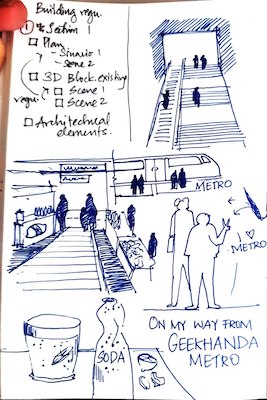
which makes it impossible to get to places. New infrastructures like the metro are showing
improvement regarding this issue. While navigating in a metro station is still made easier, maps
of stations or way to ticket counter and other signages are still not readable by everyone. - What is your learning from this course – how will you create inclusive and accessible spaces/concepts in your work from now, after this course?
Inclusivity is a large umbrella and through this course I was able to learn about a small user group that comes under it. I would definitely think above ramps when we talk of inclusivity now. From signages to navigation of a space would be thought from this lens to now forward.
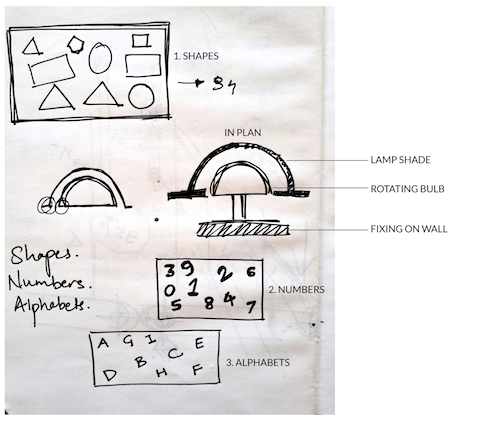
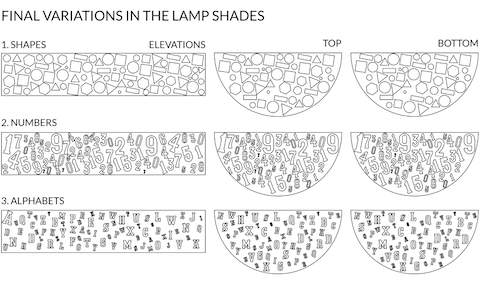
Group 2: Lampshades as educational and entertainment resource: teaching how light can be directed to portray alphabets, numbers and shapes
Aditi, Bittu, Chinmayee, Harshita
Below the students discuss their understanding of access, inclusion, disability awareness, how one can incorporate provisions and facilities to make cultural heritage accessible to all. They have also elaborated their thought, design and work process.
“The foundation majorly works on Need – Based programmes, catering to every specially abled child according to their needs. They face a spectrum of challenges in identifying, understanding and then devising ways of overcoming the different disabilities that children face. We visited the new campus of Prabhat Foundation located in Maninagar East, and dived into deep discussions on various challenges that different children and their families face – social, financial, physical and mental – on a daily basis with Mr. Keshav and his staff which included a physiotherapist and teachers.”
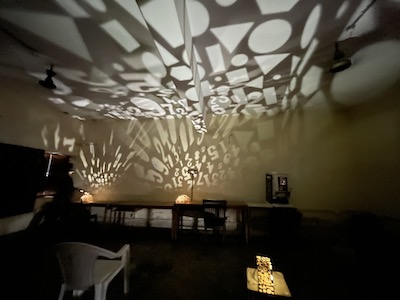
“The lampshades are detachable and are positioned above a rotating disco light. These shades have a variety of Jute Sheet cutouts that serve as perforations for the colourful lights to flow through as they rotate around the classroom. These lamps are convenient, simple to construct, and adaptable to many bulb kinds. This prototype has alphabets, numerals, and shapes punched out of it. In addition to this, natural shapes like themes, flowers, leaves, etc., can also be created.”
Aditi:
What are your favourite parts about old Ahmedabad and why? Narrate the experience/s My favourite parts of old Ahmedabad are the pols (traditional housing clusters), which are rich in history and culture. Walking through these narrow lanes, I experienced the communal lifestyle, intricate wooden carvings on houses, and the vibrant street life that reflects the city’s heritage.
What would you like to share about these parts and experiences? I would like to share the warmth and communal spirit of the pols, the beauty of the traditional architecture, and the sense of stepping back in time that one feels when exploring these historic neighbourhoods.
Harshada:
With the design, we intended to create fun learning aids through the incorporation of lights and colours. This was specifically targeted for children with learning disabilities who were unable to learn through textbooks. The lamps were meant to help the children understand how lights and shadows work in addition to numbers, shapes and letters.
What are the challenges you addressed and how? I have to become more mindful of the groups I am designing for, especially public spaces. The course allowed me to think more deeply about accessibility and the kind of neglect they face, and their right to access all the information that are very easily accessible to people without disabilities.
What is your learning from this course – how will you create inclusive and accessible spaces/concepts in your work from now, after this course? I will start thinking more about making universally accessible designs, and put in extra
effort in incorporating different groups of people. This course also taught me the importance of participatory design where every step is explained to the target group so that they can govern and properly use the outcome of a project.
Bittu:
What would you like to share about these parts and experiences? The sense of community in the polls and the detailed craftsmanship in the architecture are particularly striking. These experiences highlight the city’s blend of tradition and daily life.
What, in your experience, are the challenges for the disabled? Key challenges include physical barriers, limited access to public spaces and services, and societal attitudes that often overlook the needs of the disabled.
Have you seen/faced similar challenges in your city/surroundings? Yes, similar challenges exist in my city where historical areas are often not adapted for accessibility, and there is a general lack of awareness about the needs of the disabled. I have learned to prioritize accessibility and inclusivity in my design process, ensuring that my future projects cater to the needs of all users, particularly the disabled community.
Chinmayee:
Explain your final understanding of the course. We could imagine the user in the site.. And could feel the difficulties faced by the pwd. In designing the lamp shade, we found challenging when it comes to design of the lamp with opaque and openings with presentation.
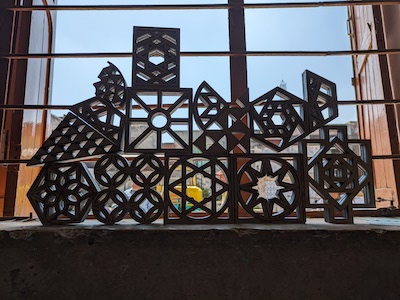
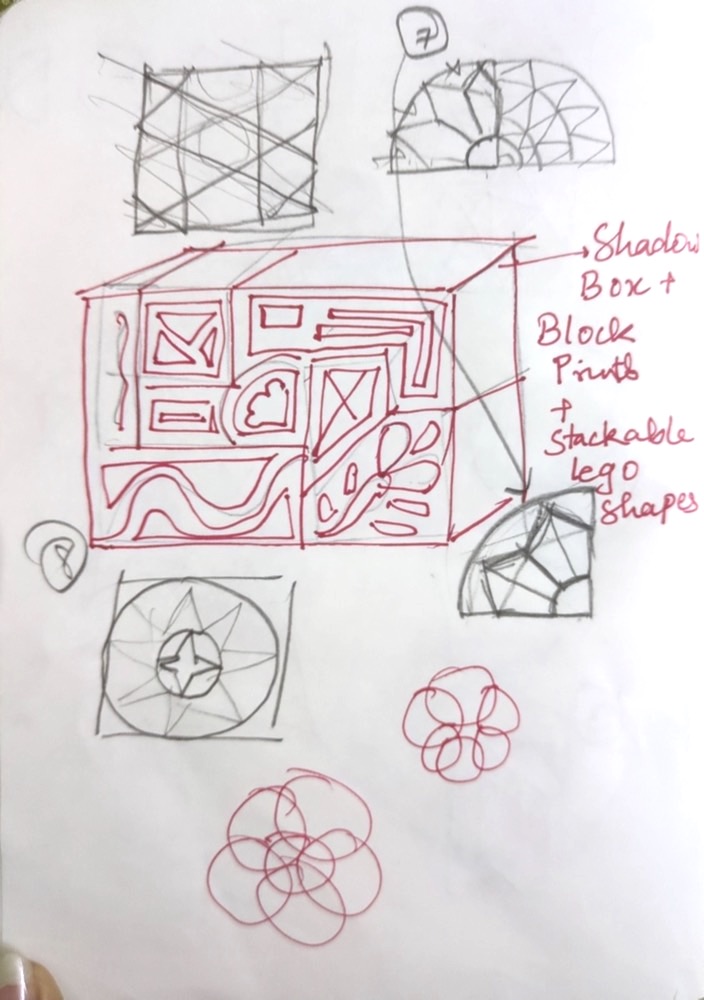
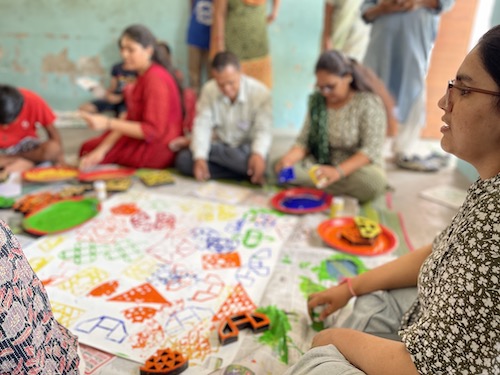
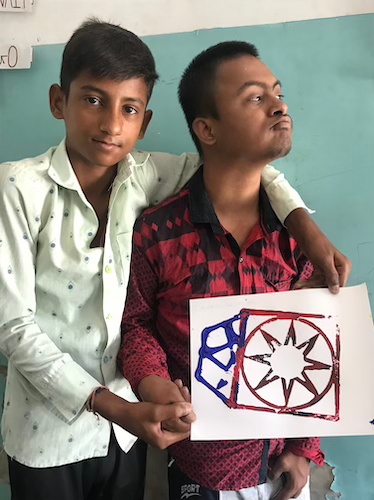
Group 3: Blocks with 15 individual designs that could be used for printing, stacking and build muscle strength
Archita, Heena, Minal, Neerja
Below the students discuss their understanding of access, inclusion, disability awareness, how one can incorporate provisions and facilities to make cultural heritage accessible to all. They have also elaborated their thought, design and work process.
Archita
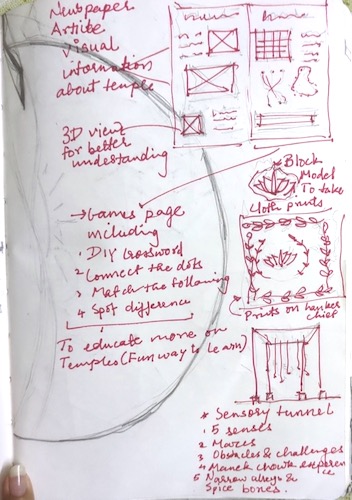
14.What is your design process? As an individual and in a group
- The design process was to find a heritage building that can be experienced.
- For me, the carvings played an important role in the structural and cultural making of the city. The other group member had identified Manek Chowk and that place was the heart of Ahmedabad’s old city since its inception.
- I was aware that the carvings of the king and queen Hajira in the Chowk played and showed my teammates around which interested them.
- We as a team documented the buildings and felt the carvings which was an experience we wanted to explore.
- This was discussed with Mr. Keshav and our faculty Ms. Poulomi Das
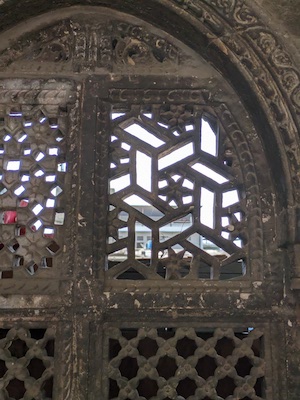
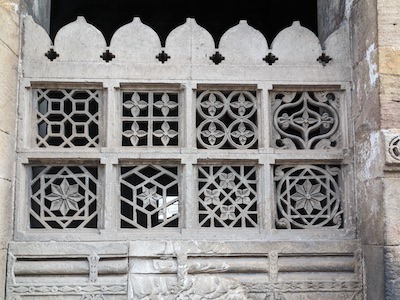
- The experience was of shade, shadow, geometry, and play of form with light
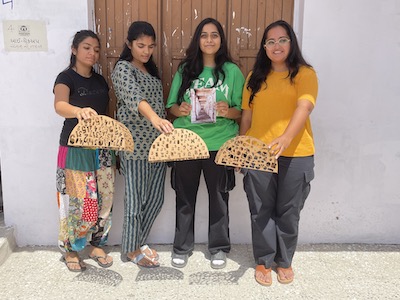
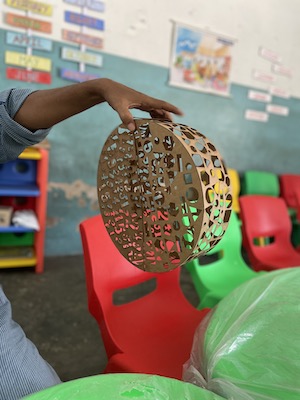
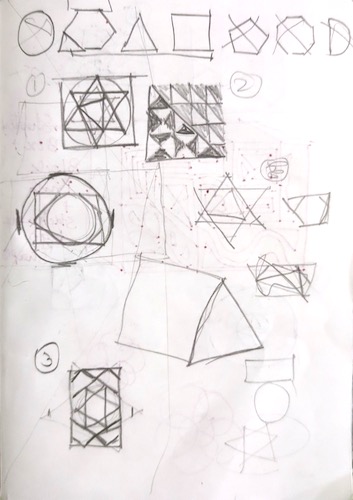
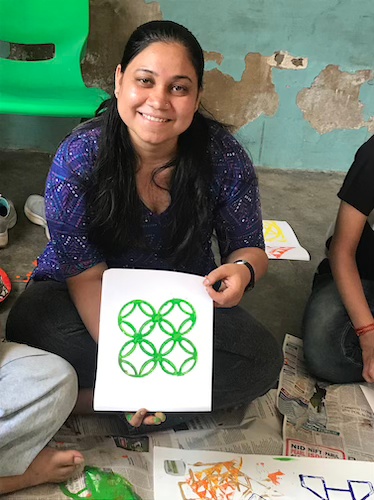
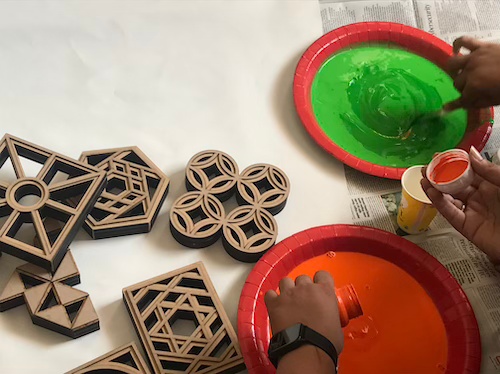
- The jali was then decoded and simplified into simpler geometric forms for clarity in forms keeping in mind the age group involved
- Light was also a factor in consideration so we made it stackable like building blocks that allow light through the window
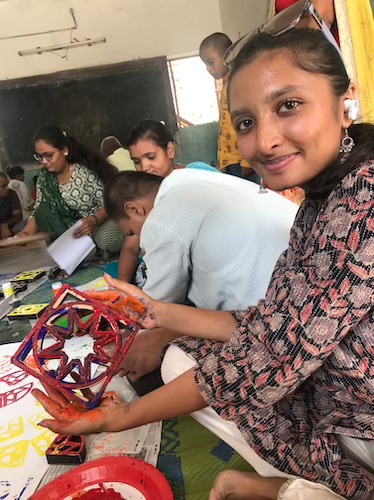
- The material was too inexpensive and doable for people not equipped with the technology so MDF was layered in the form of 8-8-8-2 mm, laser cut, and stuck with wooden glue. The 8mm wider design provided thickness for holding+stacking and 2 mm was for the intricate design on top
- The stamping can be done in paint mediums like Acrylics, ink, or poster and surfaces can be fabric, paper, or walls
- On the day of execution, we figured out the following
● All age groups can learn and enjoy
● Very inclusive activity
● This can be achieved in various places
● Easy to learn shapes, colors, and monuments through them
● Helped in motor skills, recognition, and identification
● It can be used for vocational purposes also
Minal:
- What made you select this course?
Being a Conservation architect I always had discomfort with the gap between heritage and the disabled people. Heritage should be for all and not be left out because of something that has occurred naturally or in a situation (disability) in humans. - What are your favorite parts about old Ahmedabad and why? Narrate the experience/s
- Ahmedabad’s multilayer and yet comprehensive culture has always captured my attention.
- The intricacy of details on the facade of the buildings has been my favorite.
- The amalgamation of basic designs/carvings in structures of various inclinations and various periods in history.
3. What would you like to share about these parts and experiences?
- The huge wooden facades of homes in the old Pols especially
- A very fancy carved wooden bracket I saw on several Pol houses, a Krishna haveli, a Maratha-era Shiv temple Hatkeshwar Mahadev, a market shop in the Ratanpol, and a Muslim merchant’s house.
- The facades seem small and the courtyards just enormous and one never knows what is embedded in them. This is exactly how I experienced the Kala Ramji mandir in the old city
- Also, the Hatkeshwar Mahadev temple is awe-striking
6. What knowledge or understanding of disability did you have at the beginning of this course? Disability was always very visually seen on an extreme level but the course taught me that disability existed even in very small things like the spectacles or even slow learning. These were minor noticeable but they made a huge impact on the daily lives of the people having those disability.
10.Have you seen/faced similar challenges in your city/surroundings?
- Mumbai though being at the top of Metro Cities in India is yet not equipped to cater to disabled people.
- Disability is also more catered/taken care of in elite places making it discriminative in terms of economic class
- Streets are not equipped to take care of the disabled
- The only place physical and visual disability is taken care of is the railways and metros…. I still remember during my college days I saw Braille instructions on the bridge railing and I was delighted to see it there
Neerja:
- What would you like to share about these parts and experiences? I would love for the disabled audience to experience the serenity and intricate carvings of the Hutheesing Jain Temple. Sharing its history, including the fact that it was built by a prominent woman in the 1700s, would highlight the rich cultural heritage and architectural diversity of Ahmedabad.
- What, in your experience, are the challenges for the disabled in old Ahmedabad? In old Ahmedabad, the disabled face additional challenges due to the city’s ancient infrastructure, which includes narrow, uneven streets and inaccessible historical sites. These physical barriers make it difficult for them to explore and enjoy the rich cultural heritage of the city.
- Have you seen/faced similar challenges in your city/surroundings? Yes, similar challenges exist in many cities, where historical and cultural sites are not designed with accessibility in mind. The lack of ramps, elevators, and other accommodations often exclude disabled individuals from fully experiencing these spaces.
- What is your learning from this course – how will you create inclusive and accessible spaces/concepts in your work from now, after this course? This course has taught me the importance of inclusivity in design. Moving forward, I will prioritise accessibility in my work by considering the diverse needs of all users, involving disabled individuals in the design process, and continually seeking innovative ways to create welcoming and accessible spaces.
*‘The Museum Memories Project’ is an oral history documentation project that encourages museum visitors to delve deep into their minds and feel uninhibited while sharing their memories, revealing a treasure house of diverse experiences, unknown to museum staff. It is an accessible and inclusive free platform where everyone can upload their memories and others benefit from these.
Many thanks and gratitude to: Angad, Ammu, Mayank, Malavika, Samreen, Aditi, Bittu, Chinmayee, Harshita, Archita, Heena, Minal, Neerja.
**CEPT University takes its name from the ‘Centre for Environmental Planning and Technology’. CEPT and the various schools that it comprises were established by the Ahmedabad Education Society with the support of the Government of Gujarat and the Government of India. The Faculty of Architecture was established as the ‘School of Architecture’ in 1962.
***Prabhat Education Foundation: Objective: To build an equitable and just world for all, especially those with disabilities. We are committed to the national effort to help children with special needs to find their way to independent adulthood working in and around Ahmedabad. We work to bridge the gap between mainstream society and those with special needs. Our mission is to build the capacities of people with special needs to live with dignity and hope as productive and confident citizens. The Prabhat Education Foundation reflects a journey that began in 2003 through the identification and nurturing of children with learning difficulties struggling in mainstream schools.
All photos and videos taken by the author of the blog Poulomi Das, and students of the course from CEPT. Kindly credit us before sharing.
Immense gratitude to Deeptanshu Sanyal, Designer.
Thank you Chandra, Faculty of Design, CEPT, for your help and encouragement to ease out all the challenges in the planning and final delivery of the course.

