
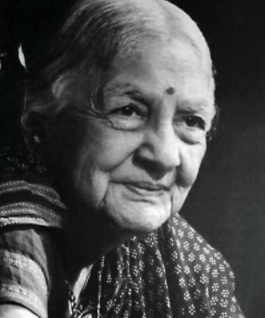
“Craftsmanship, it must be remembered, is not a matter of mechanical reproduction. It is creation that is not divorced from production, where the designer and the producer are one… In fact one of the allures of the crafts lies in that as it were magical involvement of the artisan’s personality with the product from its inception to Its final application.”
Kamaladevi Chattopadhyay
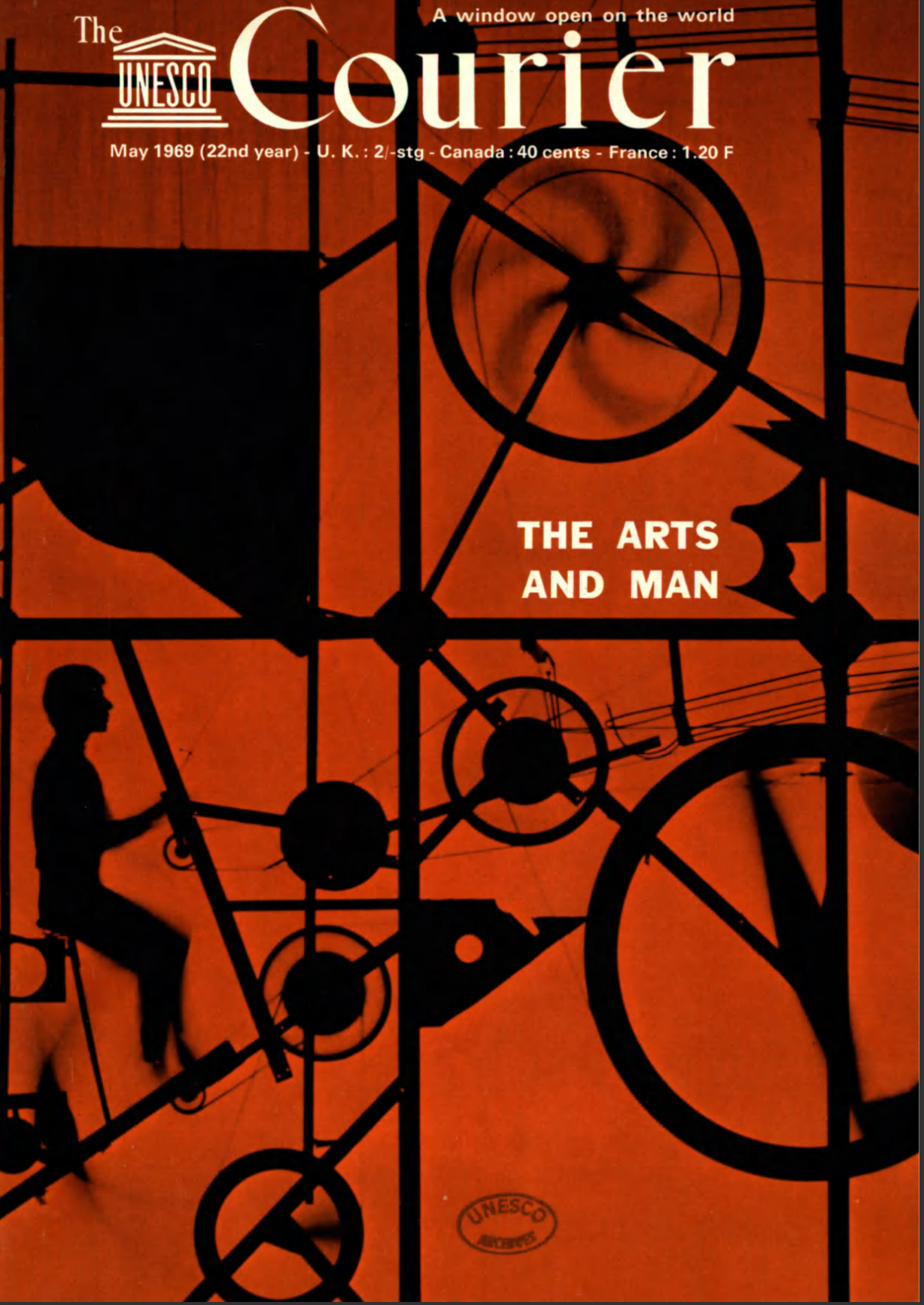
The Crafts, The Arts and The Man, The UNESCO Courier, May 1969, pp 15 -17
……………..
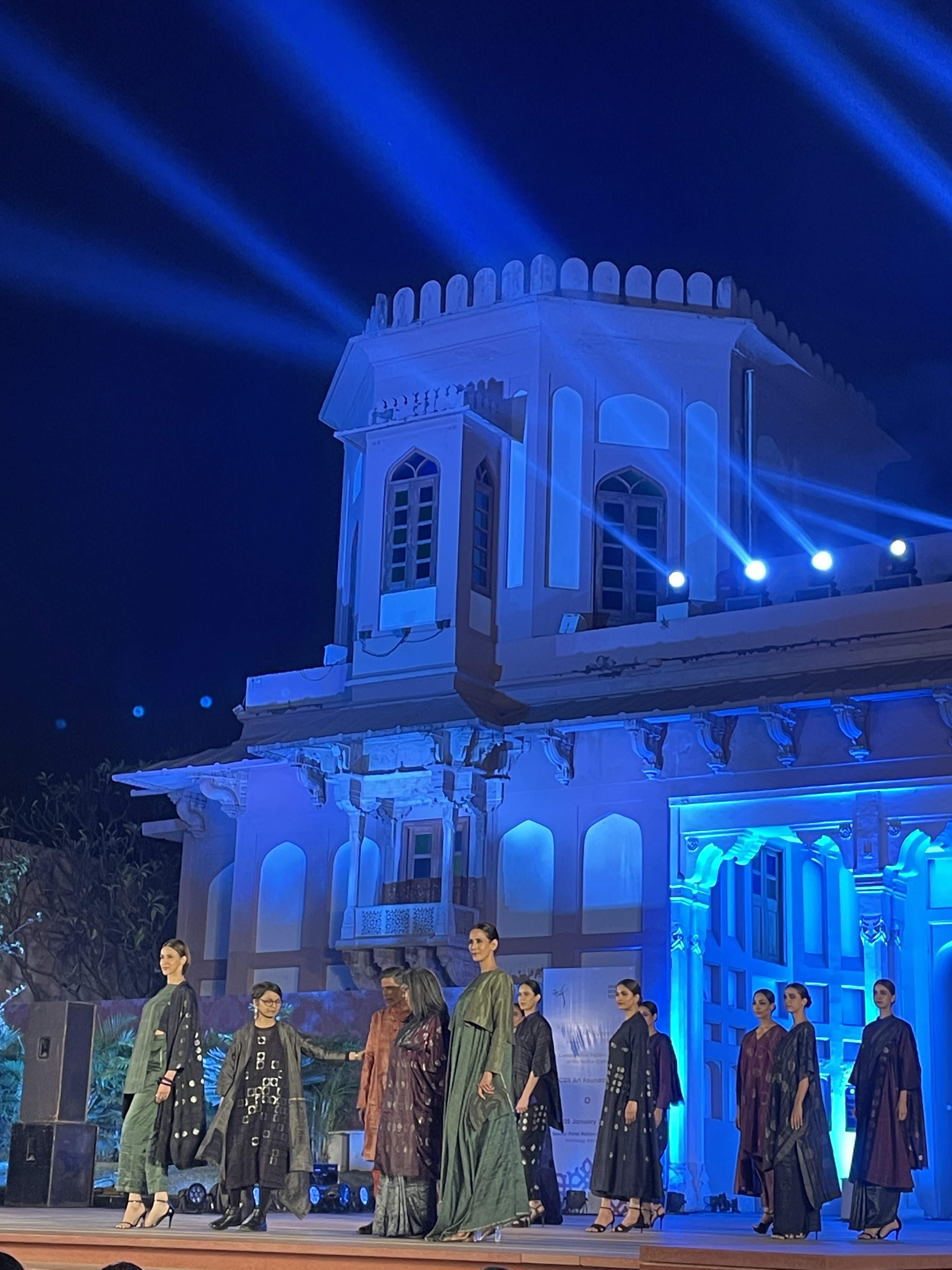
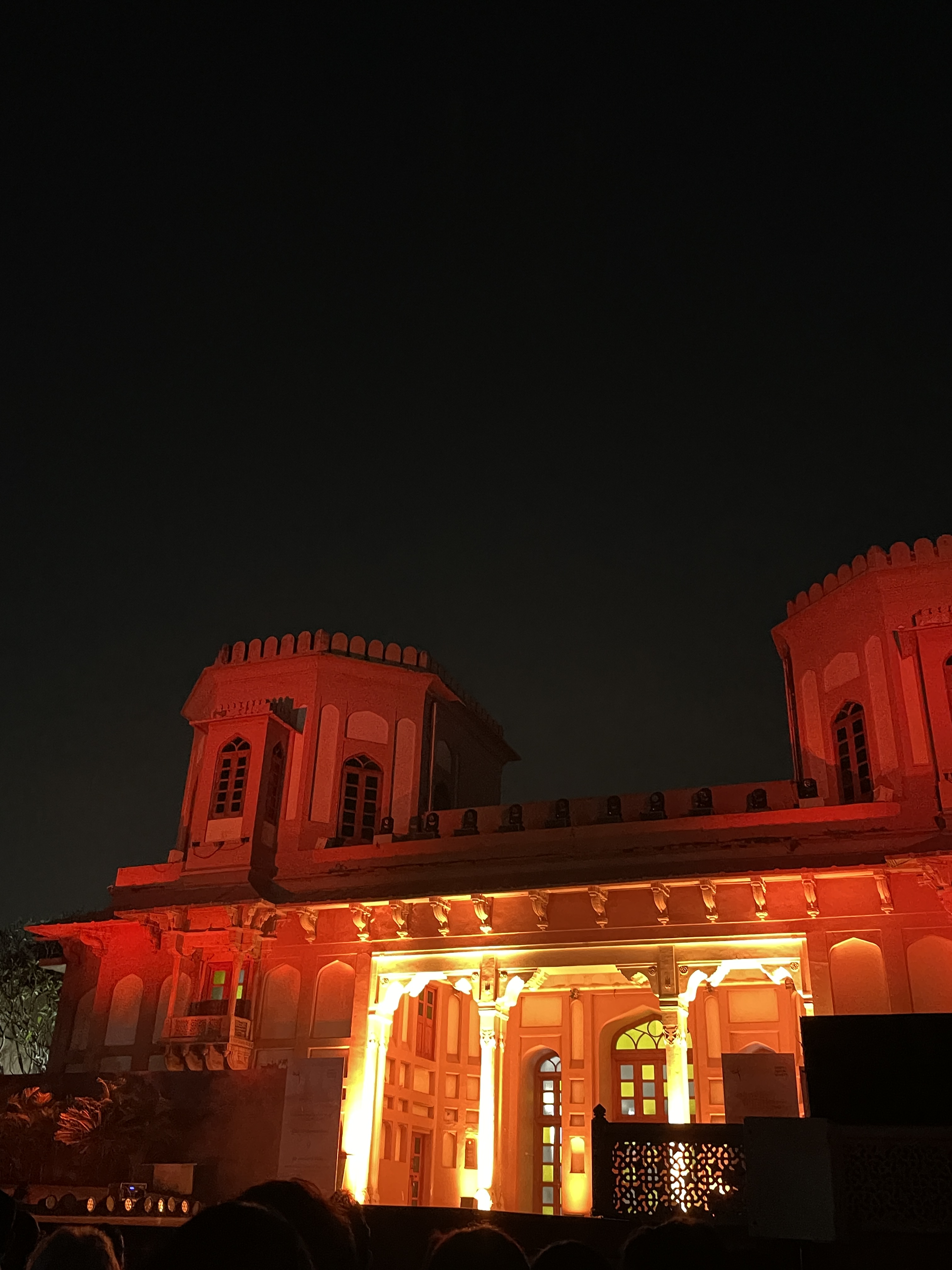
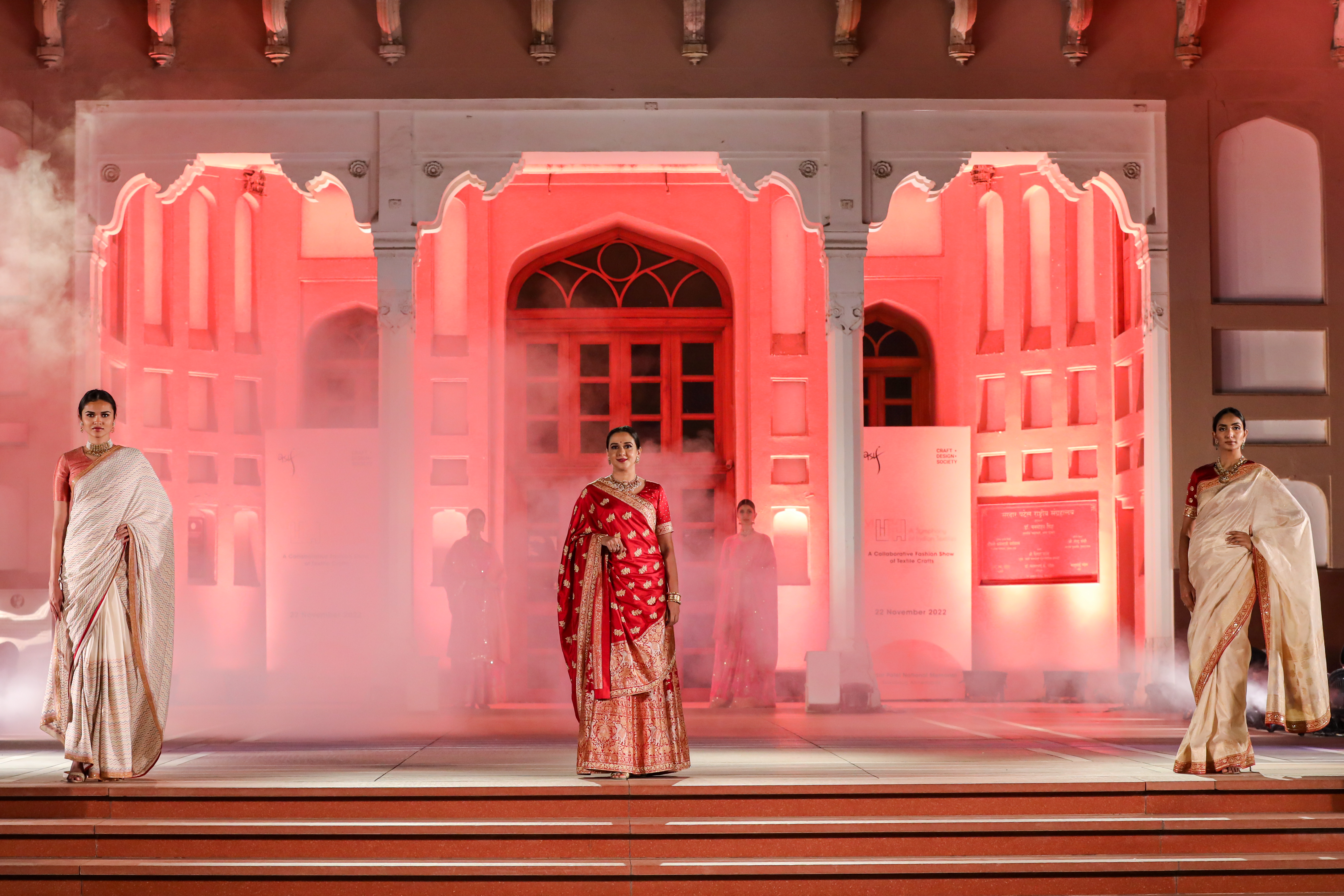
Beginning of 2024, I was invited to a fashion show to be held at Shahibaug, Ahmedabad. Since the host was Asif Shaikh, I knew the show would be beautiful. What I hadn’t anticipated was that it would be more than just beautiful! It was stunning. For those of us who work behind-the-scenes and spend most of our working lives designing events and exhibitions in the public space, we immediately understand the pains of creating such a meticulously designed and well planned show. The choreography, music, dance and the historic space presented the perfect ambiance for a celebration of the splendour of Indian textiles.
Everything about this show was so unique from the others I have been part of till now that I was intrigued to explore more and learnt of a whole new world.
The show was part of the initiative of Asif called Craft Design Society or CDS started in 2016 by him and Villo Mirza. It was conceived by him so that India doesn’t lose her craft and design heritage to society. That struck a chord with what has been bothering me since years – are we losing our rich cultural heritage? Whom should we save it for? How? Hence, the investigation began.
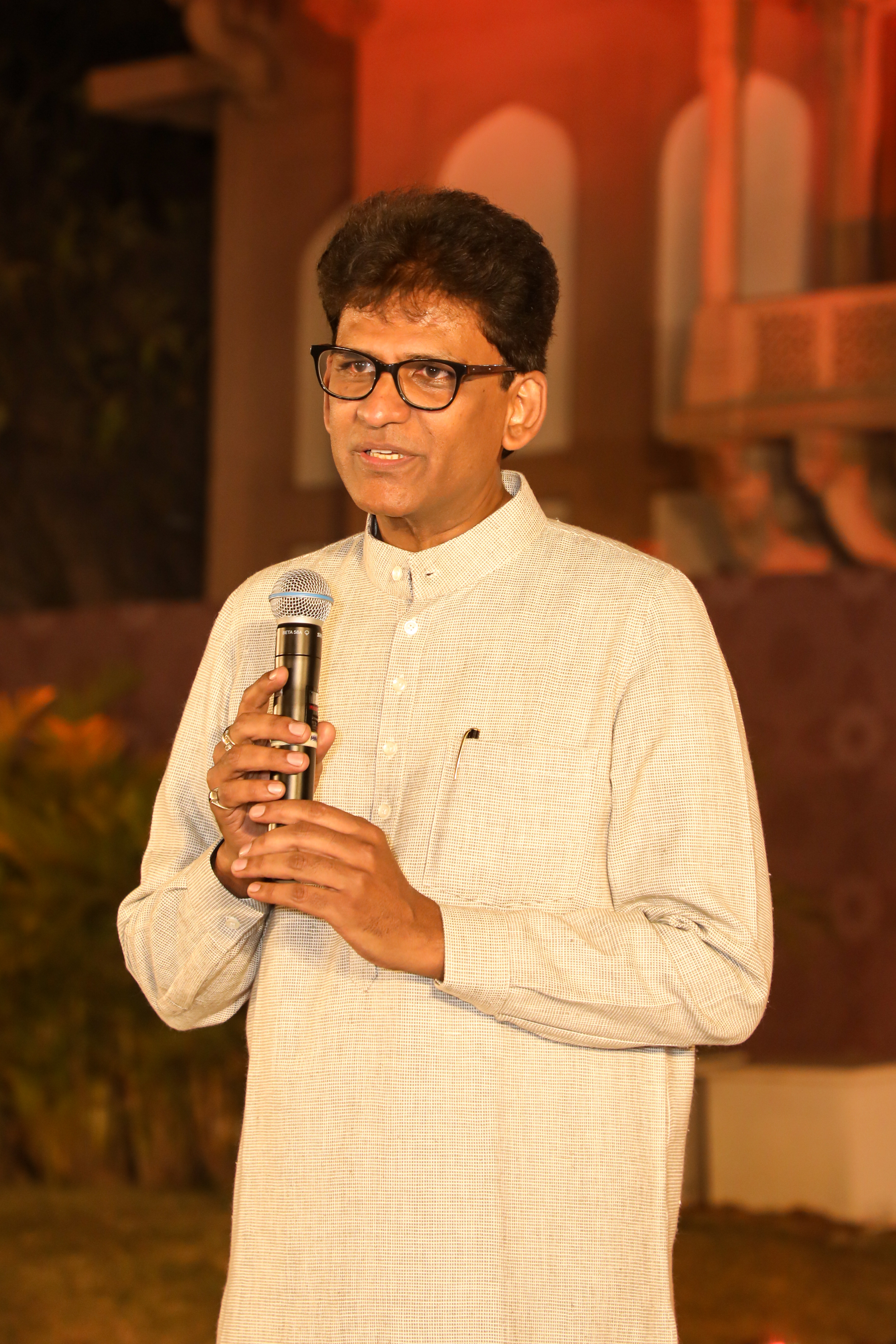
Who is Asif Shaikh?
A self-taught embroiderer, Asif does not belong to a family of embroiders and honestly admits that he has no generational links. Since childhood he was always interested in embroidery and loved its intricacy. He was already being appreciated for his stippling art. He joined the Interior Design course at CEPT but laughs and says he was a “bad student’ as he was more keen in learning of the finer geometric challenges – the foundation of embroidery – rather than sticking to assignments and submissions for the course! His intricate drawings were gradually becoming synonymous with his name and his uncle Kamal Shaikh encouraged him a lot. He was given the sobriquet ‘Master of Pencil’ by the author Esther David. His technical drawing file was kept by CEPT as part of their college portfolio for its superior quality work. In 1993, the final year of his college, Asif decided to move away from interior design and actively embroider.
Asif was fascinated by embroidery and painstakingly transformed himself into one of India’s most important embroiderers, globally renowned for his exquisite embroidery. He did not wait for any course or degree to teach him embroidery; a keen observer, eager to learn, chase excellence, Asif’s teachers were the traditional textile artisans who naturally imbibed heritage from an early age.
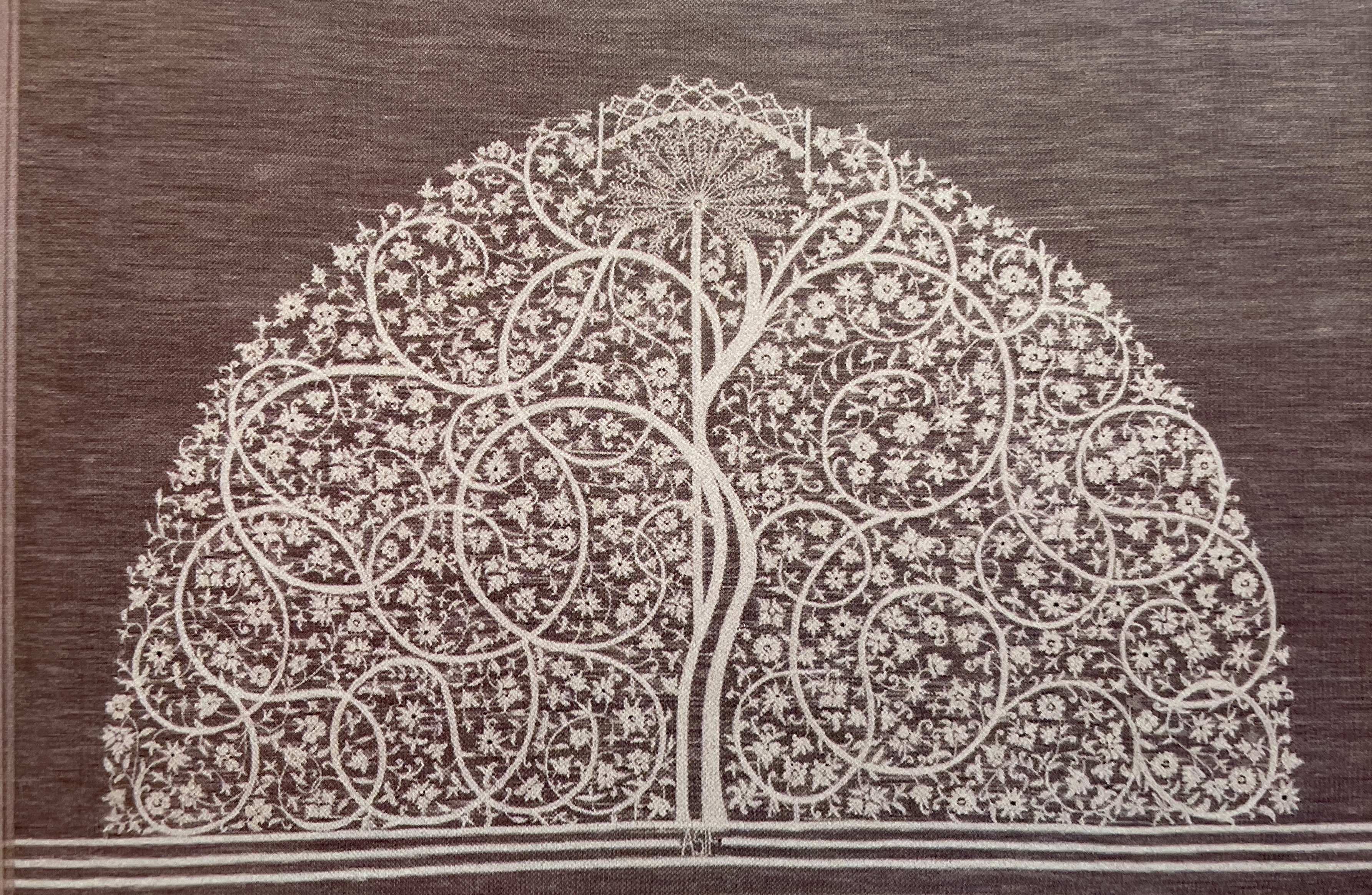
I first saw a small, framed version of the ‘Tree of Life’ from the famous Sidi Sayyed Mosque at Ahmedabad on the wall of the Kasturbhai Lalbhai Museum, Ahmedabad. In small letters there was a caption ‘hand embroidered by Asif Shaikh’!!! I looked closely and discovered that it was an embroidery and not an edited photograph, as I had incorrectly assumed!!!
I guess that’s when I started stalking Asif, read up all I could about him and then by chance visited the textile exhibition ‘White on White’ curated by him. It displayed the most amazing Indian textiles – woven, embroidered, painted and printed – all white on white!!! Finally, a stroke of luck connected me to him and then this entire post gradually evolved.
But this post is not about Asif’s embroidery but about his mission; something that few dare to even dream, he is turning it into reality.
The learning:
During my meetings with him, Asif narrated how in his journey in learning about India’s textile heritage, he felt a distinct gap between its original creators and the final user. The creators were toiling away in challenging conditions unseen and unknown, while those who were lovingly using the textiles created by them were unable to appreciate the emotions entangled in each warp and weft as they were purchasing from people who did not belong to these creator communities. Each pattern, motif, colour, texture, material involves several processes and love of communities that have over centuries enriched the lives of millions across the globe.
Isn’t this exactly what Kamaladevi Chattopadhyay was saying? “Craftsmanship, it must be remembered, is not a matter of mechanical reproduction…” in 1969… more than 50 years later we find ourselves asking similar questions and realising we have moved towards “mechanical reproduction”
Realising a dream:
Asif, along with some dedicated historians and designers form a small group who are arduously trying to bring the artisans into the limelight. The objective is to provide them a platform they were denied over generations and build bridges that connect them with those who wear and use handmade textiles.
With this vision at the core of CDS, the show called ‘Walking Hand-in-Hand’ was born.
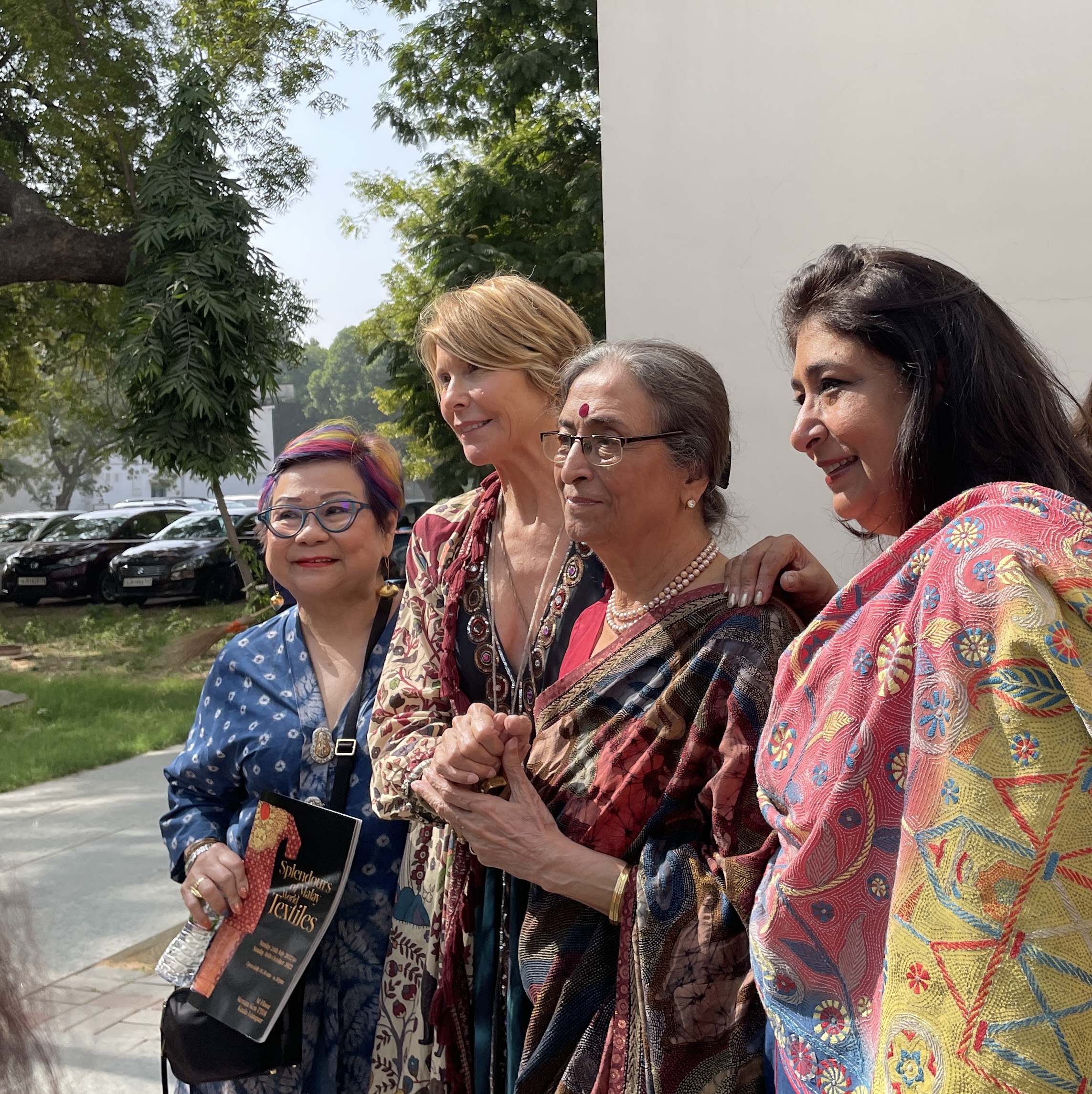
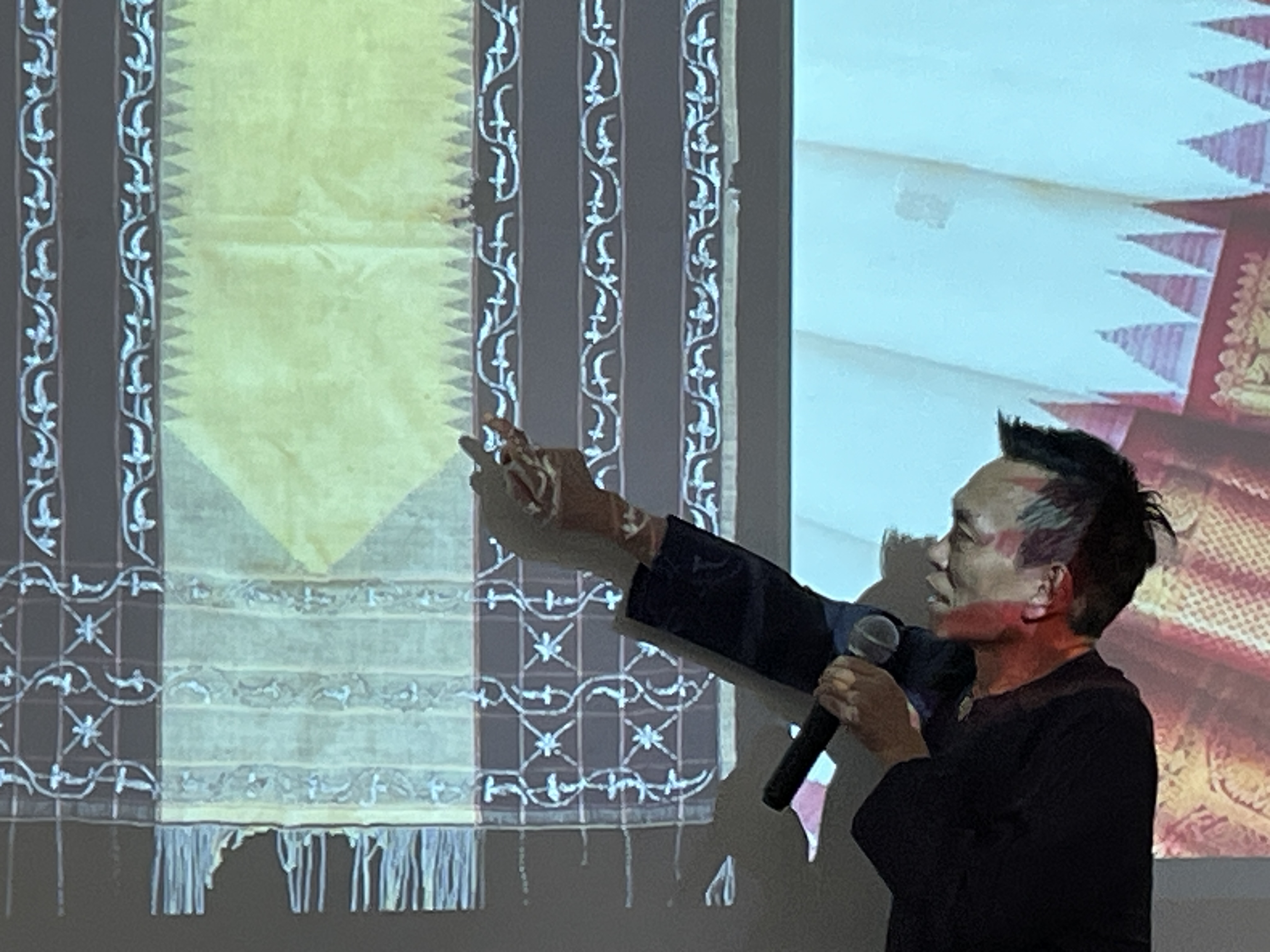
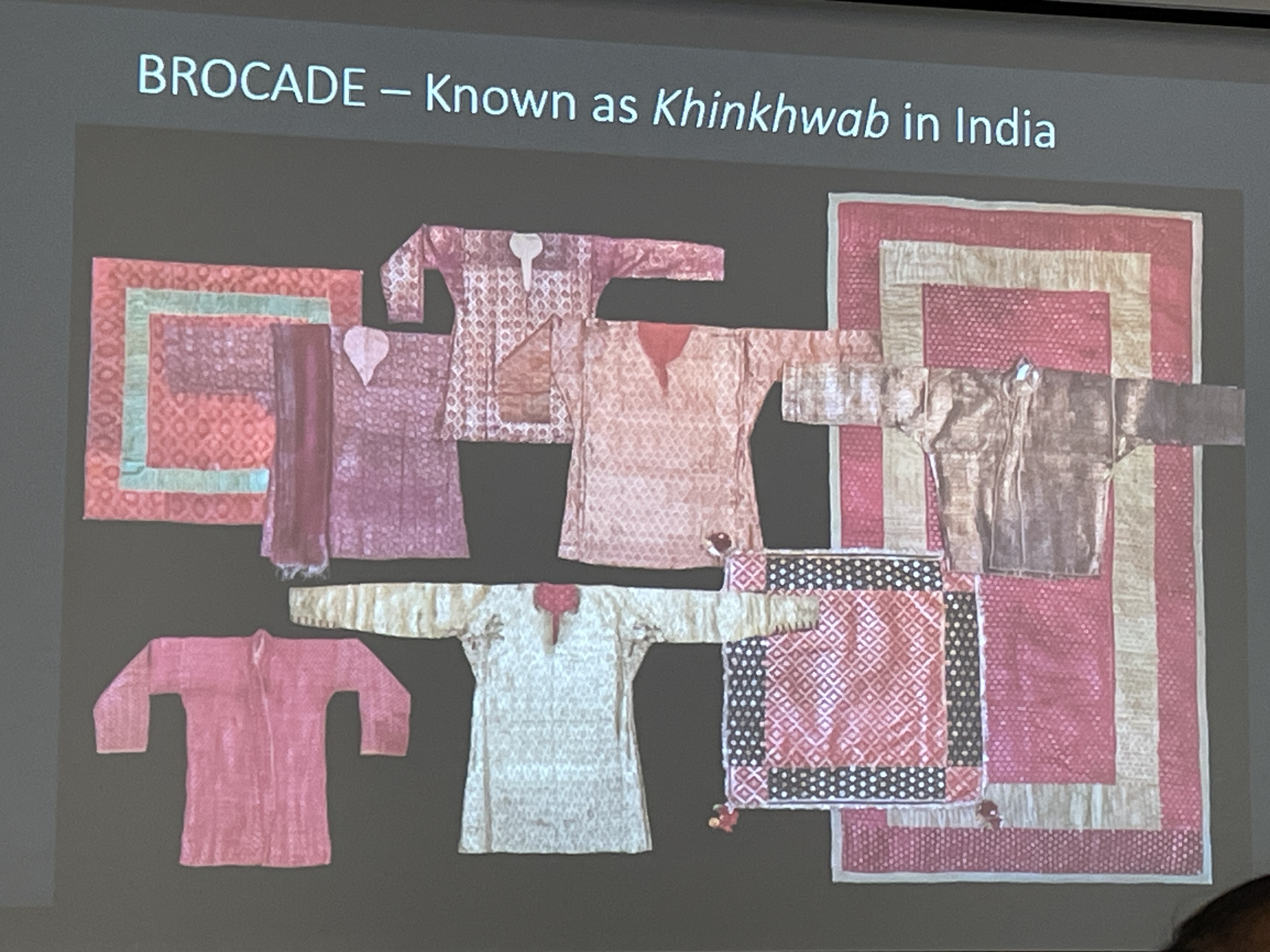
In the morning of 5th January, I was invited to illustrated talks by two speakers, John Ang, collector and Asian art history expert, and Dr Cristin McKnight Sethi, cultural leader, curator, educator, scholar, and writer. While Dr Sethi spoke about her work as Chair of the Selection Committee for the International Folk Art Market, John enlightened us with his work in discovering the connection between Malay and Indian textiles.
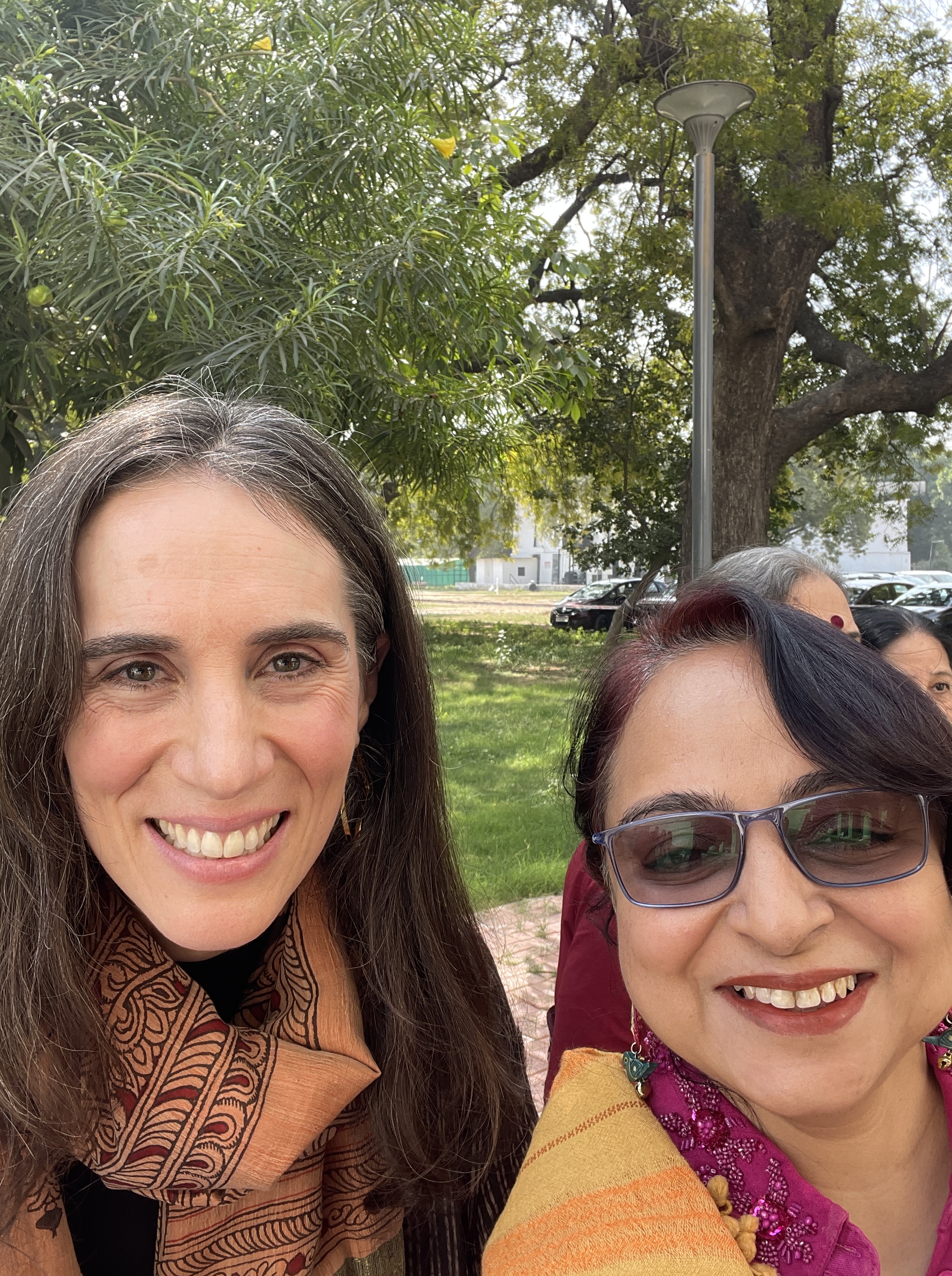
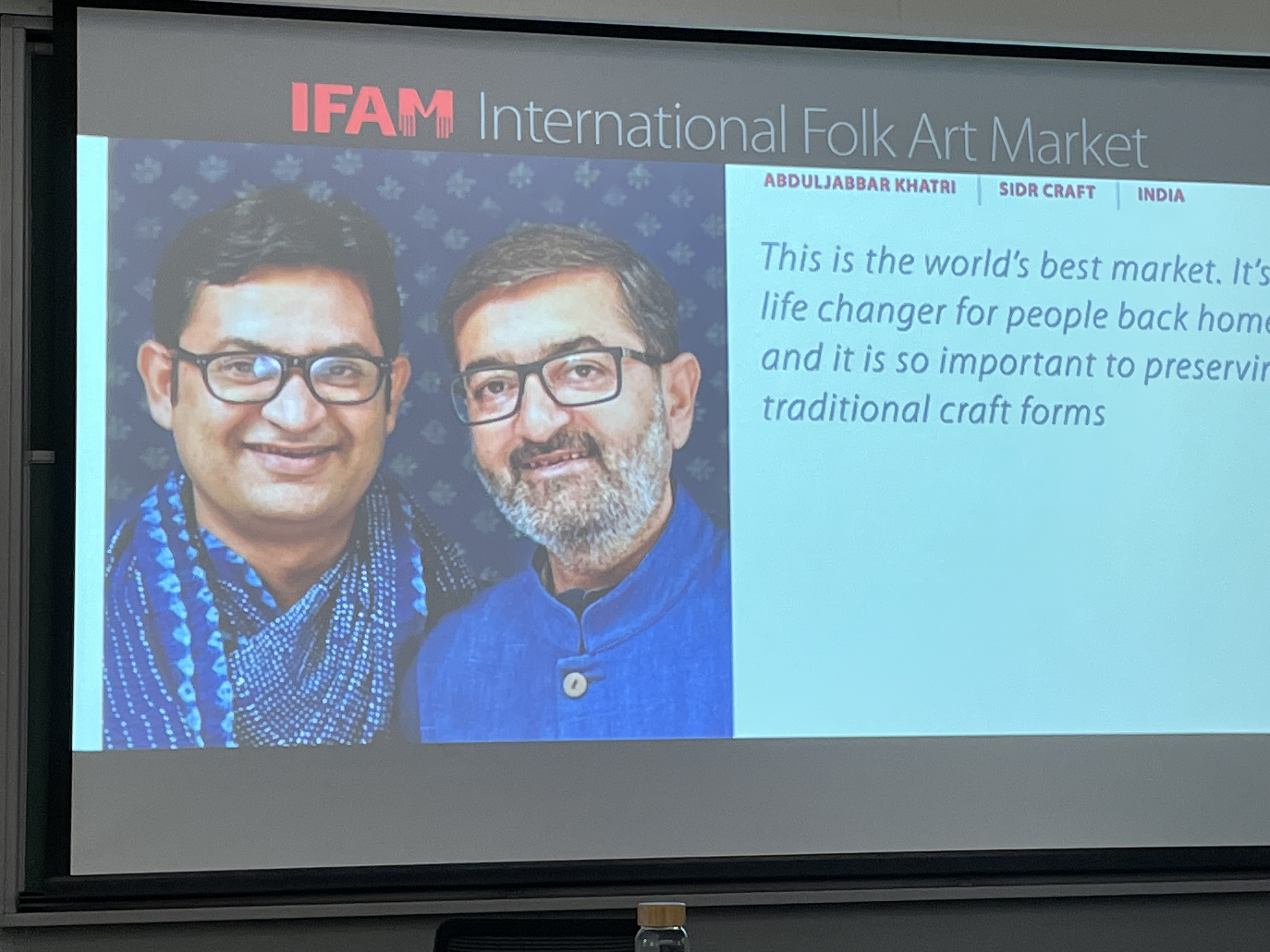
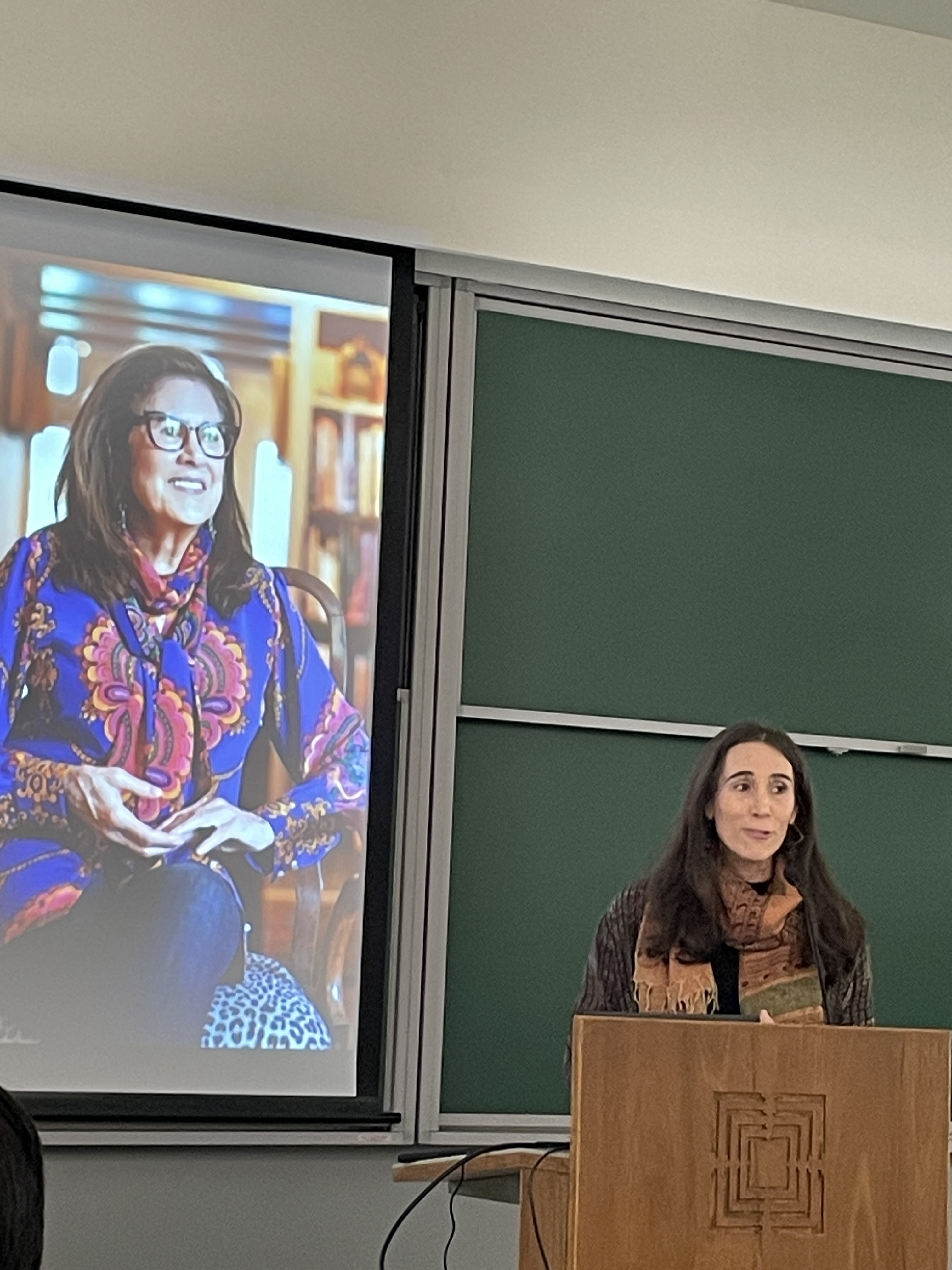
The show is indeed more than a fashion show – it culminates over 2 years of planning as a serious project. The 1st stage is when Asif reviews the work of Indian textile artisans, 2nd stage is when young Indian designers submit their portfolio and these are reviewed, in the next stage, Asif pairs the artisans and designers and introduces them to each other. He must be careful in the selection process to ensure that this artist – designer team learn from each other and contribute to the other’s creative growth. They are to follow the guidelines like – the collection must be wearable fashion (strictly no ‘lehangas’), exude Indian aesthetics, use only handloom and handloom textiles, adhere to sustainable practices. This team is free to experiment with contemporary and futuristic silhouettes.
The core of this project is based on respect, recognition, knowledge sharing, relationship and network building. Asif’s big task is to ensure that the show communicates these values and inspires the audience (including students and young professionals) who are integral to the entire project.
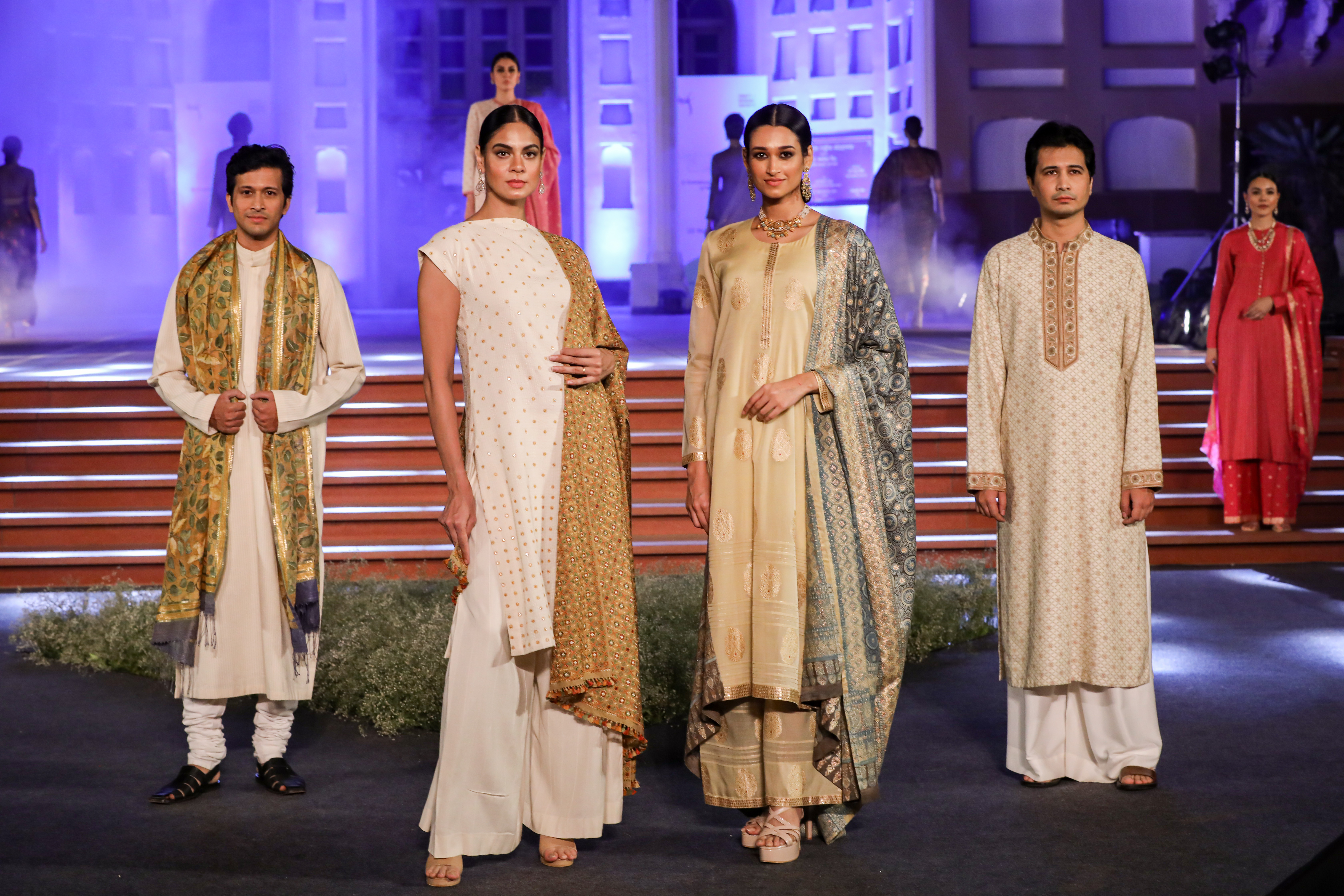
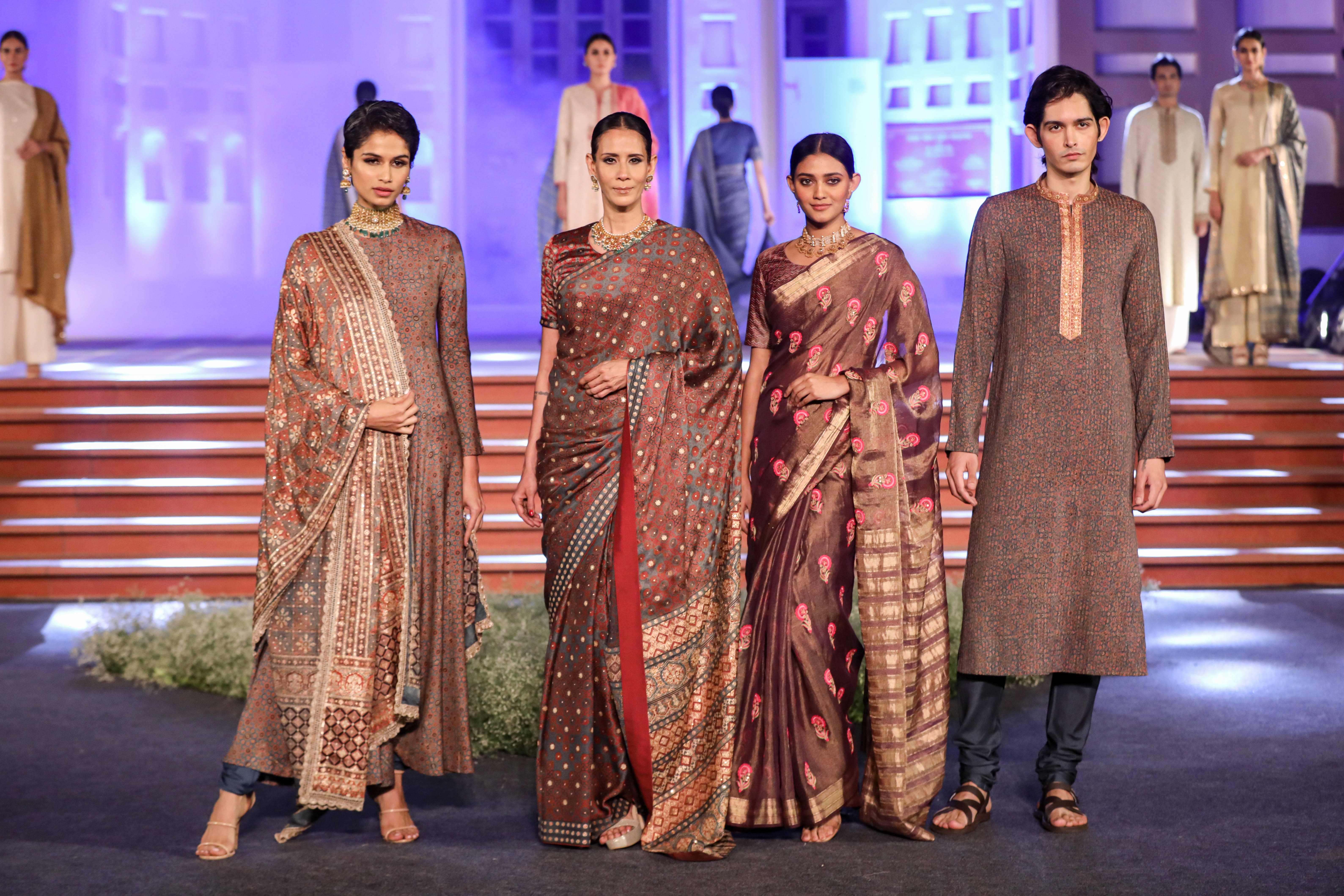
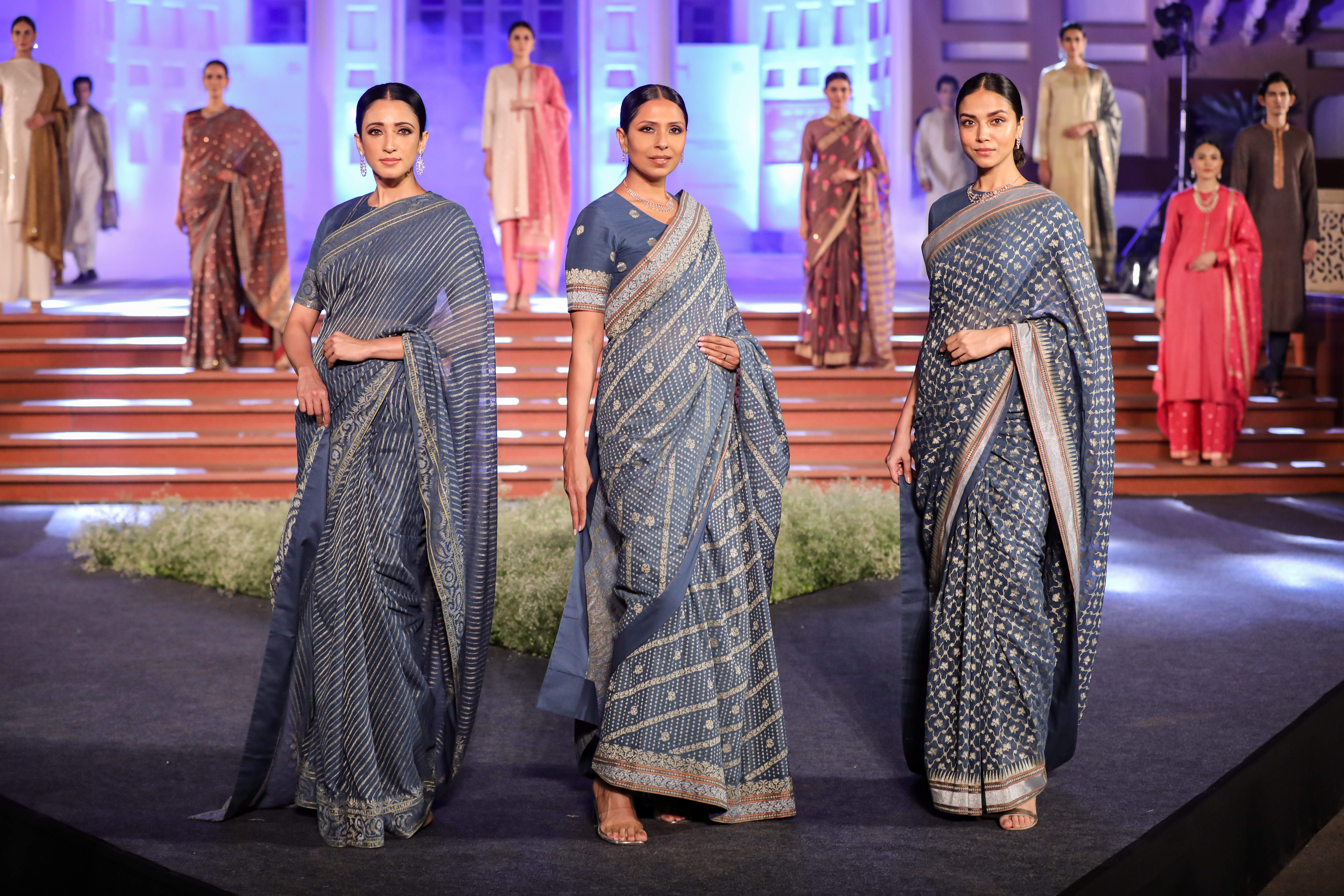
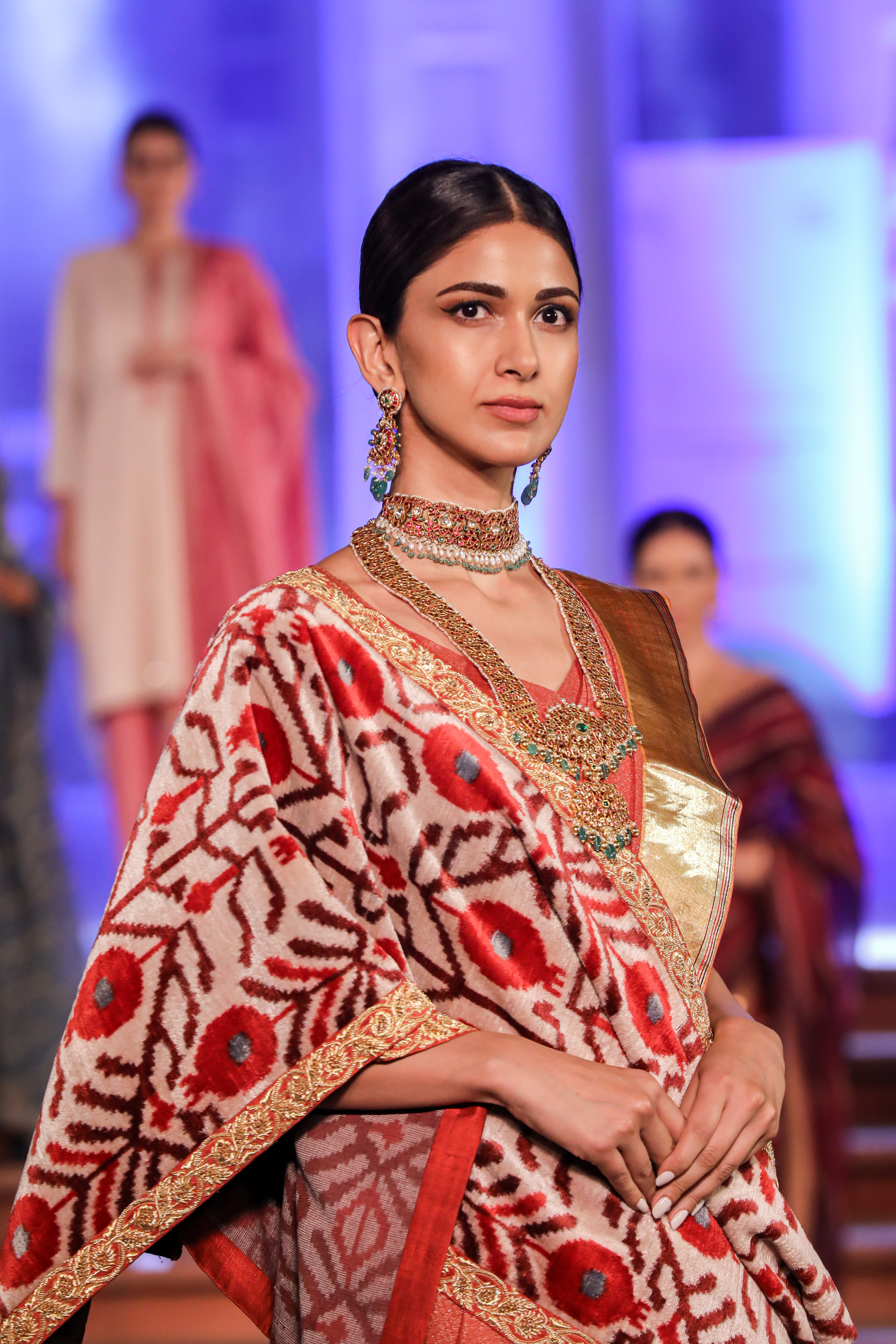
Final stages involve him studying the evolution of all the collections, selection of a venue deserving of the final presentation, designing the event, music and the invitations. Lubna Adams and her team of models from Mumbai have been part of this show since it started, she is explained the theme, background of all the collections, and she accordingly choreographs. This symbiotic relationship is nurtured and presented to the audience in a show in the form of stories presented through dazzling collections – each a new surprise.
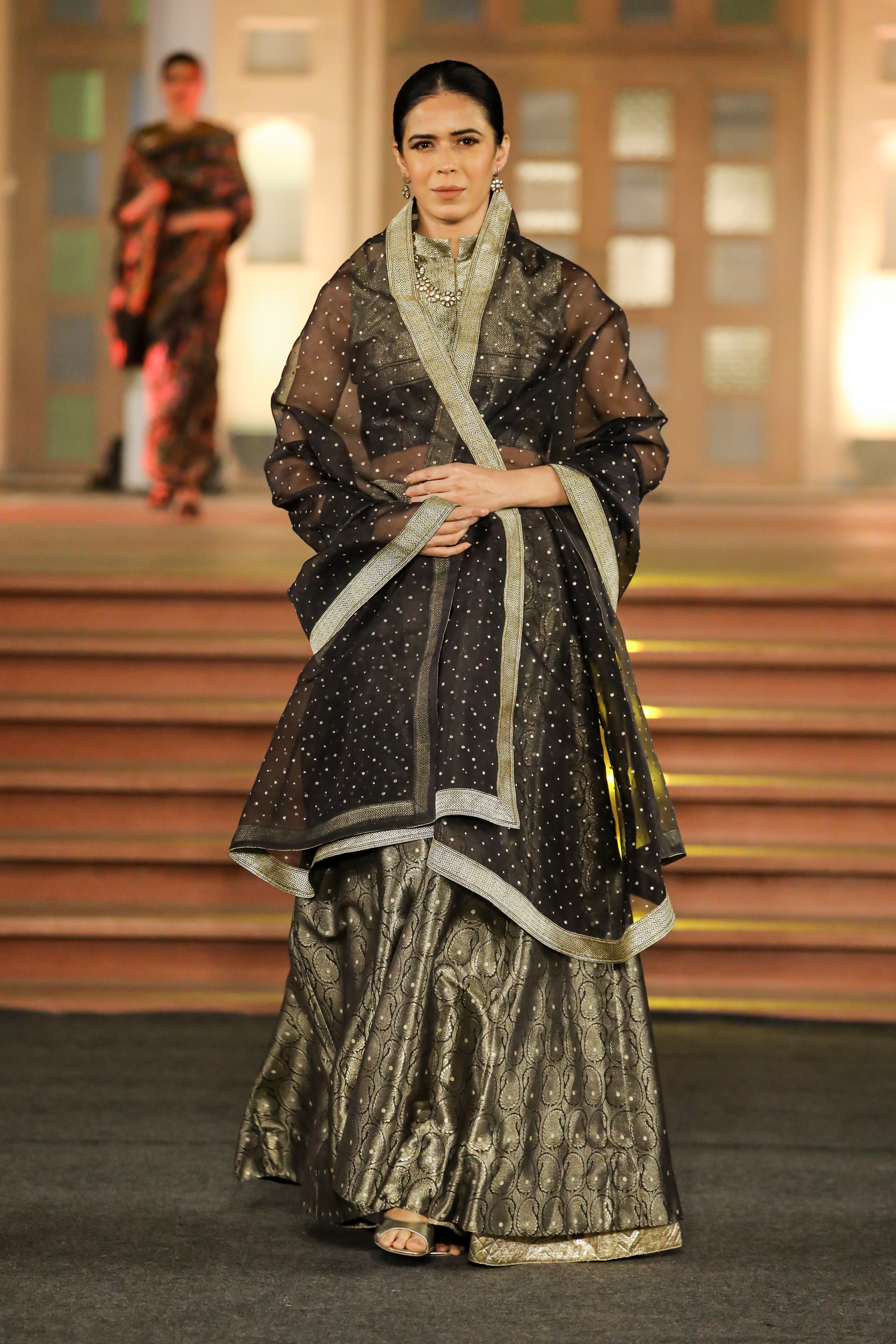
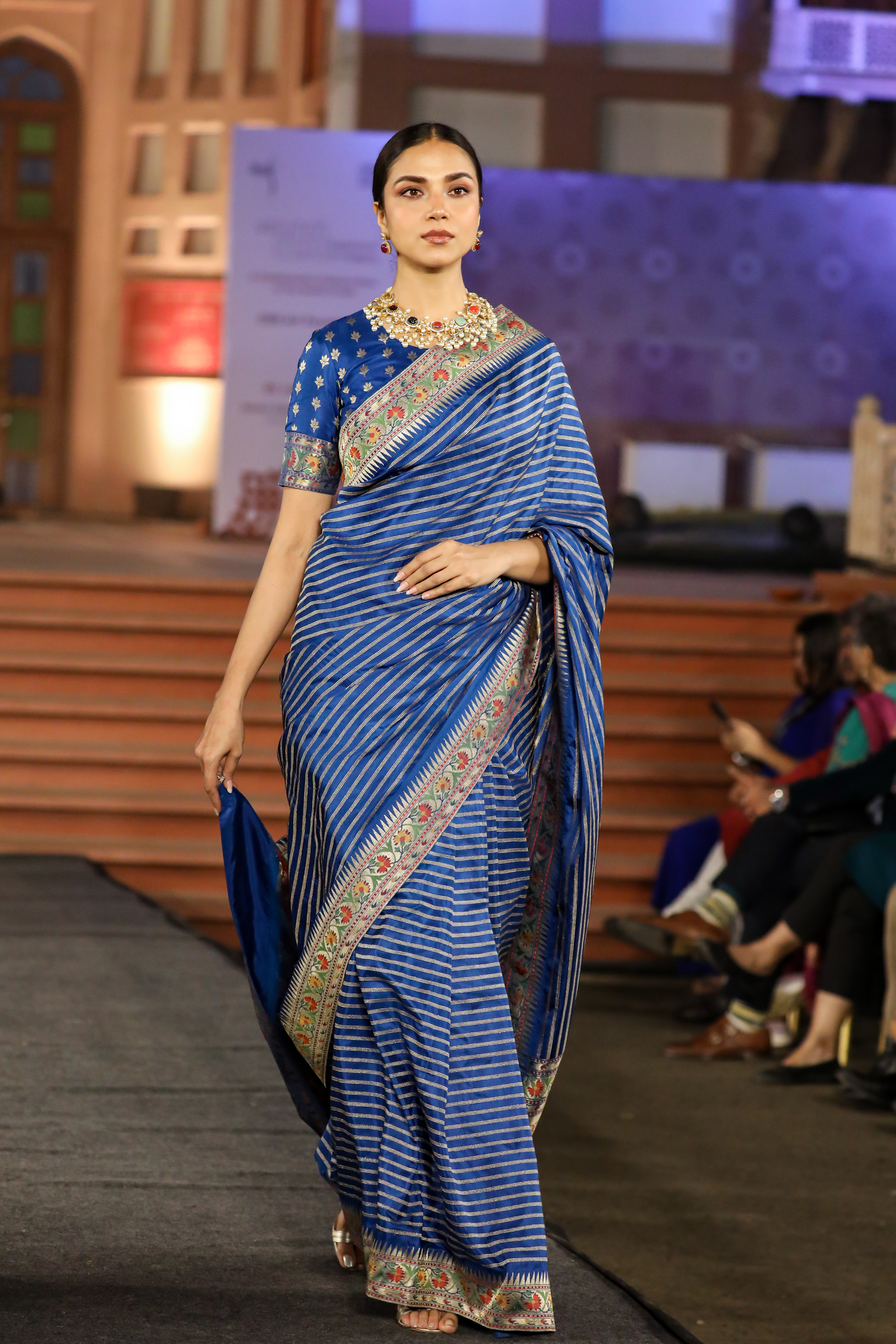
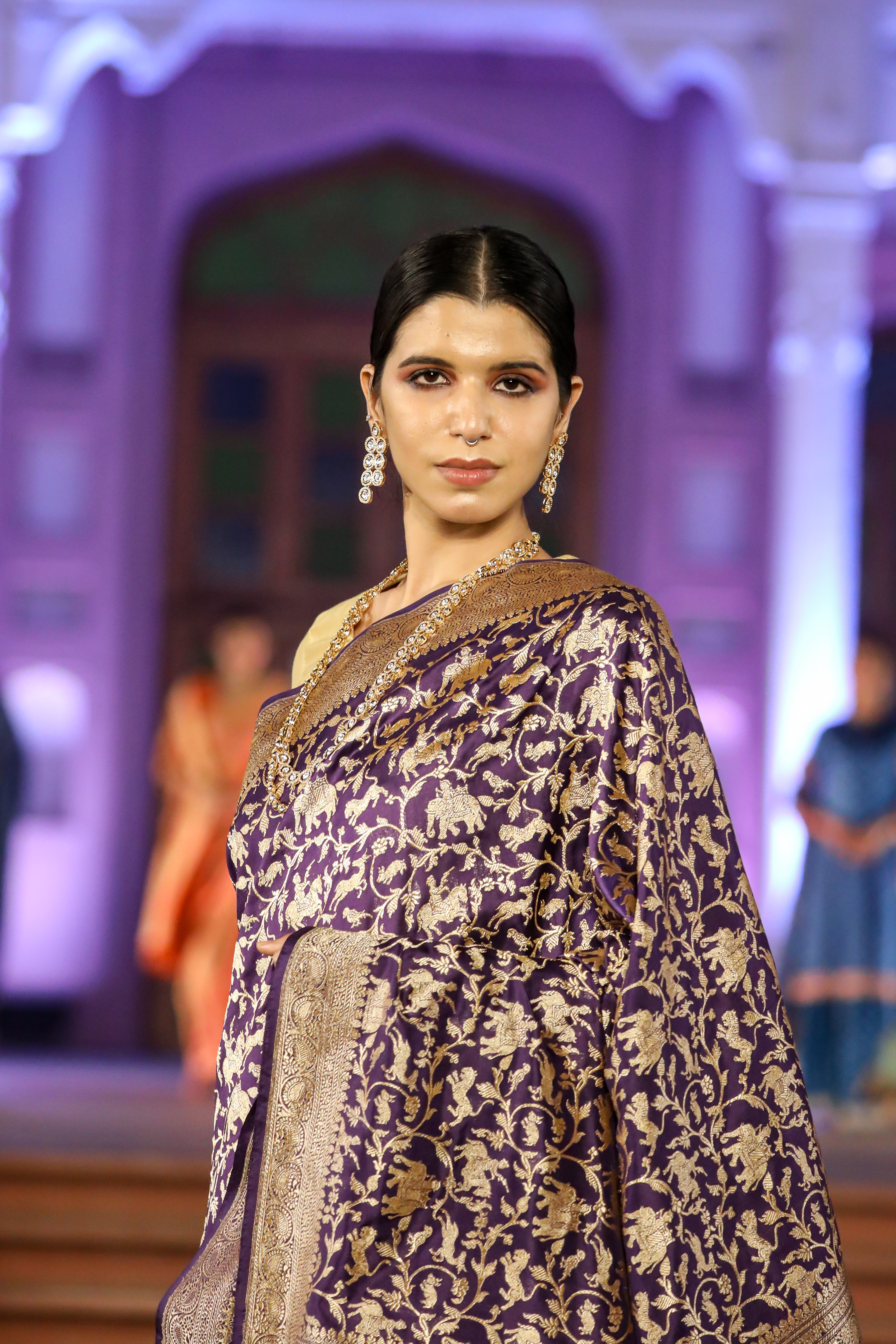
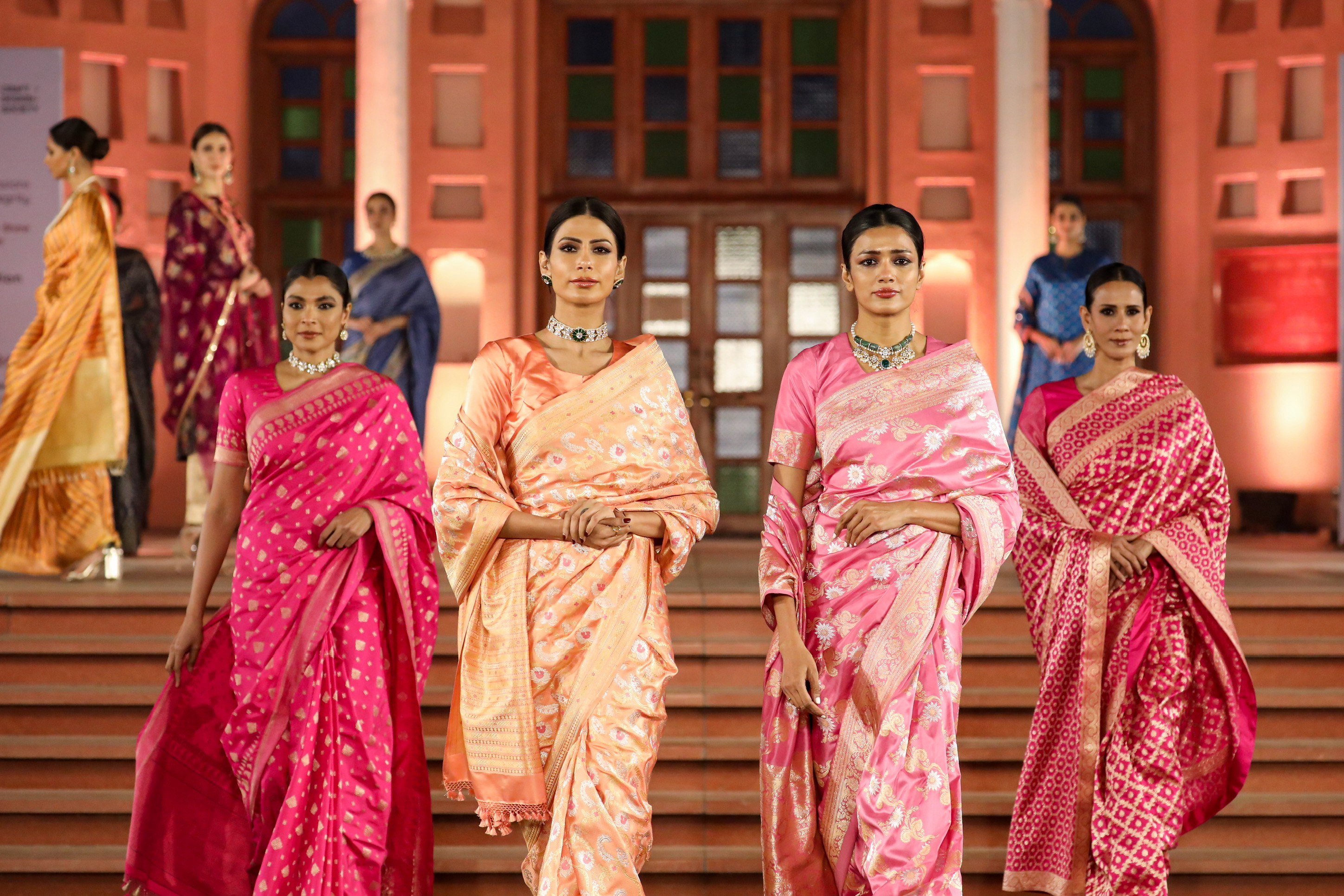
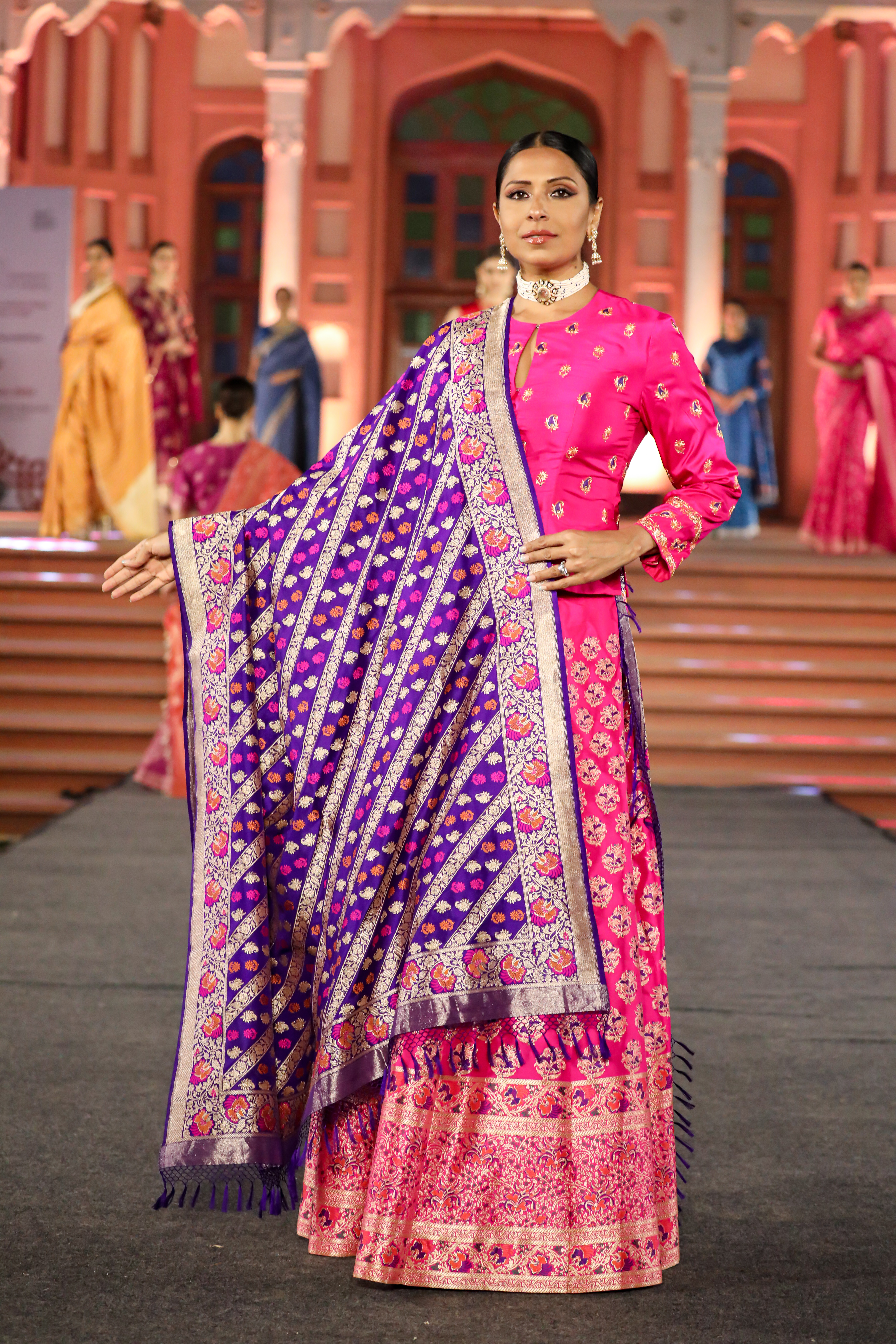
‘Walking-Hand-in-Hand’ 2024:
The venue was the historic Shahibagh Palace in Ahmedabad, former palace built in 1622 by Prince Salim (later Emperor Jahangir) when he was the Governor of Gujarat. At this same palace, the young Rabindranath Tagore wrote his first short story ‘Khudito Pashan’ in 1895, when his older brother Satyendranath Tagore, India’s 1st civil servant, was posted in Ahmedabad. It is presently the Sardar Patel Memorial Museum. After learning all this I feel honoured to have witnessed its 5th edition in January 2024.
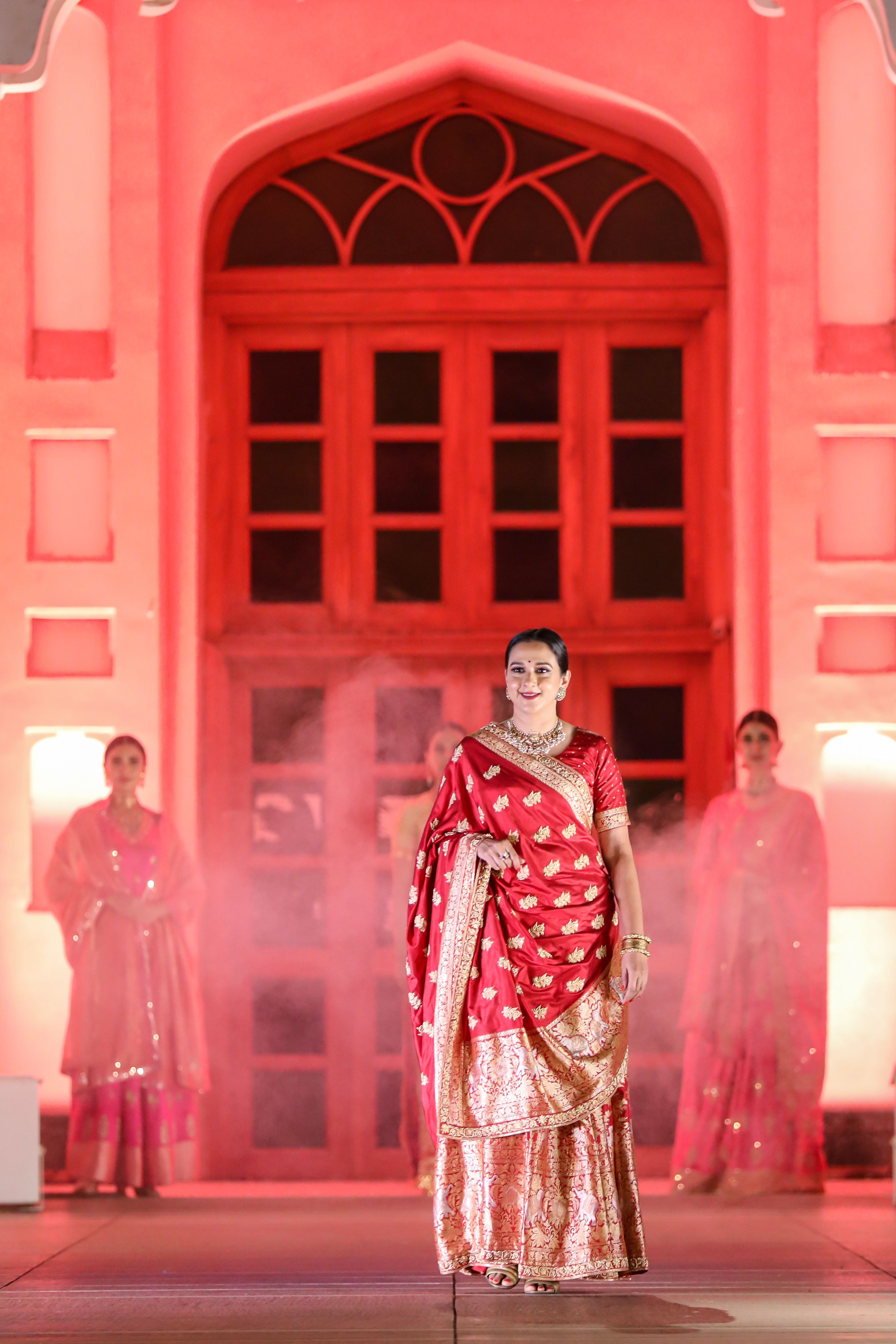
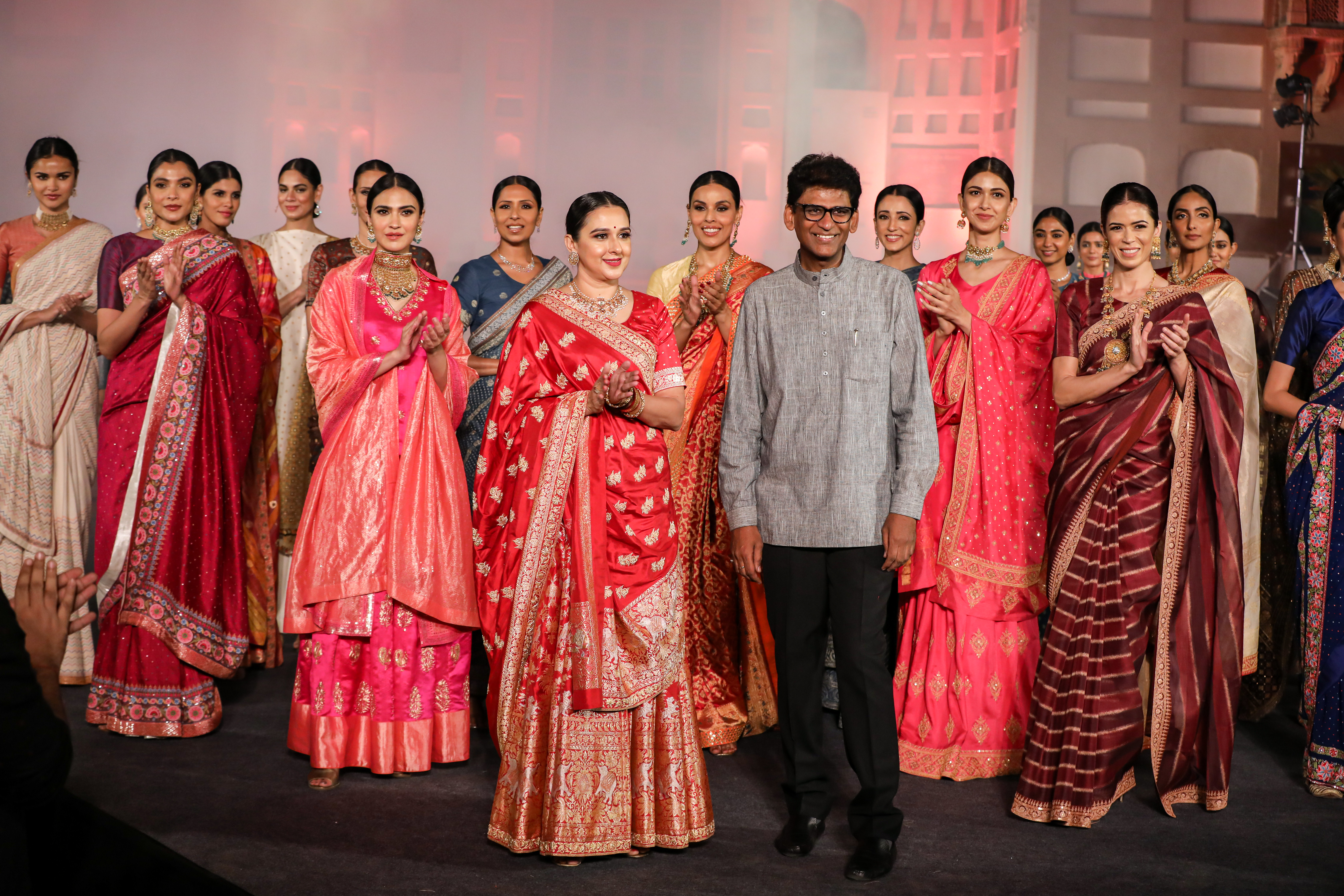
The show began with Kathak dancer Mansi Modi’s scintillating evocation, traditional Garba (now on the UNESCO Intangible Heritage) and the ramp walks by the models. At the end of the presentation of each collection, the artisan and the designer walked down the ramp ‘hand-in-hand’ – the artisans are usually shy and sometimes awkward to be in the limelight and the designers (I noticed all of them did this) stepped back a little and applauded while encouraging the artisans to step into the limelight – literally.
The strong lights beamed down on the duo. Amidst thunderous applause, for a brief moment, probably for the 1st time in their lives, the artisan made the magical direct connect with those who have worn their handmade textiles and were eagerly waiting to book the new collection. Kamaladevi Chattopadhyay, and those who had tirelessly worked to help India’s artists, artisans, crafts communities, were probably smiling down these moments. I was touched and had tears in my eyes, am sure you can feel it now.
I knew some of the artisans like Master Indigo Dyer Shyamji Vankar Valji, Bandhej expert Jabbar Khatri from the audience and asked them how they felt. They said they truly loved being a part of this show, even if their collection was not part of it that year they still came down from wherever they were. Truly, Asif’s idea that when craft is explored to its utmost level, aesthetics and quality, it is art. This year, guests from 10 countries had flown down to support this mission.
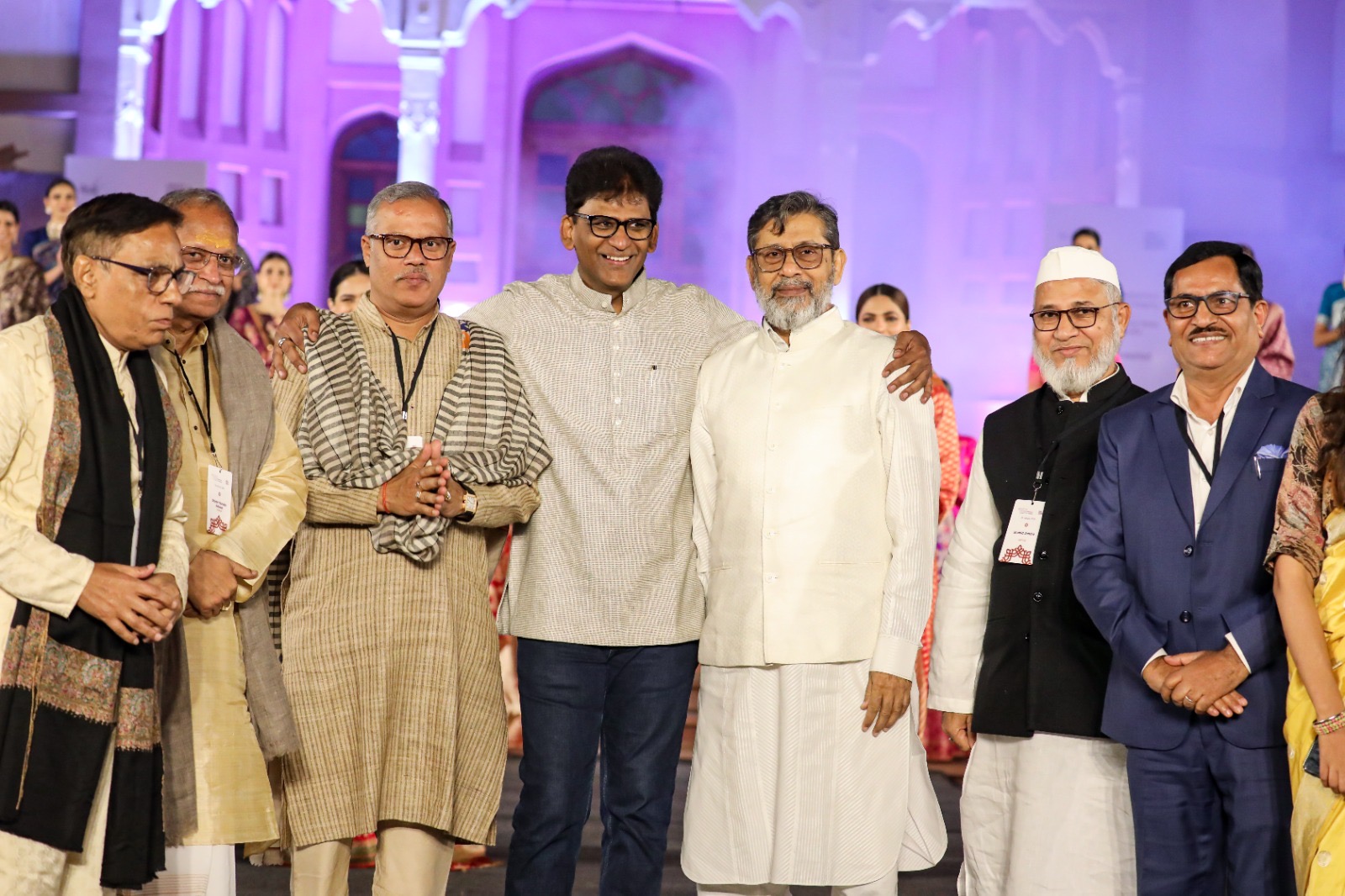
‘The Benaras Collective’:
After the show, I had longer discussions with Asif and he was more relaxed and spoke at length about ‘The Benaras Collective’. It is being formed at Benaras with the efforts and guidance of CDS through Asif, where the younger generation of the weavers of the uber exquisite Benarasi textiles are coming together to save it from being lost.
Cheap imitations, mostly machine-made with artificial yarn are set out to nearly destroy the Benarasi textiles. Indian government policies are not so supportive as one would want them to be and have drastically failed! Some NGOs and individuals have been trying to document, save and bring to the world the plight of the centuries old Benarasi textiles and their creators but the damage is already much bigger than the first aid provided.
The grand mission:
‘The Benaras Collective’ is formed with financial investment of 5 weavers from Benaras. The master weavers comprise of the ‘Golden Group’ and their next generation are the ‘Silver Group’ – young women and men within the age range of 21 – 30 years.
The primary objective is to ‘save’ the traditional craft by creating the best quality handloom woven textiles, apart from their usual business enterprises. They will focus on making new designs and motifs using natural fibres and dyes that will challenge their intelligence, simultaneously designing systems in sync with 21st century.
The practical plan:
Presently ‘buta’ motifs are popular and Asif says that Benarasi weavers know if they weave a textile, mainly a sari, with a few ‘butas’ it will sell. He insists that the move should be in a new direction, away from this comfort zone, where there might be uncertainty but there is a challenge to the individuals creativity.
The plan of the Collective is to set an example by weaving saris similar to archival ones, found today in museums or private collections. These saris are not easy to make, their motifs and colour schemes are extremely difficult to remake and some of the techniques of making some motifs are lost as they haven’t been made since decades!
In these saris, Asif wants to emphasise on each corner of the ‘pallu’ and continuous corners of the design – there will be no blank spaces but exquisite and delicate weaving all over.
Once the archival saris are woven, they will be displayed at the experience centre being constructed in a Benaras heritage property. Well researched detailed content on the history of the original and the creation of these saris will be provided. After the archival sari is made solely for this centre, new saris similar to it will be made for sale, with each sari having a certificate and a photo of the loom where it was woven. (Apparently some certificates and GI tags can also be fake these days!). These saris will have to be booked by those who want to wear them. Those interested would have the facility of trying it out with different drapes, before the final purchase. Family members from the weaving community will be at this centre, bringing in their original stories and love.
Final objective of CDS and ‘The Benaras Collective’:
There will also be a school of design and weaving, for children of the artisans. They will be trained to prepare the loom, tye the yarn, arrange the warp and weft, put jacquard and finally weave – all by themselves. The best work of a student would be woven in real ‘zari’ for sale.
The younger generation will be educated in design, innovation, production and marketing.
A self-sustainable enterprise like this is the best way forward for the world. To again quote Kamaladevi Chattopadhyay:
“Craft has always been a basic activity in human society, in fact it is considered more cohesive and permeating in human relationships than even language, for it can penetrate many barriers to communication.”
Weaving, embroidering, printing or painting, Indian textiles will survive the ravages of time, if we become more inclusive and accessible – ‘walking-hand-in-hand’
Going back to my questions:– are we losing our rich cultural heritage? Whom should we save it for? How? I found motivation in the mission of Asif Shaikh. Have you? Do comment on the post so that he and his team know of your support.
Astronomer and educator Carl Sagan had said, “Do something. You are by accident of fate alive at an absolutely critical moment in the history of our planet.”
And, Nike says it well “Just do it”
Wishing Asif and your team the very best of luck for the mammoth responsibility you have taken upon yourselves.
Thank you for your time 😊
…
Dear readers… you would have noticed that I have used words like ‘artisan’, ‘craftsmanship’ and ‘crafts’ – we are still unsure in India the correct word to use for those who are the original ‘producers’ of our textile heritage.
Photos and videos courtesy CDS archives. Some are by author, others are mentioned. Kindly give due credit before sharing. Thank you!
 VarnikaDesigns
Very heartening that Asif has taken on such a challenge. He will succeed with enormous encouragement and support from like minded inspired individuals.
Good luck!
LikeLike
Thank you Sue for your kind words ❤
LikeLike