
Darbar Shri Guru Ram Rai Ji Maharaj is situated in the heart of Dehradun city is a magnificent monument of great historical and religious significance. These two images will help you find the exact location when you’re in the city.
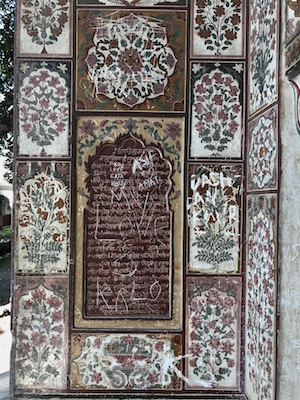
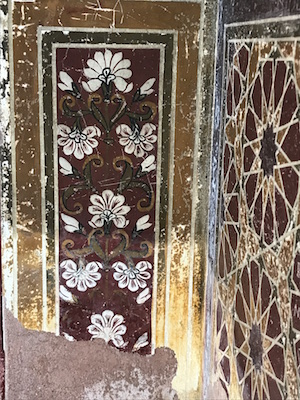
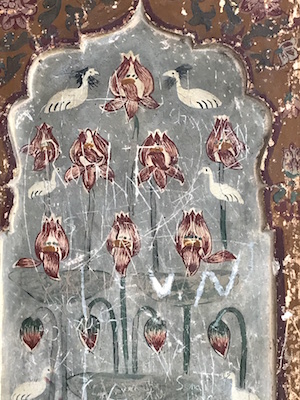
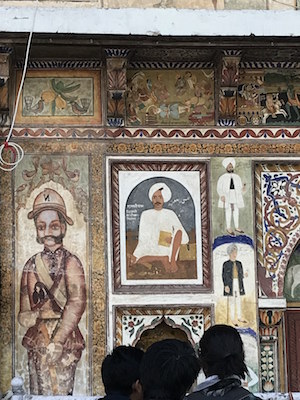
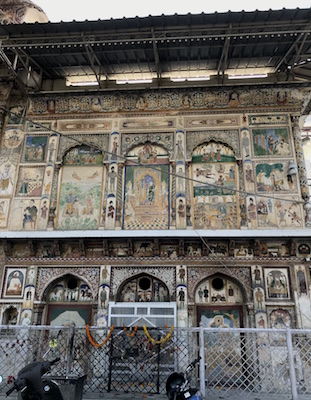
The Foundation students of the School of Design, Doon University, Dehradun, were directed there by their HOD Dhriti Dhaundiyal, with the information that this is one of the most unique architectural monuments of the city. She didn’t tell us anything more but with a glint in her eye told us to find out for ourselves. So we told ourselves that this is going to be an investigative site visit for us and we were determined to make most of this adventure!
We went through many lanes and bylanes, getting narrower as we came closer to the site on the map. We expected a more carefully demarcated area but the Gurudwara has a simple and low wall, with many shops all around it. Amidst this busy thoroughfare lies a huge, exciting and unusual story of politics, loyalty, friendship, religion, aesthetics and exchange of cultural beliefs through art and architecture.
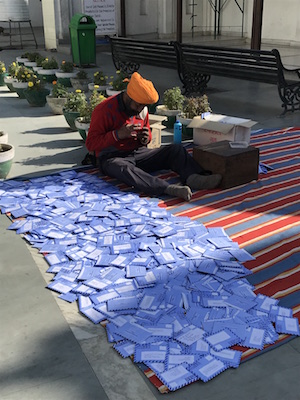
At the main entrance of the Gurudwara, one finds a long post with colourful fabrics wrapped around it. We were told that this is central to the famous Jhanda Fair. It is celebrated here during Holi by Guru Ram Rai’s followers, known as Ramraiyas, are also referred to as Ram Raiyas. On the day of his birthday, which incidentally coincides with the day of his arrival at Dehradun in 1676, Ramraiyas from all over India collect here with new flags and replace the old ones with these. Hence, the name of the fair is ‘Jhanda Fair’ meaning ‘Flag Fair’. We visited about two months before Holi and came across this unusual sight. On enquiring, we were told that these are invitation letters to be despatched for followers to participate in the Fair.
Then comes the next logical question: who is Guru Ram Rai? Guru Ram Rai was the eldest son of the Seventh Sikh Guru Har Rai Ji. Check the family tree from https://www.sikhiwiki.org/index.php/Guru_family_tree
The story as narrated on the internet and Sikhism related sites goes:
After Aurangzeb had imprisoned his father, Emperor Shah Jahan, and had finally wrested the Mughal throne away from his eldest half-brother Dara Shikoh (who their father Shah Jahan had preferred as the next Emperor), Aurangzeb was goaded, by members of his Court, into accusing Guru Har Rai of lending Dara Shikoh support.
Aurangzeb demanded that Guru Har Rai make an appearance in Delhi. Instead, Guru Sahib sent his eldest son, Ram Rai, to the imperial court at Delhi. Ram Rai was well received by Aurangzeb. He not only satisfactorily responded to all of Aurangzeb’s concerns, but he also impressed the Emperor with his cleverness. As a result, Ram Rai was asked to stay on as a state guest for some period.
One day, after prodding by some of the Ulemas, Aurangzeb asked, why is Islam criticize in a couplet in the Gurbani “Mitti Musalman Ki”? Ram Rai sreplied that the line had been copied incorrectly and that the actual writing was correctly “Mitti Baimaan Ki” and not “musalman ki”.
‘Mitti Musalman ki peirei paee kumiar; Ghar bhandei itan kia, jaldi karei pukar.’ (Asa Mohalla 1, p-466)
‘The ashes of the Mohammadan fall into the potter’s clod; Vessels and bricks are fashioned from them; they cry out as they burn.’
Taken from the site: https://www.speakingtree.in/blog/ram-rai-and-the-sin-of-altering-gurbani-441603
On hearing this, Aurgangzeb was extremely pleased and requested Ram Rai to stay on in the court at Delhi. He had even performed some miracles while at court. When news of his translation of the Gurbani and the miracles reached Guru Har Rai he not only denounced Ram Rai from the family but also excommunicated him from Sikhism.
Ram Rai dejectedly left from Punjab with some followers. When Aurganzeb learnt of this, he immediately requested the Raja of Garhwal, Fateh Shah, to extend all possible help to Ram Rai. He was provided with some land at Dun, which was the valley portion of Garwhal. Ram Rai set up his “dera” (camp) in “dun” (valley) in 1676. The neighbourhood around it later became a city called ‘Dera Dun’. This then transformed to Dehradun, as we have known it since the last few centuries! We were astounded to know of this history, but were you aware of it?
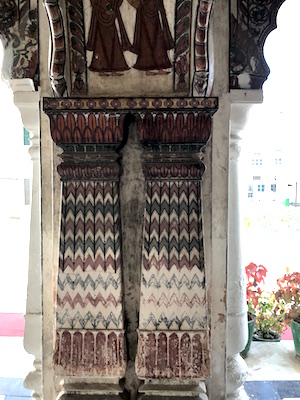
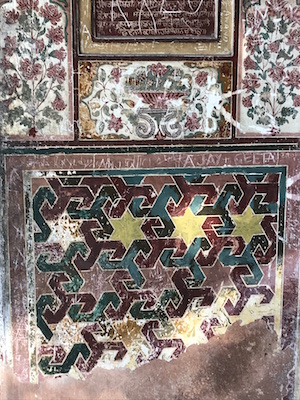
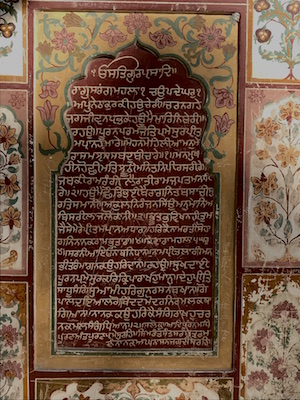
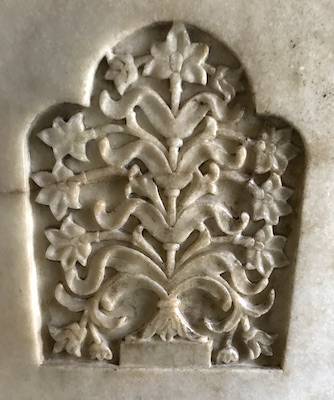
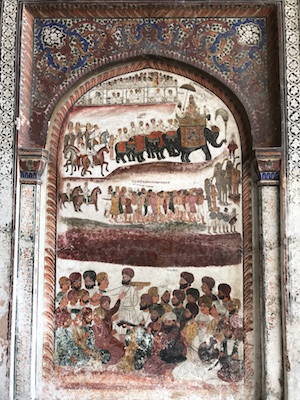
Initially a Gurudwara was built in Dhamawala, the construction of the present building of Darbar Sahib was completed in 1707.
Legend on the http://www.sgrrmc.com/page/history.aspx
says that Guru Ram Rai wanted to meditate leaving his body behind and his followers wouldn’t accept it. They didn’t heed his wife, Mata Punjab Kaur’s warnings of leaving the mediating Guru’s body alone and broke open the meditation chamber. This is when Guru Gobind Singh sent his followers to end this sacrilege and the violaters were gruesomely dealt with. Guru Ram Rai was hurt by the behavior of his followers and decide to return from his meditative state, and left for his heavenly abode in 1687. Mata Punjab Kaur started managing the Shri Darbar Sahib and established the tradition of Shri Mahant for looking after the property of Shri Darbar Sahib. Shri Aud Dass Ji was the first Mahant of Darbar Sahib in 1687. The present Mahant Devendra Dass Ji is the tenth Mahant, and has undertaken large scale repair and restoration work for preserving the rare mural paintings of Rajasthani, Mughal and Pahari style.
The Gurudwara adheres to the norms of architecture found in buildings, especially of this nature, found in Sikhism. These are usually heavily influenced by the Mughal and Rajput styles and include secular forts, bungas (residential places), palaces and colleges within their built environment treasury.
The word Gurudwara consist of two words GURU (Spiritual Leader) and DWARA(Gateway) symbolising the House of the God, of the Guru – as it is here where the Guru dwells.
The ‘Deorhi’ is an entrance or gateway through which one has to pass before reaching the shrine. The Sikh shrine is traditionally planned as a square according to its plan with the Gumbad (Dome) as the crowning feature of the Gurudwara.
Some other prominent features of a Gurudwara which are present even in this one are:
- Jaali: term for a perforated stone or latticed screen, usually with an ornamental pattern using geometry common in Hindu temple architecture, Indo-Islamic and most generally (cuts down heat)
- Bracket: is an architectural element, a structural decorative member. It projects from a wall usually to carry weight and sometimes to strengthen the angle
- Chattris: elevated dome shape pavilions canopy/umbrella , highly used in Rajasthani architecture.
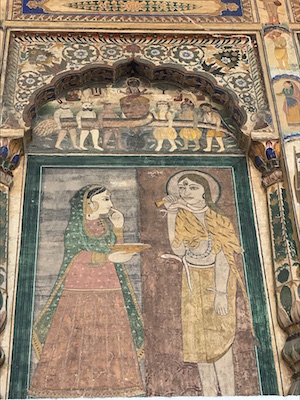
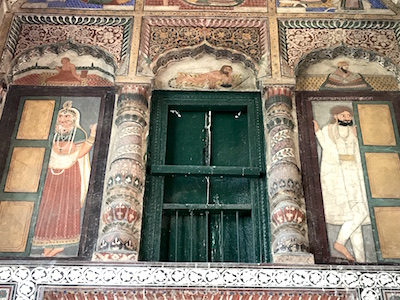
The most striking aspect of the Guru Ram Rai Gurudwara are its outstanding fresco paintings. In Fresco painting, water-based pigments are used on freshly applied plaster, usually on wall surfaces. The colours, which are made by grinding dry-powder pigments in pure water, dry and set with the plaster to become a permanent part of the wall. And, you would be amazed by the range and scale of the frescoes here. They probably covered every micro milimeter of the surface, both inside and outside. With time, their beauty has definitely faded but not their narrative structure or their artisitic quality.
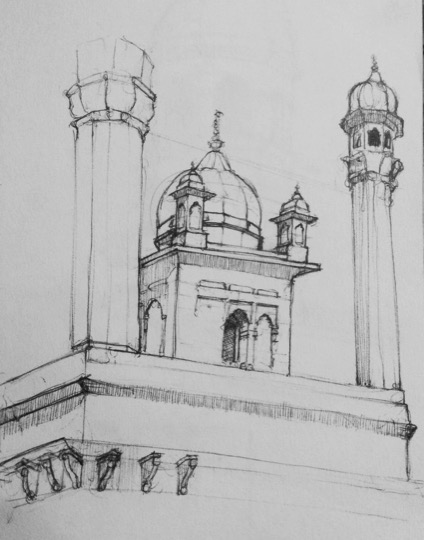
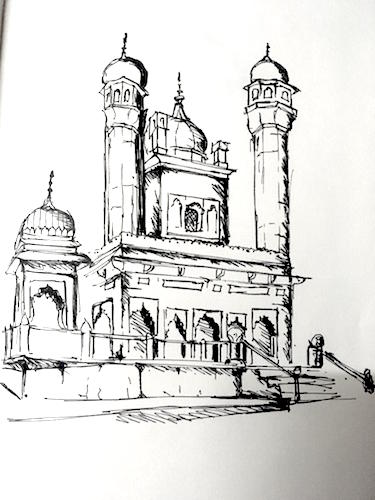
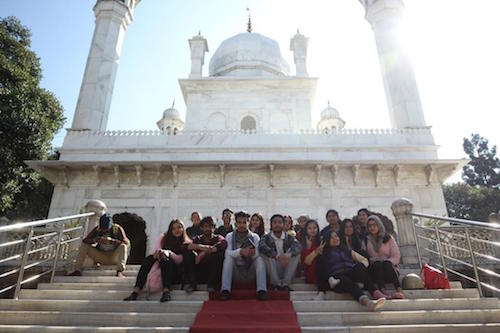
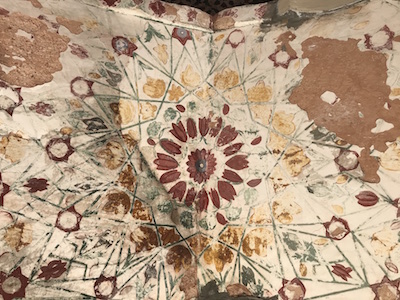
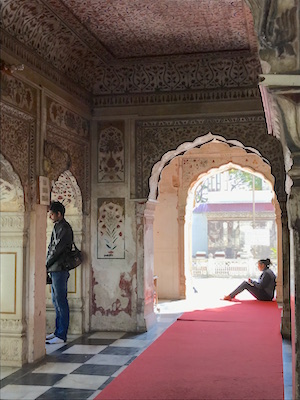
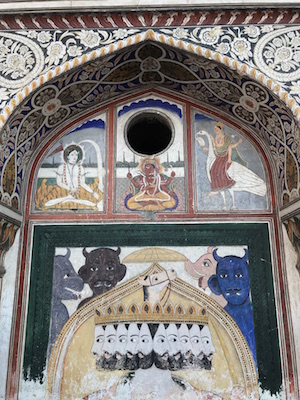
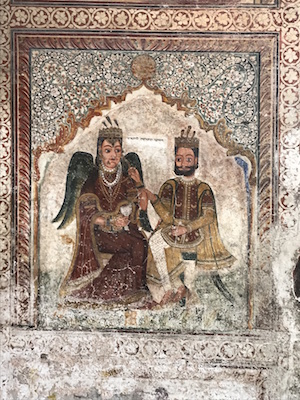
This living heritage is a throbbing witness to a large range of historical events and personalities. It is
Some resources that have been referred to are:
https://www.britannica.com/topic/Ram-Raiyas
All photographs taken by the author at the site in July 2019, videos available at: VarnikaDesigns@Instagram

