
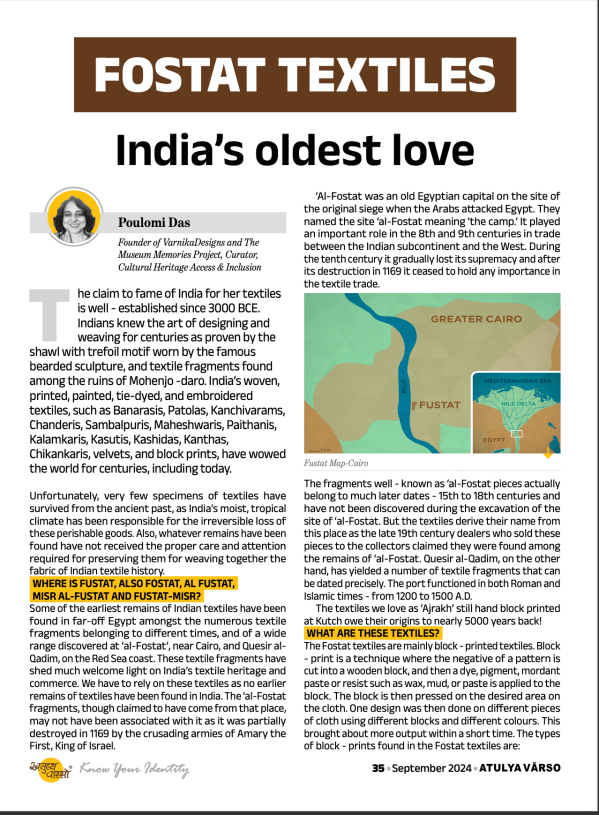
Fostat Textiles: my article on India’s oldest love <3
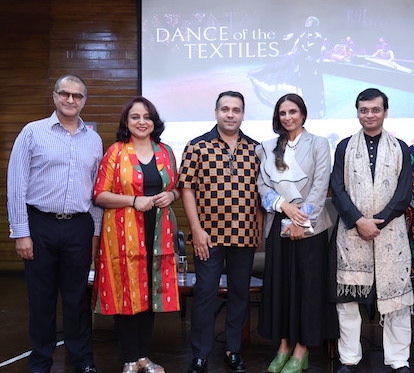
This post wraps up the panel discussion held on Sep 3, at the NGMA, Mumbai, as a tribute to Padma Shri Astad Deboo. He experimented, broke boundaries and created new paradigms that has an everlasting impact… he belonged to not one city, school, genre or creative form but seamlessly moved in all. Video link to the entire discussion is in the post.
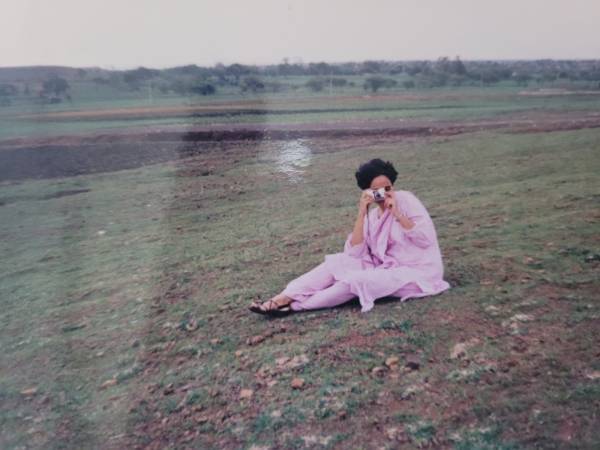
This article was written by me in 2001 as the lead for the craft documentation team of 5 students. It closely observes the crucial role of craft regeneration in the creation of livelihood, leading to empowerment of women and education, health and hygiene for children and the whole community of Bhils there.
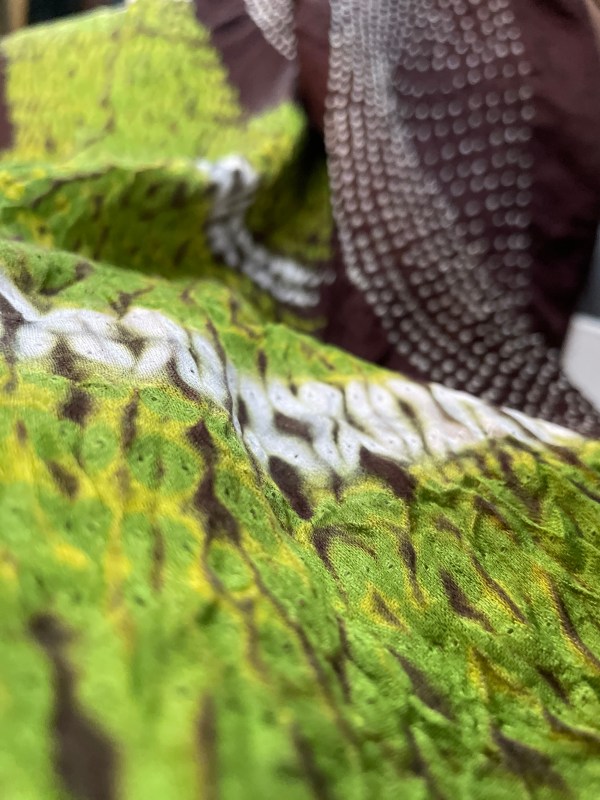
I have been a die-hard fan of the amazing Judy Frater since decades, have been following her work in Kutch, Gujarat, through Kala Raksha. When I finally got the chance to visit an exhibition showcasing the work of the graduating students of this university I rushed to it, at Mangalbagh Gallery, Ahmedabad

This post is a review of the book 'The Shoemaker's Stitch: Mochi Embroideries of Gujarat in the TAPI Collection', published last year by Niyogi Books. It is as delicately narrated as the embroidery itself by Shilpa Shah and Rosemary Crill. Each page is like another stitch into the past of the embroidery and the lavish photos do justice to the exquisite embroidery. The festive season of India is upon us, and women are digging into their treasure chests for old textiles that are still wearable or can be upscaled.
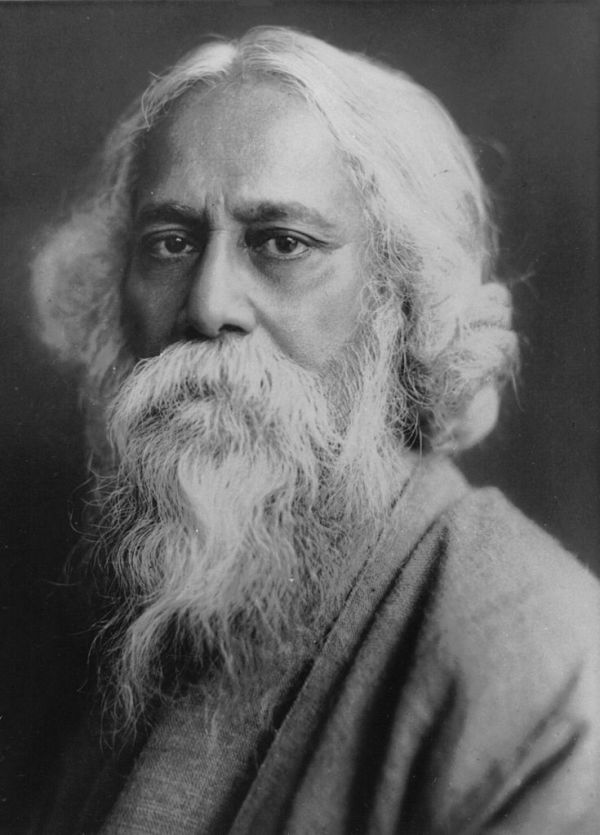
Tribute to Santiniketan: UNESCO World Heritage Site Santiniketan is India's 41st UNESCO World Heritage Site. This post is a personal tribute by VarnikaDesigns to Santiniketan for this honour. It contains photos and videos of some parts of the tangible, intangible and natural heritage of Santiniketan, including Kala Bhavan, links to 8 posts written by me over the years on various aspects of Santiniketan, 2 impromptu songs sung by Dr Syamali Das and the photos of Kala Bhavan at night by Dr Soumik Nandy Majumdar.
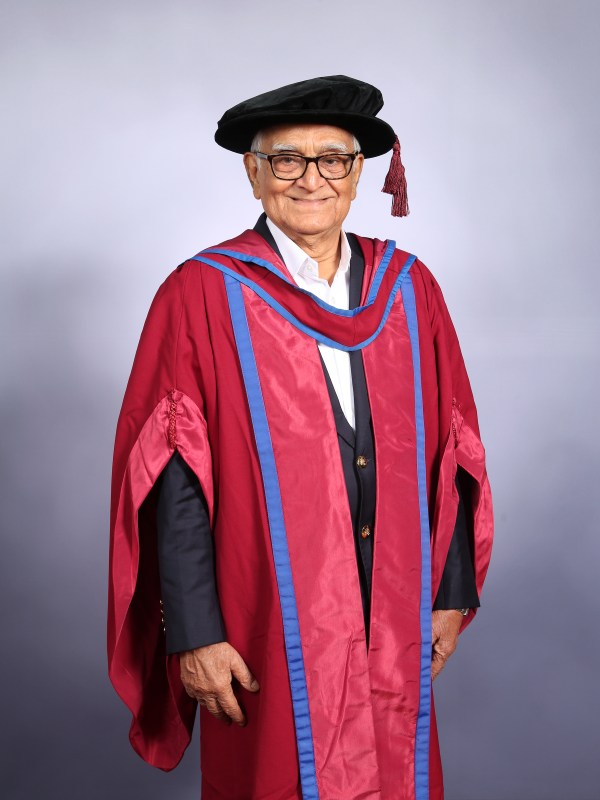
The Courtauld Institute of Art, an independent college of the University of London has announced the conferment of an Honorary Doctorate degree (Doctor Honoris Causa) to the distinguished art historian Dr Asok K. Das.

I was honoured to be invited by the Ministry of Culture as a speaker on International Museum Day to talk about the oral history documentation project called ‘The Museum Memories Project’ – it was found at the beginning of the Covid global lockdown that to bring the world closer through sharing of personal memories from museums visited by anyone in any corner of the globe. It is a free digital archive and resource platform of histories, heritage, cultures of all people, making them accessible and inclusive to everyone 🙂
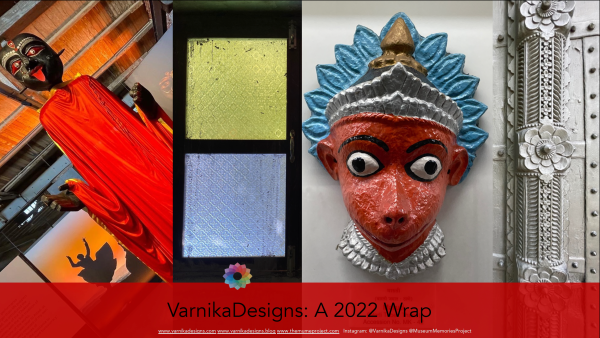
Happy 2023:) Wishing you a very Happy, Safe and Peaceful 2023. Thank you everyone for your support, encouragement and appreciation. VarnikaDesigns managed to get back to doing what we have been attempting since 2010 - to make Indian museums and heritage more accessible and inclusive.

You are cordially invited to Breaking Boundaries - A retrospective on the life of Astad Deboo: a journey through his time, work and vision, opening on Dec 10, 2022, Mumbai. The exhibition on the life, vision and work of Astad Deboo has been conceptualised like going on a journey with him - trekking and hitchhiking, heartbroken during his struggles, applauding his successes, in rhythm with his dance moves.

