
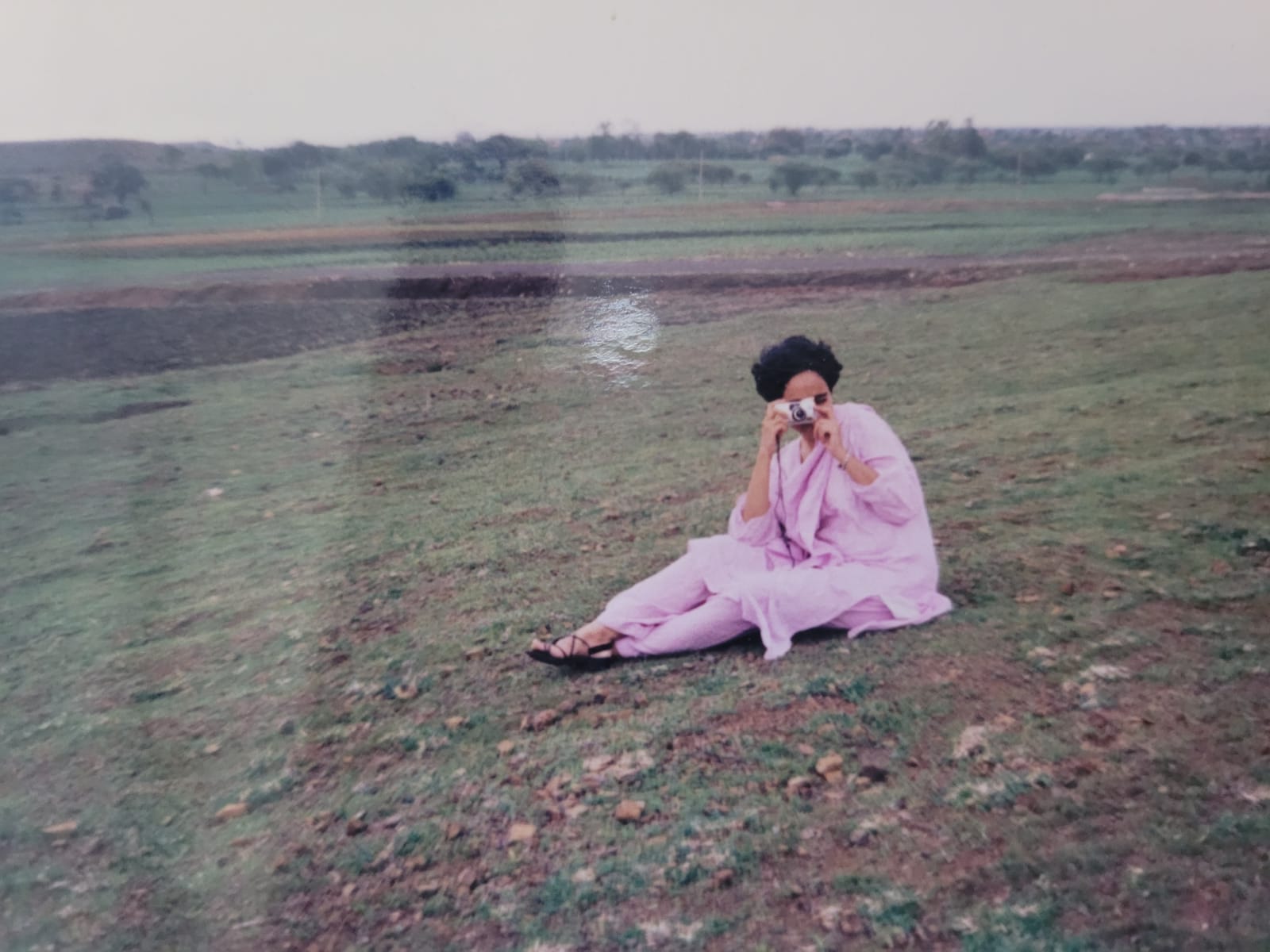
This article was written by me in 2001 as Faculty Assistant at NIFT (National Institute Of Fashion Technology), Gandhinagar, as the lead for the craft documentation team of 5 students. It closely observes the crucial role of crafts in the creation of livelihood, leading to empowerment of women and education, health and hygiene for child and the whole community of Bhils there.
I taught there, designed curriculum and edited several craft documentation projects of students from 3rd January 2001 to May 2002. I have not had the opportunity to re visit Dahod since.
“Folk arts and crafts have up to now been given little attention to. There is, therefore, the great danger that many of these latter works will disappear irretrievably before they have been sufficiently recorded. Yet this would mean an irreplaceable lossÖas traditional arts represent an important cultural foundation for every country…”
– Dr Alfred Buehler, in Preface of Rural Craftsmen and their work, by Eberhard Fischer and Haku Shah, Ahmedabad, 1970.
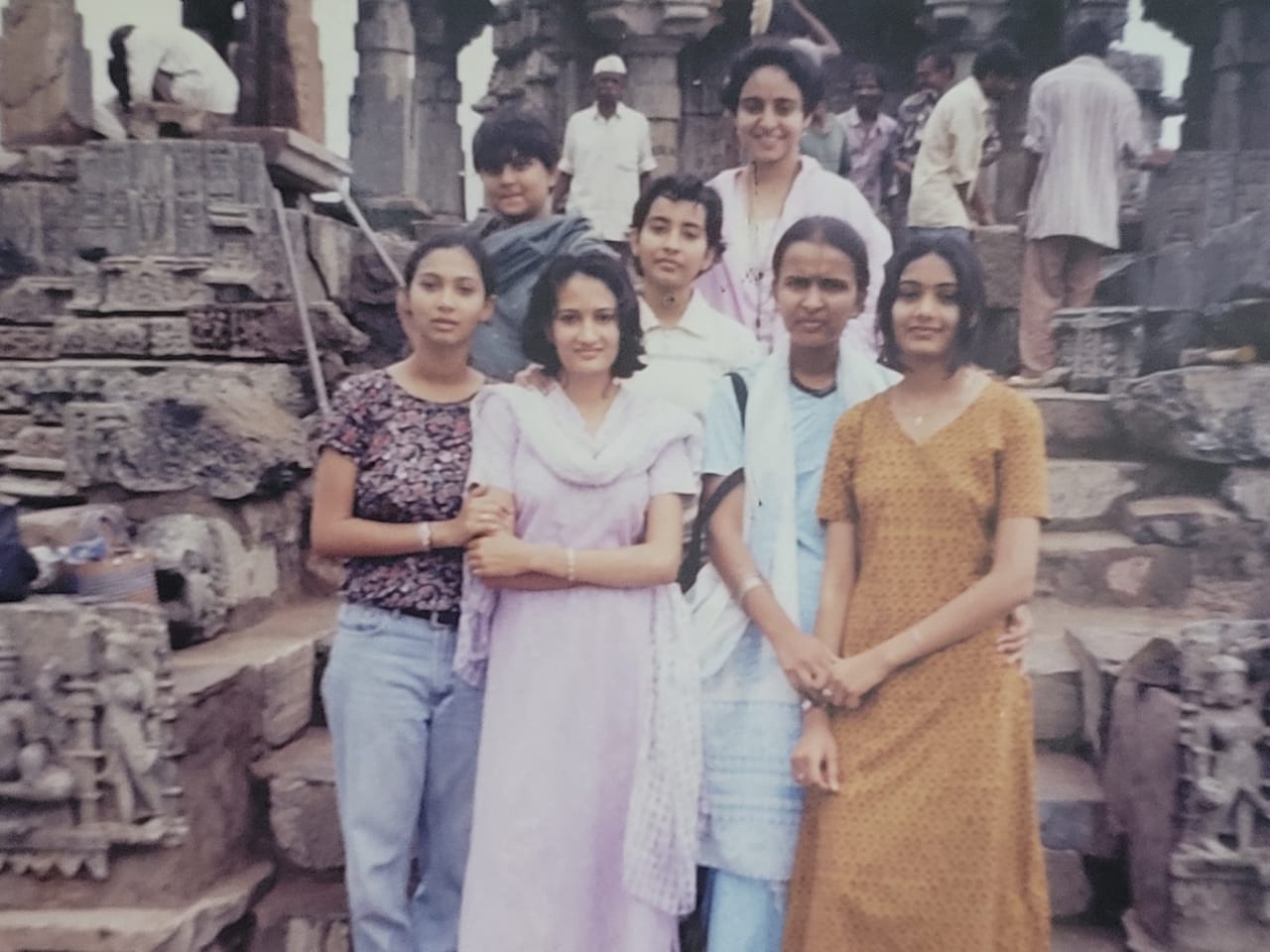
It dawned a bright and beautiful day. With no heat or humidity to bother me or a heavy downpour to dampen the spirit, I set out. For this spirit was taking me to Dahod in the eastern corner of Gujarat. Dahod, with my students from NIFT Gandhinagar – Janki, Pooja, Prachi, Preety, Shachi and Viral. I was going there with them to study the craft techniques of beadwork, bamboo work, stuffing and quilting.
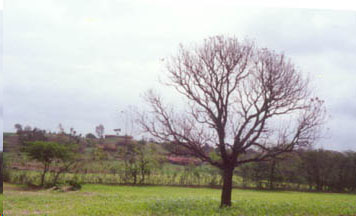
When I had set out for Dahod, I had in mind that as it is located in one of the most drought affected regions of Gujarat, it would be quite barren and lifeless. But the road to Dahod proved otherwise. The area became greener and greener as Dahod came nearer and there was abundant evidence of an initial phase of a good monsoon everywhere. This unexpected delight proved to be the promising beginning to a short but memorable trip.
Dahod is located in the eastern part of Gujarat. Previously, it was part of the Panchmahal district of Gujarat, but owing to a considerable rise in population, Dahod was made an independent district in the later half of the twentieth century. It has a predominantly tribal population comprising mainly of Bhils.
Dahod occupied considerable importance since the time of the Mughals. It was then a hilly and forested pargana of the Mughals. In the jungles of Dahod the Mughal emperors Akbar and Jahangir indulged in hunting and elephant trapping. Records of such incidents have been found in the Akbarnama and the Jahangirnama. And, the Mughal emperor Aurangzeb was born in a camp in the jungles of Dahod when the imperial cavalcade was moving from Gujarat to Agra. (https://dahod.nic.in/history/#:~:text=Mughal%20Emperor%20Aurangzeb%20was%20born,last%20days%20in%20this%20region.)
All this seem a myth now as Dahod has turned into one of the most drought affected regions of Gujarat. Although the notified forest area in the district is above 20% of the total area, a large fraction of this is highly degraded scrubland. The drought, for consecutive years, has wrought much havoc on the inhabitants. Agriculture had been their main source of sustenance over centuries, but with consecutive droughts, there has been an acute shortage of water. Repeated failure of crops led to large-scale migration of the local population. The struggle for survival led to people who were mainly agriculturists attached to the soil, to give up this attachment and migrate to various cities and towns in and outside Gujarat for earning a livelihood.
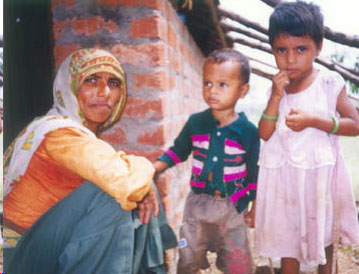
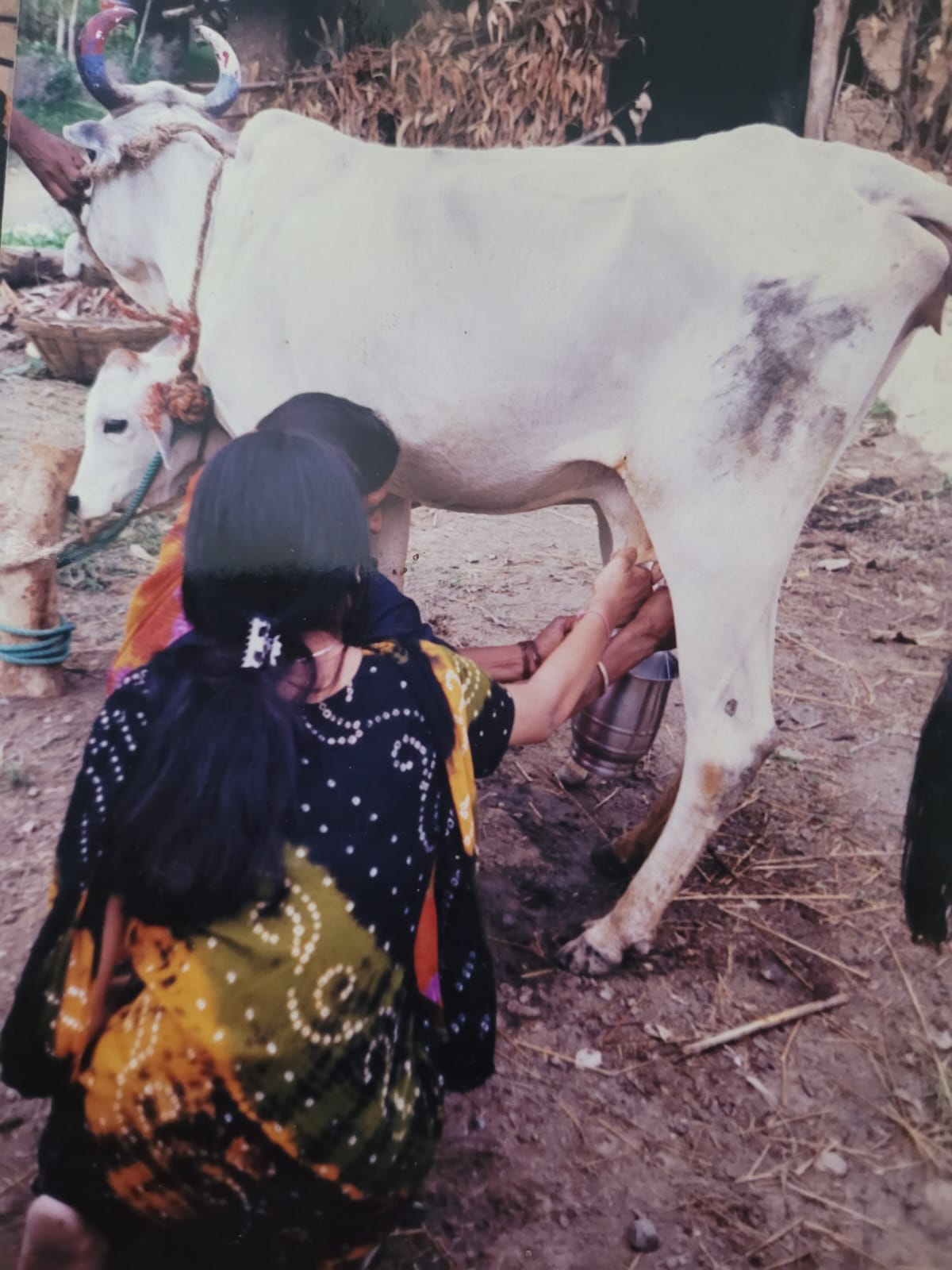
During this process of resettling the people it was noticed that most of them had lost their knowledge and skill of their traditional crafts and were depending upon those that were available in the markets and haats. To regain their lost sense of pride in their handcrafted products the women of some of the villages demanded they be taught the crafts of their ancestors, but they were also adamant that they wanted to earn a decent living out of them too. It was then realized that simply relocating the Dahodians was an incomplete task; there were much larger issues that needed to be addressed. These included primary health and sanitation, education (including womenís) and a basic awareness of rights. If all these issues were addressed properly then only would a solution come about that would go into strengthening a bright and secure future.
There are three crafts that have been under some exposure facilitating them to the level of crafts that could modify themselves to the demands of the market. These crafts have undergone the process of design development where some relatively newer designs have been experimented with, even some new products that could cater to the rapidly changing scenario of a globalised society have also been designed. These crafts that have received such highlight are bead work, bamboo work and the stuffing and quilting work.
While the first and last craft were mainly taught to the women so that they could earn an alternative source of
livelihood, bamboo work was mainly confined to men. More importantly this was the only craft that did not need a revival, merely modern designs acceptable to the younger generations living in a hi-tech world were provided. When the women gradually mastered these crafts it brought about a silent revolution in their lives. They gained a sense of self-respect and dignity and started taking active interest in maintaining a clean and hygienic environment and educating themselves and their children. This has resulted in a sharp rise in the awareness of their rights.
Through a revival and strengthening of the existing craft base, the Bhil women of Dahod have taken the reins of their lives in their own hands and laid the solid foundation of a strong and bright future. With an improved lifestyle they now decide where and how to spend their income. They are concentrating more on their children’s education and health and sanitation issues.
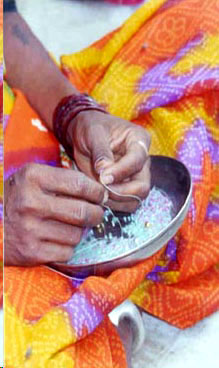
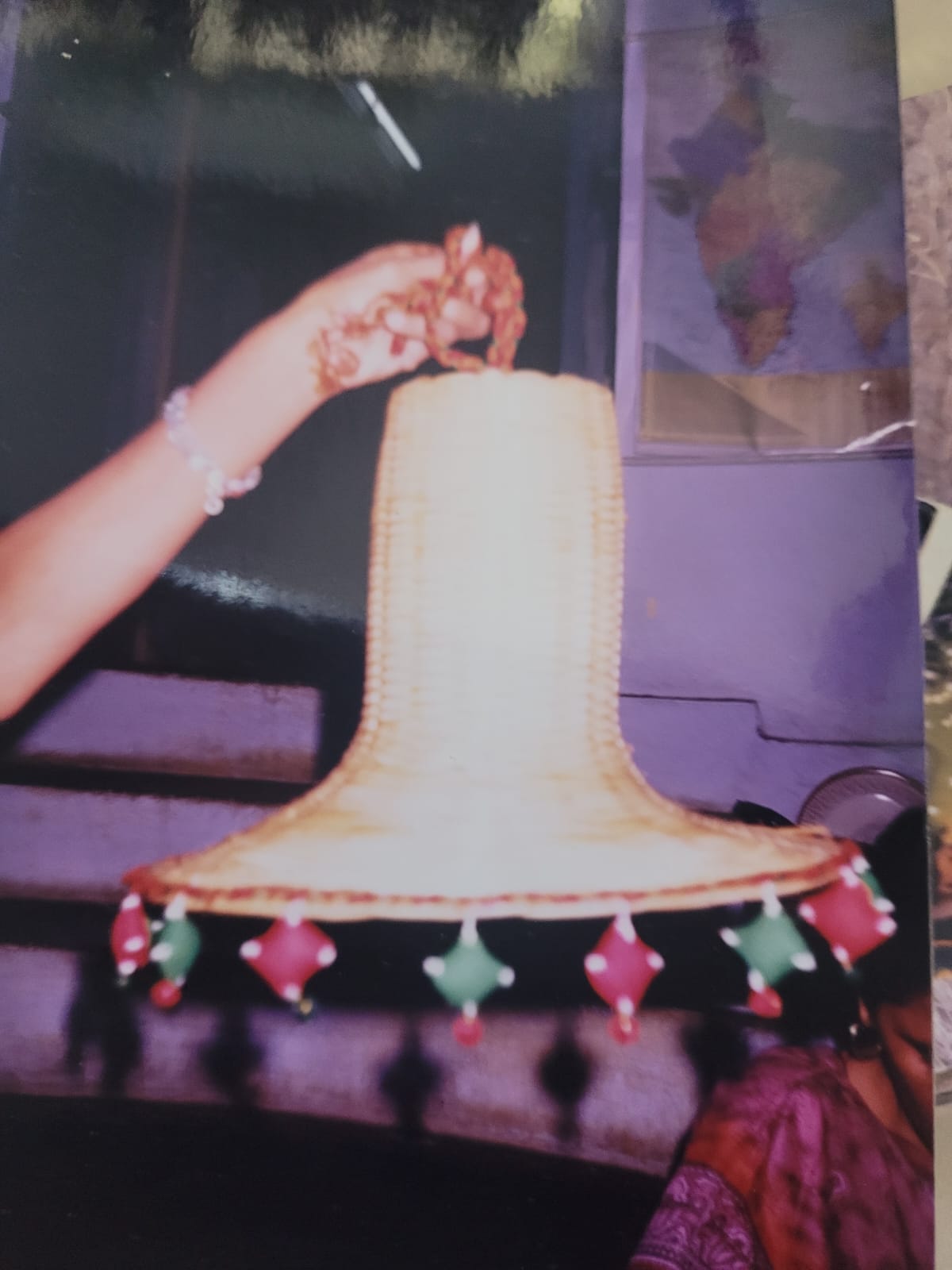
Several organisations are helping the local population sustain themselves by translating their traditional craft techniques into revenue generating means. These crafts include articles by straining the colourful beads into laces for mobile, spectacle and pencil pouches, small cotton bags, wall hangings. Though the technique of beadwork may appear simple it is very taxing to the eye.
The women divide the beads as per requirement. This is decided according to the final product and the number of colours to be used for that product. Then the beads are placed on a plate and picked up one by one by the needle and thread in the nimble hands of the craftswomen. A knot is tied around each bead with the thread through the needle. It is through this extremely time consuming procedure of picking out each and every minute bead, and then knotting it that the women finish the product. In spite of daily housework, looking after all the family members and cattle, toiling in the fields, walking for miles to fetch water, the Bhil women accomplish the task of completing one set of a necklace and two earrings in a span of merely two days. Women who specialize in finishing only give their finishing touch to the necklace and earrings – attaching the cord to the necklace. Though the technique of beadwork may appear simple it is very taxing to the eye.
The focus on bamboo work has helped in product diversification of the quintessential bamboo. Now, articles made out of bamboo are used not only for their durability, strength or economy, but also for their decorative quality. These modern age products are even exported to the UK and other European countries, other than being largely sold through exhibitions in India. The articles made of bamboo that I saw in the haats of Dahod, Limkheda and Limbdi were basically baskets to be used for storage of fruits, vegetables. They were not highly finished products and were available for quite a cheap price – one had to be careful about bargaining though. There were also beautifully crafted brooms; I found them too delightful to be used for sweeping!
The craftsmen purchase the bamboo form the ‘pitha’, paying Rs. 25 -30 for a ten to twelve feet bamboo. The bamboo is brought from Mumbai and nearby areas. The greener the bamboo the easier and more supple it is to craft items out of. The Bhil judge the bamboo from its appearance putting their years of experience to application. If the bamboo turns out to be rotten from inside then it has to be thrown away. Each bamboo can make up to five to six small baskets or pen stands. The bamboo is skinned, and with the help of sharp, broad knife-like instruments, it is cut thirty two times into strips till wafer-thin strips are obtained. Then these strips are woven into the desired product. There are two variations of weaving: one, where the bamboo strips are woven into warp and weft, like a fabric. The other – where the strips are cut into even thinner-than-wafer strips.

For making small baskets, around 18″ long thinner-than-wafer strips are taken and woven by the first method. This makes the base. After weaving an approximately 3″ by 3″ area, the strips are left extending from the four sides of the base. Then, two fine strips are alternately passed under alternate extended strips. Once the basket nears completion, the number of fine strips is increased to three. Then, these three strips are alternately passed resulting in a braid-like weave, ensuring a tight weave. And, the basket-weaving ends. Encouraged by the speed and dexterity of the craftsmen I also tried to weave the basket but my amateur hands proved no match. These baskets, amongst many other articles made out of bamboo have beaded items stuck on them to increase their appeal.
The other crafts stuffing and quilting are minor crafts. Stuffing of birds and animals made out of old or new colorful fabric is a craft commonly practiced in the whole of Gujarat for making hangings for adorning the house. This craft has been improvised upon and presented to the consumer with an attractive admixture of bead worked flowers.
In stuffing, the stencil of a parrot or elephant is taken and placed on fold of the fabric and cut. The parrot is the only form that is kept on the bias, i.e. at a forty-five degree angle, on the cloth. This facilitates the next step, which is stitching. Stitching is generally done on the edges of the form on a sewing machine. Once the animal is stitched the form is taken inside out and fine saw dust is tightly filled into the form, trying not to leave any air gap. Then, the small opening through which the sawdust was filled is hand stitched to close the form completely. Seven or nine such animal forms are stitched together vertically in a string into simple yet ornate hangings, a necessity of every Gujarati household.
In quilting, the cotton printed cloth is purchased from Dahod or Ahmedabad markets, and cut into the desired shape. Then foam is placed in between two such shapes. These three layers are then stitched on the sewing machine with diagonal lines running all over them. After the stitching the piping is cut and stitched on the machine again. There is finally embellishment with beads on the edges or the borders to lend an appeal to the quilted tablemats, telephone mats, cushion covers.
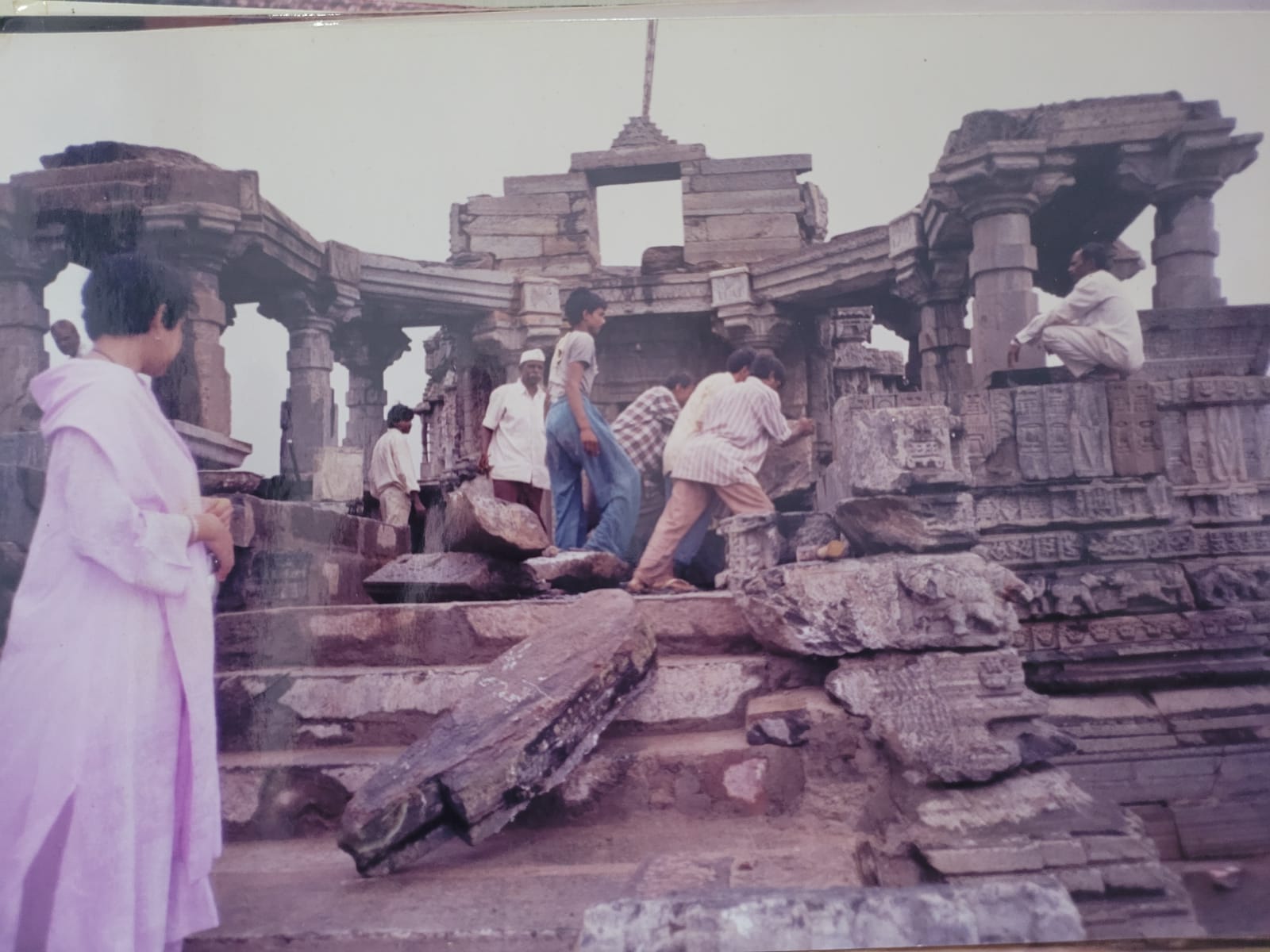
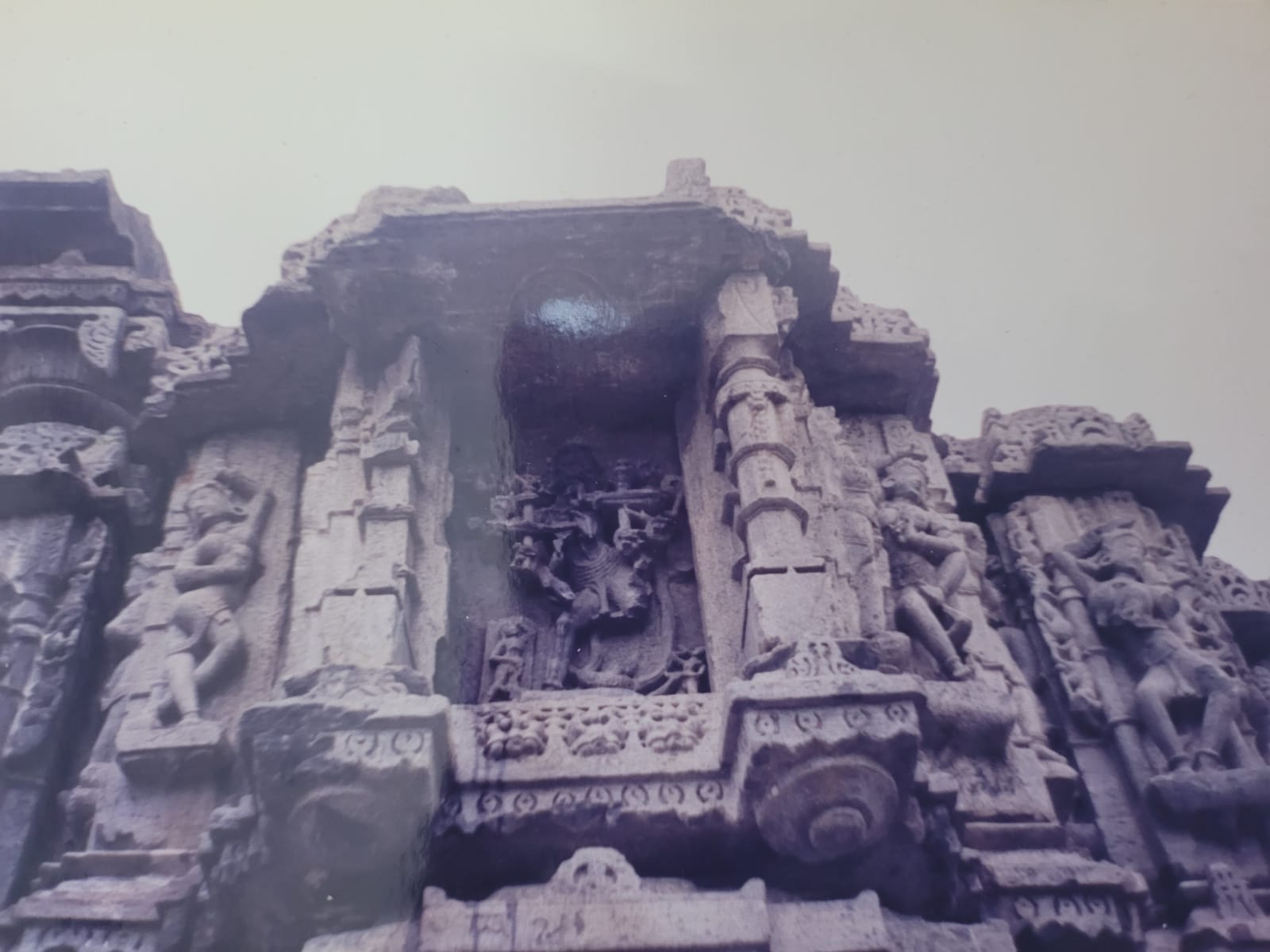
Giving a break to the tight schedule, I decided to visit the historic temple at Bavka. It is an intricately carved Panchmukhi temple dedicated to the Lord Shiva and his consort Parvati and their child god Ganesha. Damaged by the ravages of time it is presently undergoing extensive restoration work under the aegis of the Archaeological Survey of India.
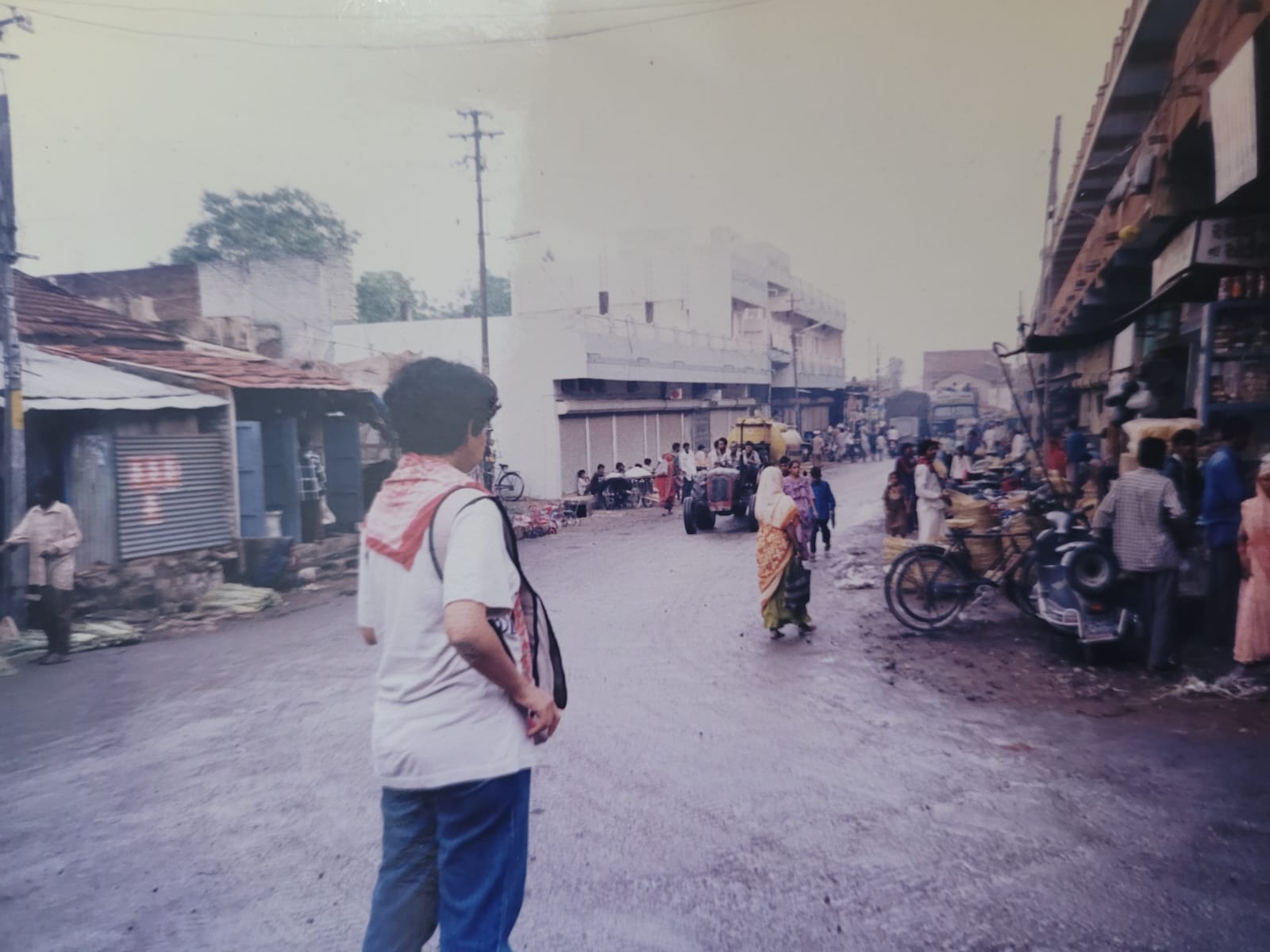
‘Haats’:
In my visits to the ‘haats’ (open markets) at Limbdi, Limkheda and Dahod I saw the crafts catering solely to the local people. These were pottery making and sesame comb making. The haats are held once every week at these places and the sellers move from one haat to the other to ensue income throughout the week.
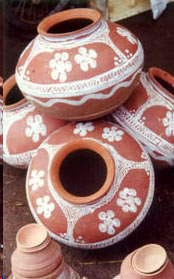
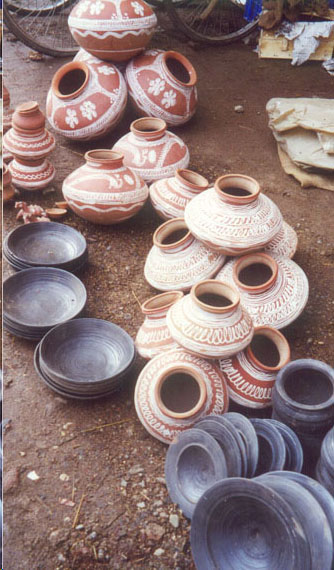
The potters get the clay for their pots from faraway places. Then they mould the clay, after mixing it with the correct quantity of water, into wooden pitchers, matkas and handis. The most common and durable kind of pottery was the black pottery. I was under the impression that these were painted black pottery to give a visual effect. But on asking the potters I was told that the color was not only on the surface. The pots are covered with a layer of paste. The outermost layers of trees are taken, then burnt and mixed with water to make this paste. This paste is applied to the ordinary pots and then they are burned in the furnace. During this process the pots absorb the black color. After they are ready, the black pottery is extremely useful for good cooking. They can retain the heat and they are supposed to give a good flavor to the food.
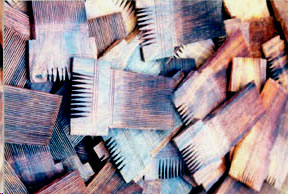
I met a man selling beautiful wooden combs. On questioning him I was told by him that these combs are made out wood from the sesame tree. He gets the wood from jungles near his village, and then he cuts and processes the wood. He claimed that twenty processes need to be carried out before the sesame combs are finally ready to be sold. These processes include the cutting of the wood into the right size for the combs, and sharpening for getting the teeth of the comb, polishing the comb. As the combs were selling for five rupees each I asked him how much does he actually earn, he said he hardly earns anything as with the increase of sale of cheap and durable plastic combs hardly anybody bothers to buy his combs. Also, with the decrease in jungles procurement of wood is a very difficult task. As he is a craftsman he does not know of any other mean of earning money and manages to feed his family of five somehow – he was not able to state exactly how!
TRADITION:
What amazes one is the freedom and respect given to a Bhil woman regarding her choice of a life partner. During the festival held six days after Holi, a Bhil woman can walk into the house of the man she loves, even forcefully. If the parents of the couple object then they are asked to leave the house and earn their livelihood someplace else. And, they can return only if they have been able to earn and save enough. On the same day of this festival an interesting function is held. In this a fifteen-foot heavily oiled wooden pole is erected, with a pot of jaggery (gur) hanging from the top of it. Unwed girls of marriageable age stand around it in a concentric circle armed with bamboos. They hit the man who tries to enter the circles to reach the pole. The man who succeeds to climb the pole and break the pot of jaggery gets to marry the girl of his choice from those standing in the circle as his reward.
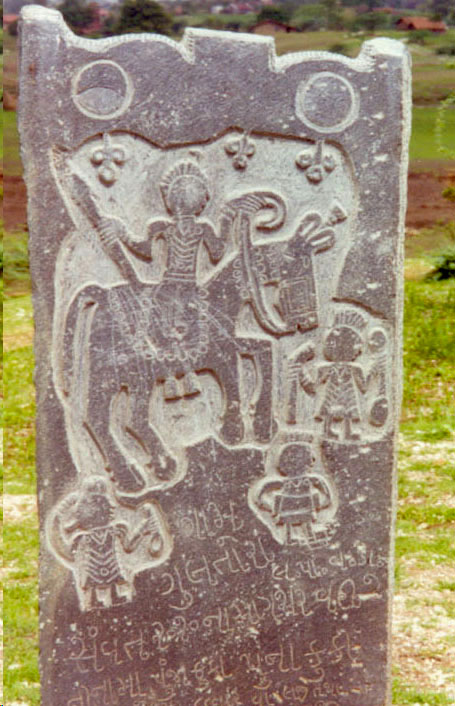
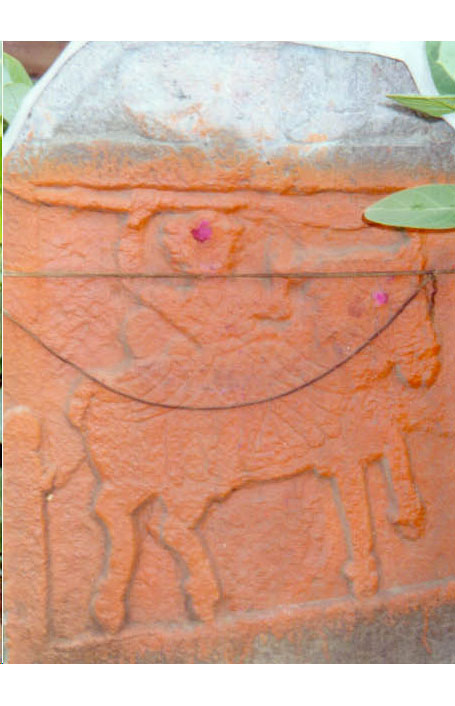
Worshippers of the gods Meghraj, Indra and Dharmaja and the goddess Rohila Sahun, there is widespread belief in ghosts and witches. They believe that after the death of a pregnant woman the gods do not accept her soul and she becomes a witch (‘chudail’), roaming about near cool places like ponds and lakes, having the appearance of a woman from the front and lighted ‘diyas’ as a back. Those who worship the dead are supposed to get the spirit within them. This happens during the festival after harvesting. For this festival the Bhil collect goats, wine, money and corn and worship their god in the form of a stone, earthen pot or wooden beam. The head of a cock or goat is sacrificed and the blood from it applied to the god. Then, the man within whom the spirit enters, can be questioned anything on any topic. The spirit, however, never enters any woman. Throughout my tramping the countryside, I saw figures of warriors on horseback surrounded by human and animal figures carved on stone. These carved hero-stones raised after the death of a tribal man are believed to possess the soul of that man and are respected and even worshipped.
With the exposure to city life, education, science and technology, and television, there is a debate between the older and younger generations concerning the acceptance and practice of these ancient beliefs and rituals.
Seeing all these dynamic activities take place that had been spurred on by an attempt of restructuring the craft base I was forced to re examine the statement of Dr Alfred Buehler. If the NGOís concerned had not taken upon themselves the responsibility of teaching the Bhil women of Dahod the crafts their ancestors had practiced over generations then these crafts would have ceased to exist there. Now, not only do these crafts have a bright future to look forward to, but also their creators have their own heritage well preserved. through this. The women can dream and aspire for a future full of hopes and bright ambitions that gets reflected in their creations and the crafts come to life!
This revitalization of some crafts intrinsic to a particular region makes one realize the necessity of newer designs and products to other crafts widely practiced throughout our country. As the technique and skill remain inherent with them only some subtle change in the design as per current demand would help them to thrive for a long time. In this way not only would the existing crafts get a breath of fresh air and life, their creators would also be able to establish their dignity and respect and stand on firmer grounds. A strong foundation would lead to an important cultural and artistic tradition that would be carried on for posterity.
After this experience of 10 days, I returned to my schedule of chasing time. The delicate balance between the two worlds may not hold for long, before one overtakes the other. Only time will tell which world wins!
I take this opportunity to express my gratitude to all those women and men of the villages of Dahod, Chausala, Limbdi, Limkheda, Bhutardi and Bavka who made this study come true The spirit of taking up challenges in spite all hardships wrought by nature and man has not undaunted these innocent souls and they move on despite all odds.
Cherishing this spirit and wishing them luck in all that they venture in I dedicate this study to all these women and men and their children.
Special thanks to Drs Syamali & Asok Das. NIFT Gandhinagar.
And, to Janki Pandya, Prachee Kapoor, Pooja Soni, Preety Paranjpe, Shachi Sheth, Viral Vaidya. All photos are taken by the author, Poulomi Das, or Preety Paranjpe on basic non digital cameras hence they are a tad blurred – kindly give credit to us before sharing. Thank you 🙂


Leave a Reply