The fascinating story of Mochi embroidery:
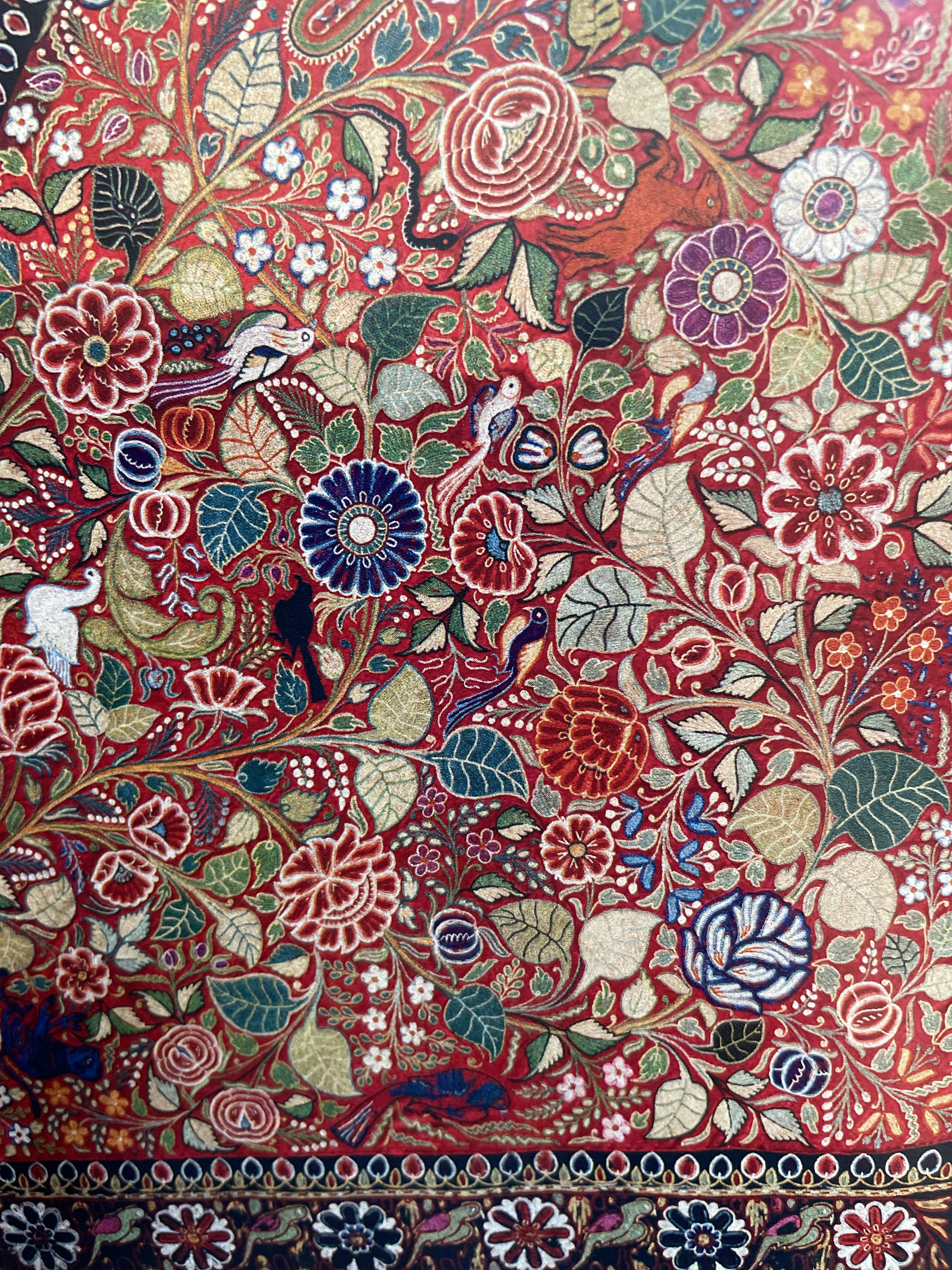
Have you ever been stunned by brightly coloured flowers, vines, parrots, peacocks even elephants, and stories of marriage and other processions, including gods like Ganesha or local warriors, on square or rectangular textiles? Noticed them on ‘lehenga’ and ‘choli’? If you run your hands over the patterns then they seem to come alive! These vignettes of life – like a social media page of today’s influencer – are intricately embroidered textiles by women and men from Gujarat, many centuries ago.
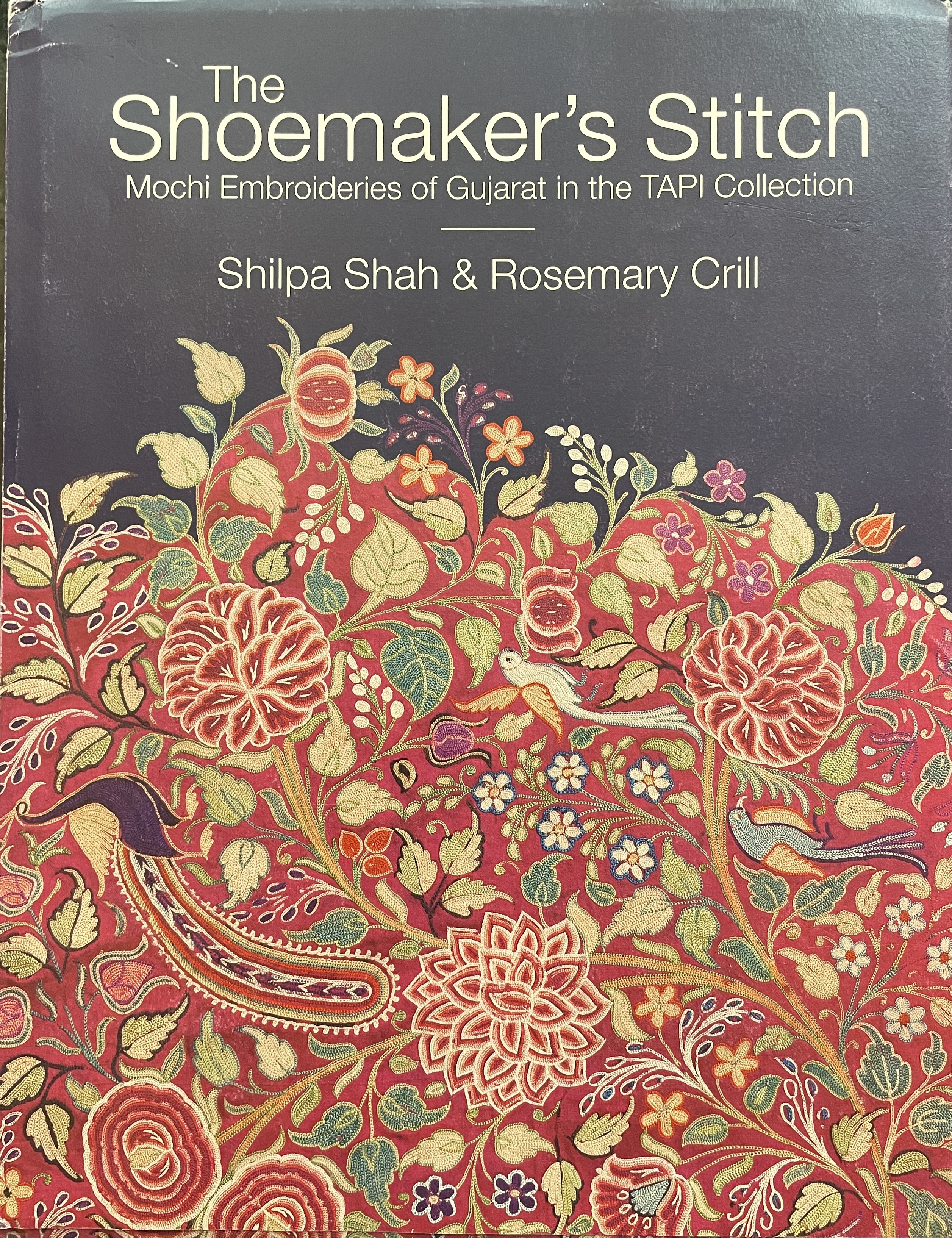
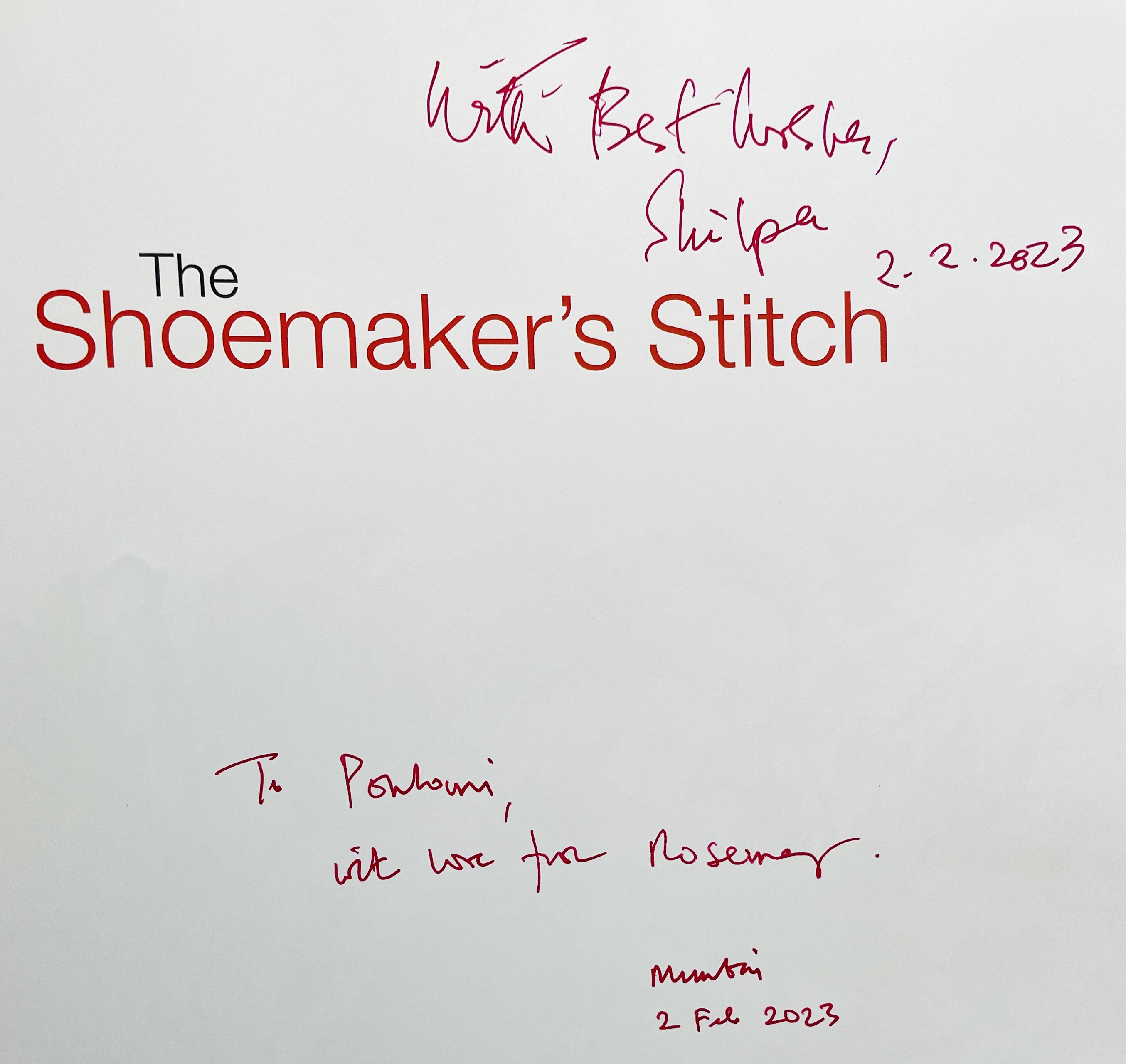
This post is a review of the book ‘The Shoemaker’s Stitch: Mochi Embroideries of Gujarat in the TAPI Collection’, published last year by Niyogi Books. It is as delicately narrated as the embroidery itself by Shilpa Shah and Rosemary Crill. Each page is like another stitch into the past of the embroidery and the lavish photos do justice to the exquisite embroidery. The festive season of India is upon us, and women are digging into their treasure chests for old textiles that are still wearable or can be upscaled.

Mochi embroidery, one of the finest chain stitch embroidery, to have originated from India:
The intensely researched book takes us on a journey into the heart of Kutch, in undivided India of the thirteenth century. Yes, it is more than 700 years that the world learns of this embroidery in a historical context from traveller accounts: we come to know how Marco Polo then had admired leather sleeping mats, believed to have been embroidered at Sindh. In 1518, Portuguese traveller Duante Barbosa and in 1585, Dutch traveller Huyghen Van Linschoten have also referenced it. In 1600-41, British East India Company asked for ‘quilts made about Cambay’ and then also appear in auctions in London. In 1725, Alexander Hamilton writes in ‘A New Account of the East Indies’ that “…(the people of Cambay) embroider the best of any people in India, and perhaps in the world…”
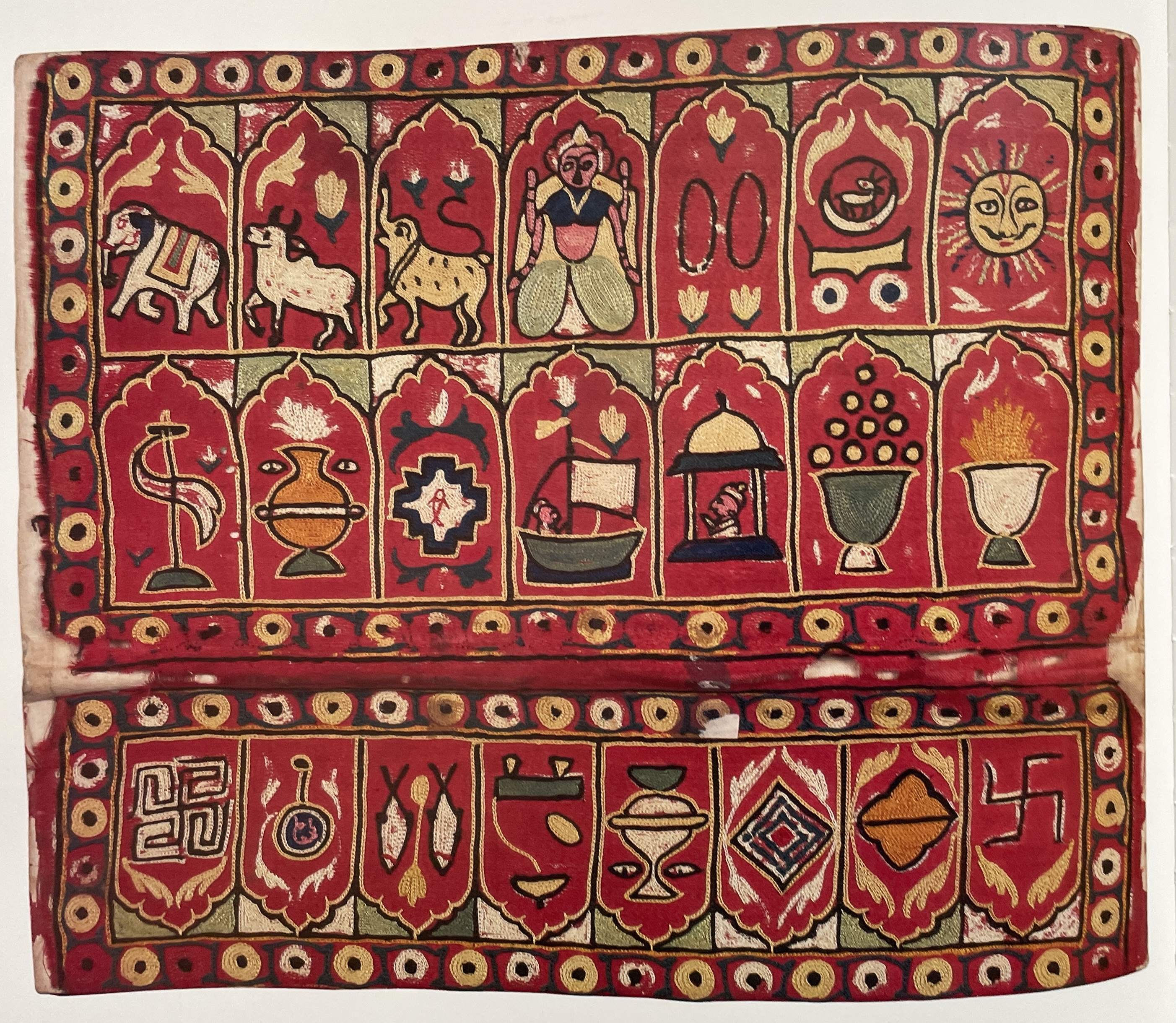
The embroidered textiles had become so endearing to the world over that they turned into a commercially viable consumer item with different traders. Let’s find out how this happened.
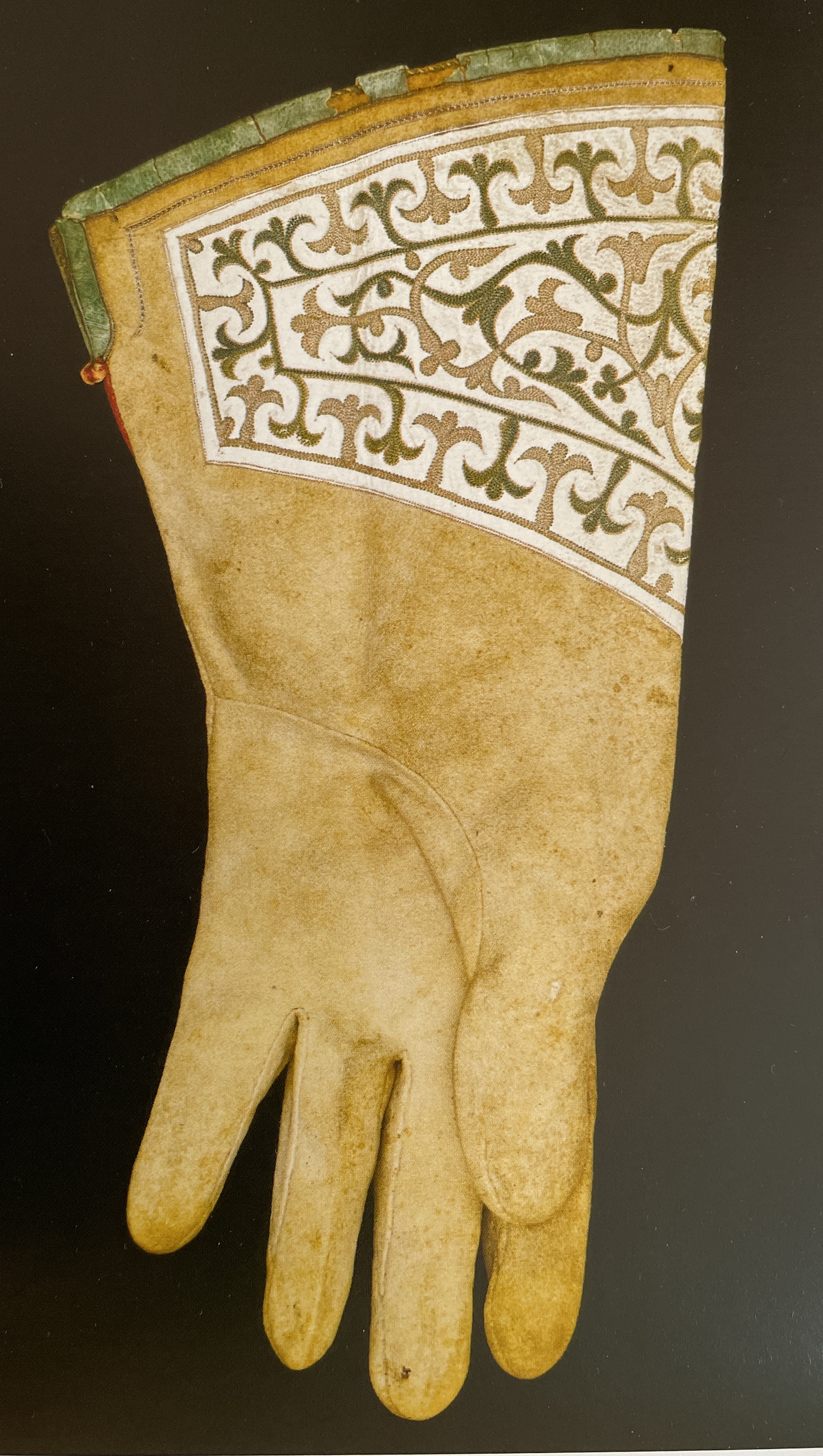
It is widely believed that between 475 – 221 BCE – chain stitch embroidery originated in China, during the Warring States period. Due to being on the trade route, they came to the Indian subcontinent, mainly in the present Sindh region in Pakistan. They were orginally used to decorate footwear and saddles, embroidered by cobblers hence the name ‘Mochi’ embroidery, ‘Mochi’ being the Hindi word for cobblers.
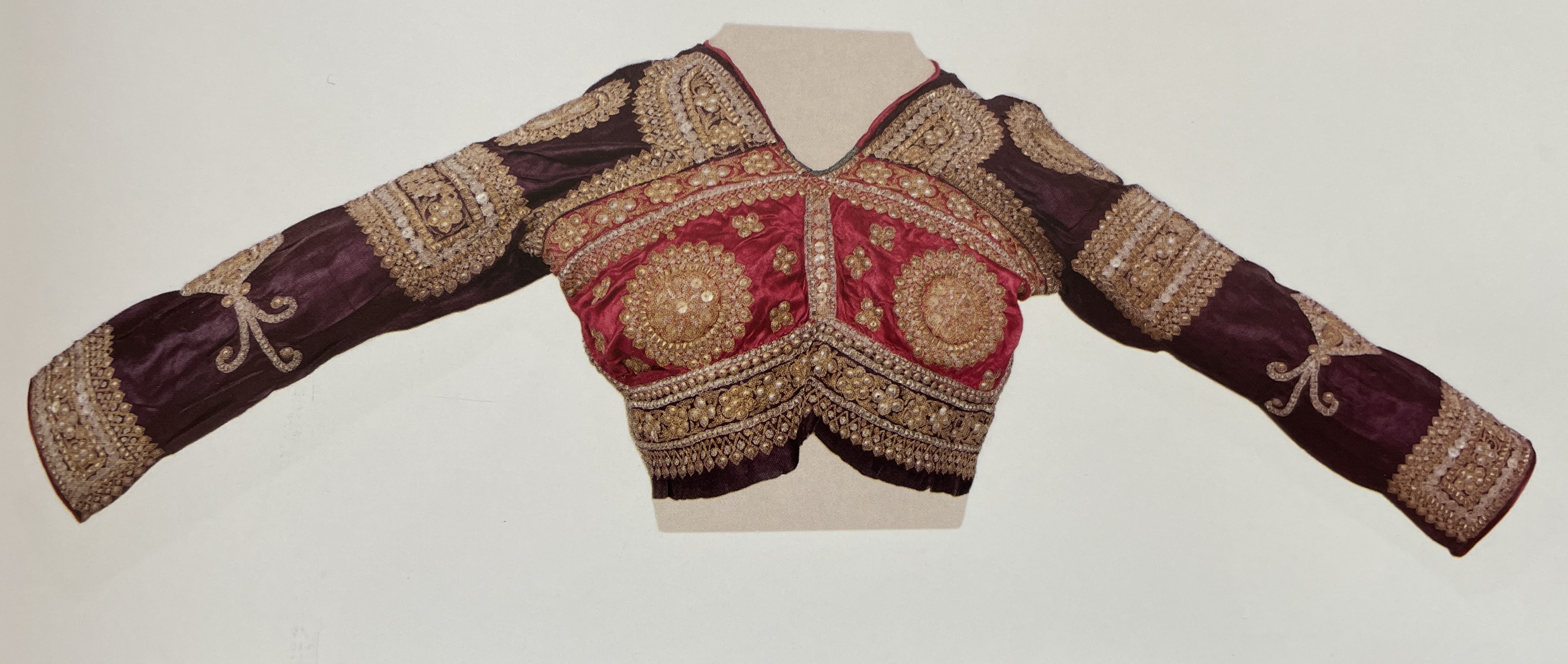
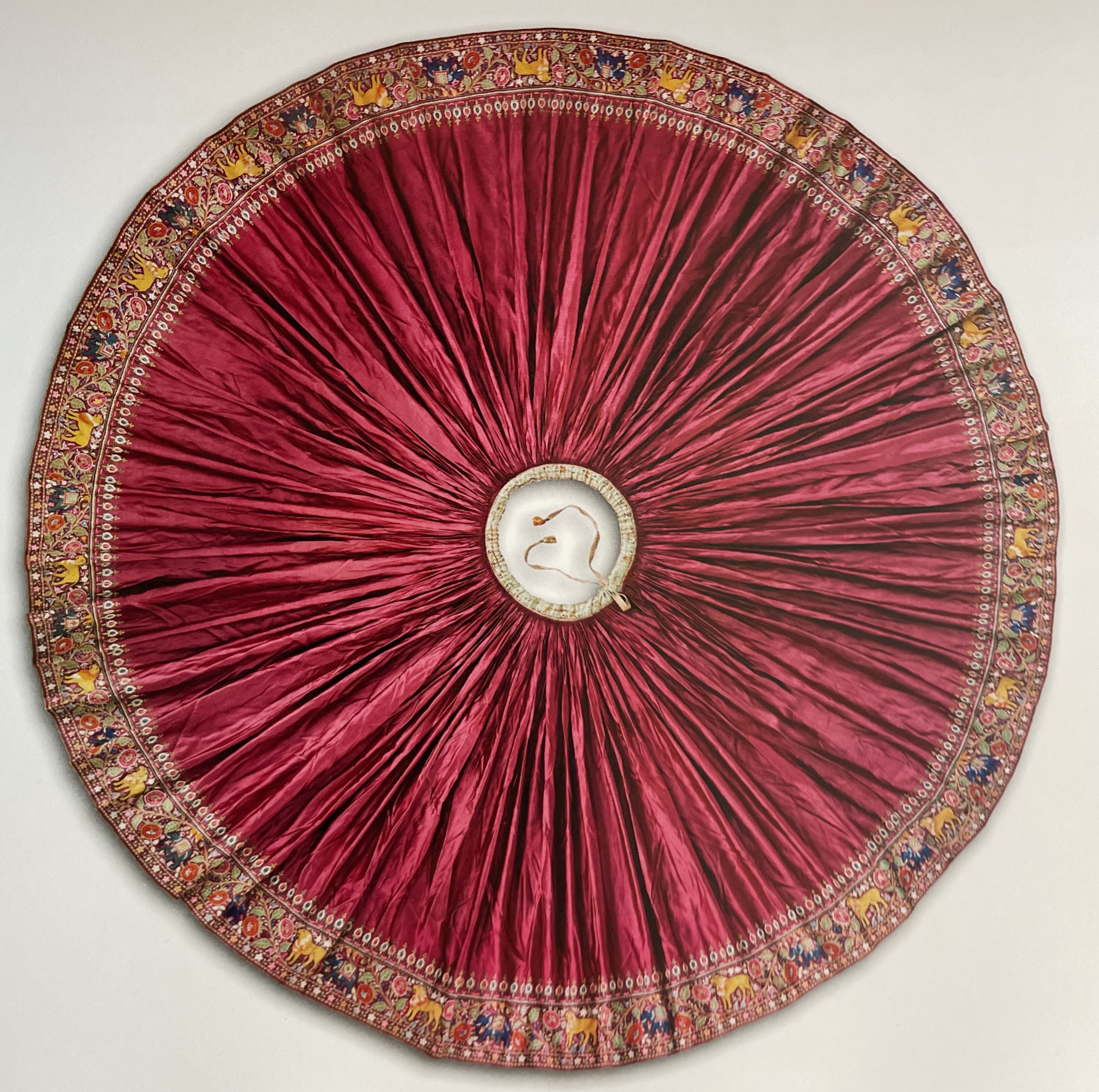
With time, they were used for adorning hunter’s gloves and gloves worn for falconry before transforming for adorning furnishings and women’s garments like ‘ghagra’ or ‘lehenga’, ‘choli’ and ‘odhni’ – Maharani Gangaba, wife of Maharao Khengarji III of Kutch even used this embroidery for horse cover.
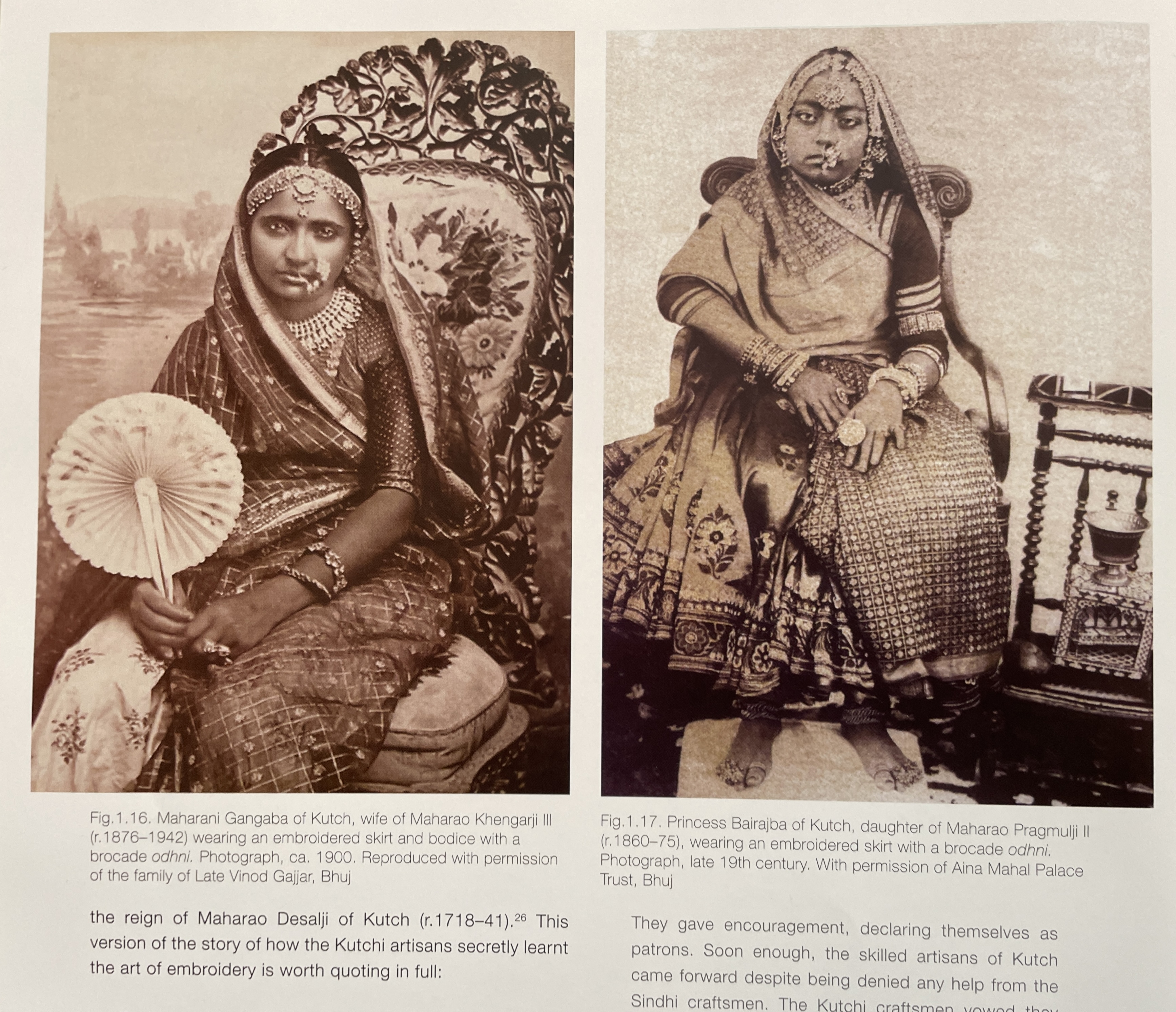
Mystery around how Mochi embroidery came into Kutch from Sindh and how it jumped from gloves worn by men to women’s garments. Read the book for the various theories and facts but let us find out the many uses of this embroidery once it was actively promoted by the rulers of Kutch. Royal family women wore cholis with symmetric patterns on both sleeves while others had left sleeve more embroidery as odhni on right sleeve.
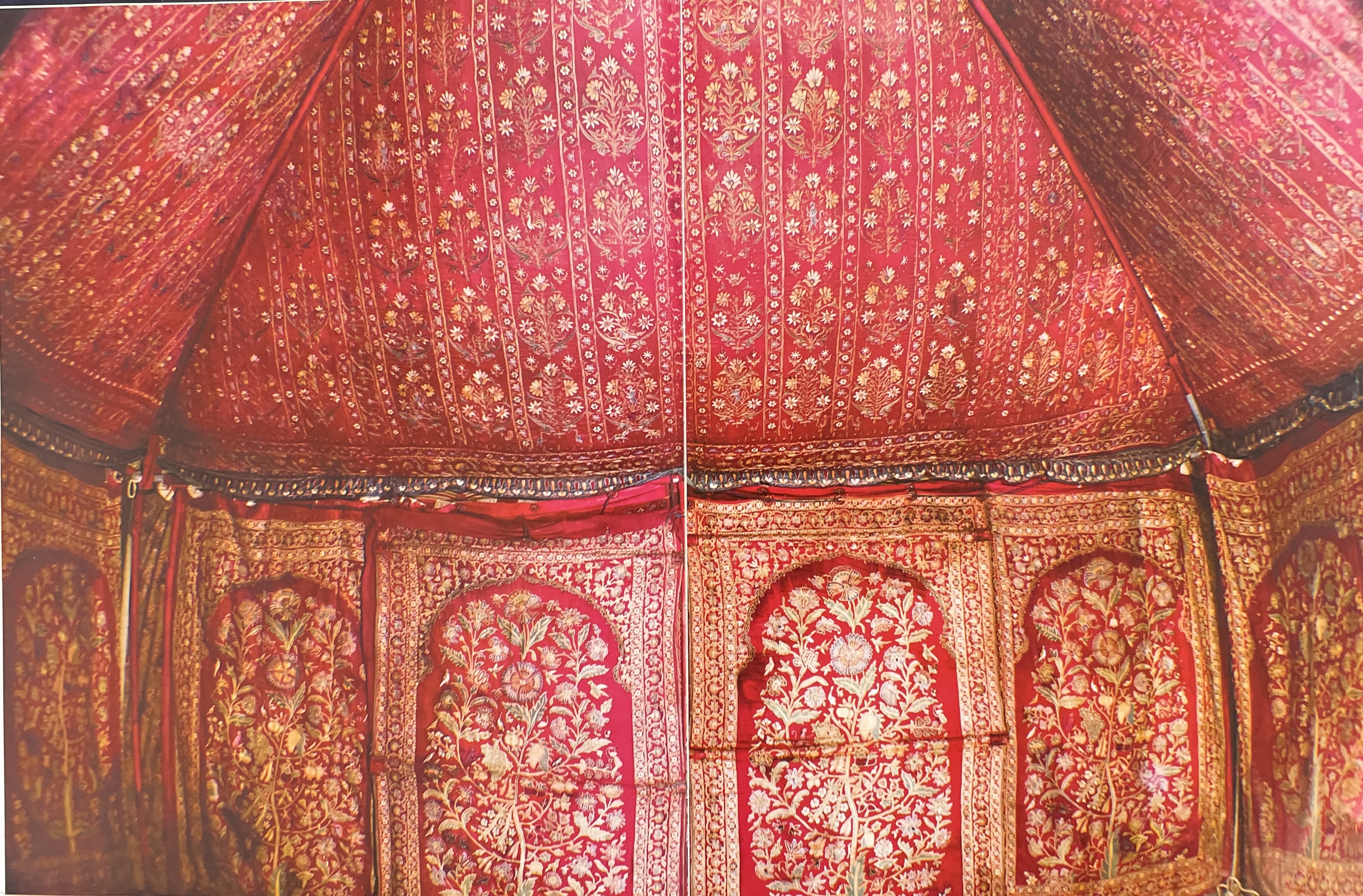
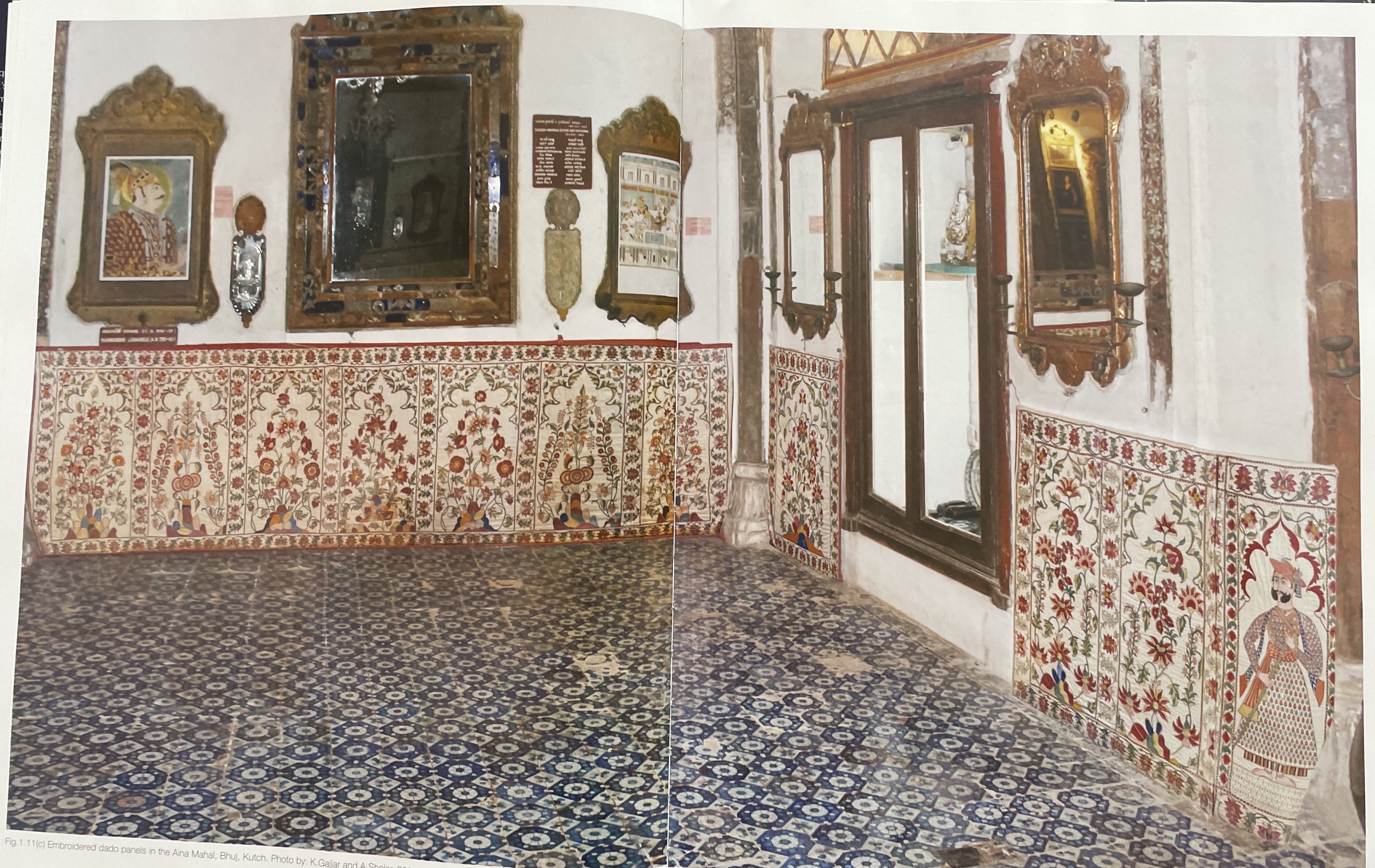
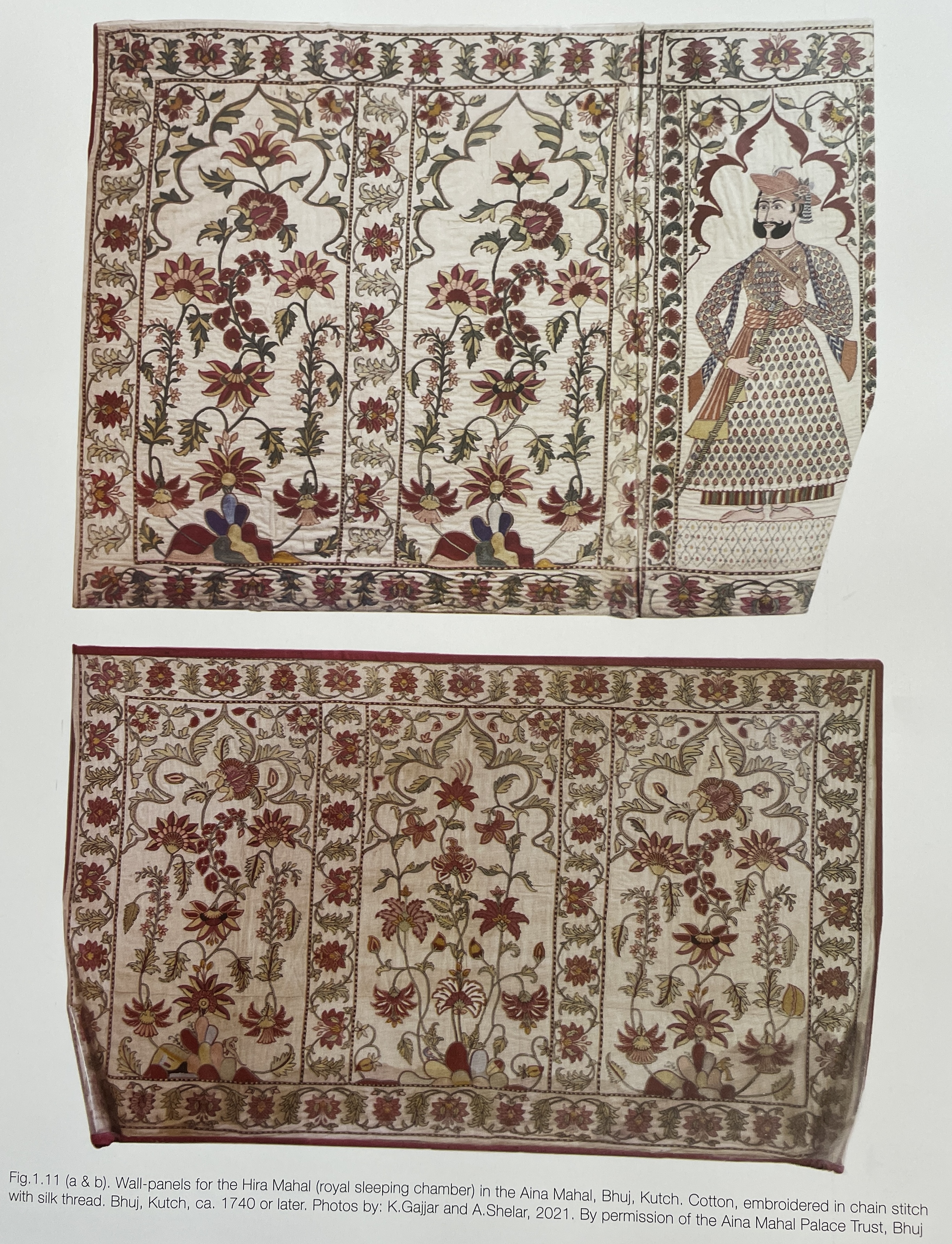
It was so easily adopted in India that we see the most fascinating examples from the Dado panels and palace tent of the Aina Mahal, Bhuj, made in 1750 and the floral tent of Dhrangadhra. I am so excited that the authors have given full-page photos of these tents and devoting so much research on them (all photos here are taken from the book and the colour might differ from the originals).
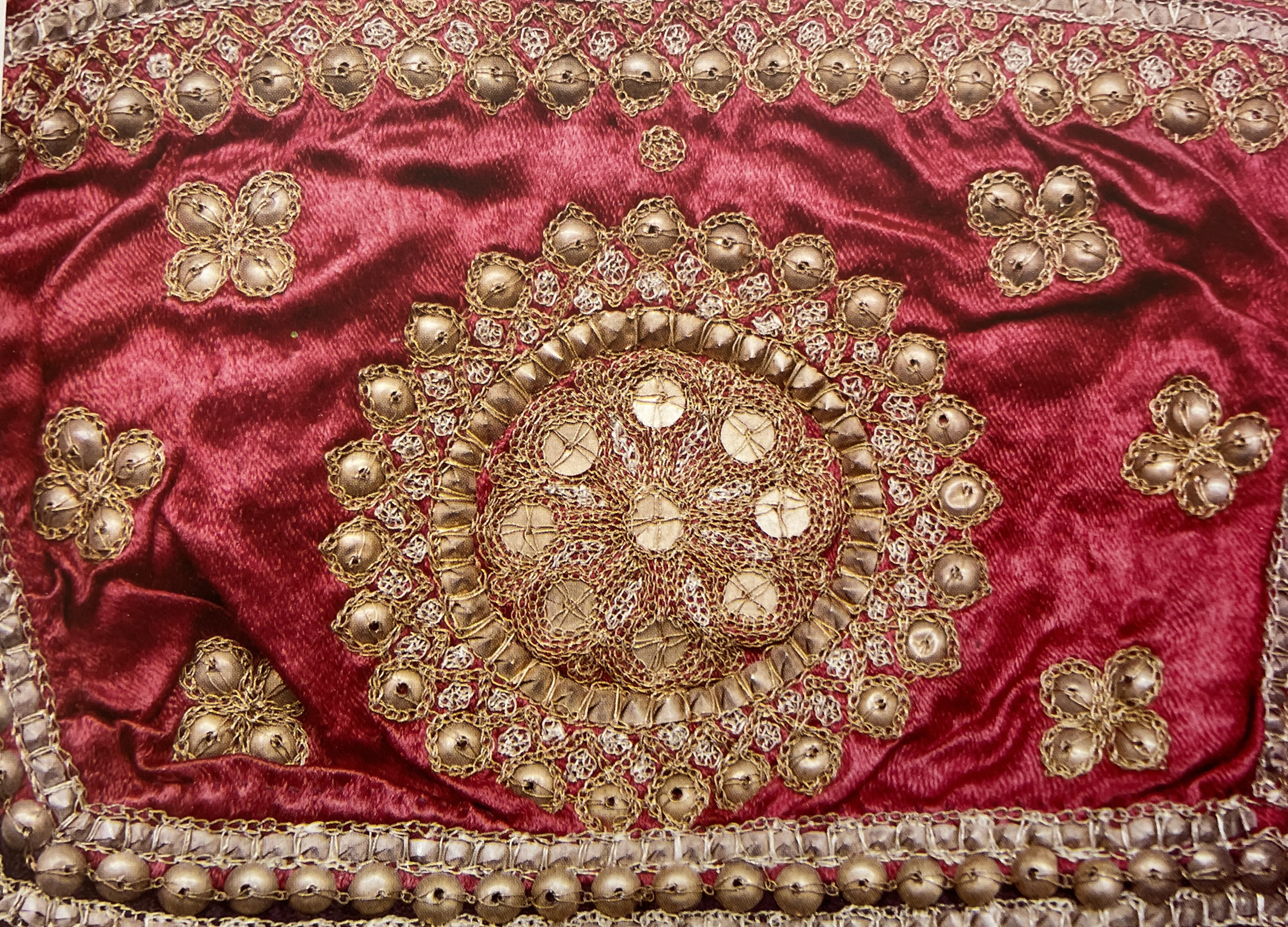
One Mochi embroidered textile piece has been found in Jaipur, Rajasthan, made in 1770. Some of the 17 – 18th century, Mughal textiles that were exported look like Mochi embroidery but are not as they are made using a straight needle unlike a curved one for Mochi. This proves that the demand for this embroidery technique were so high that the supply couldn’t match with the high demand and a similar looking textile was made, probably in less time requiring less skills and craftsmanship.
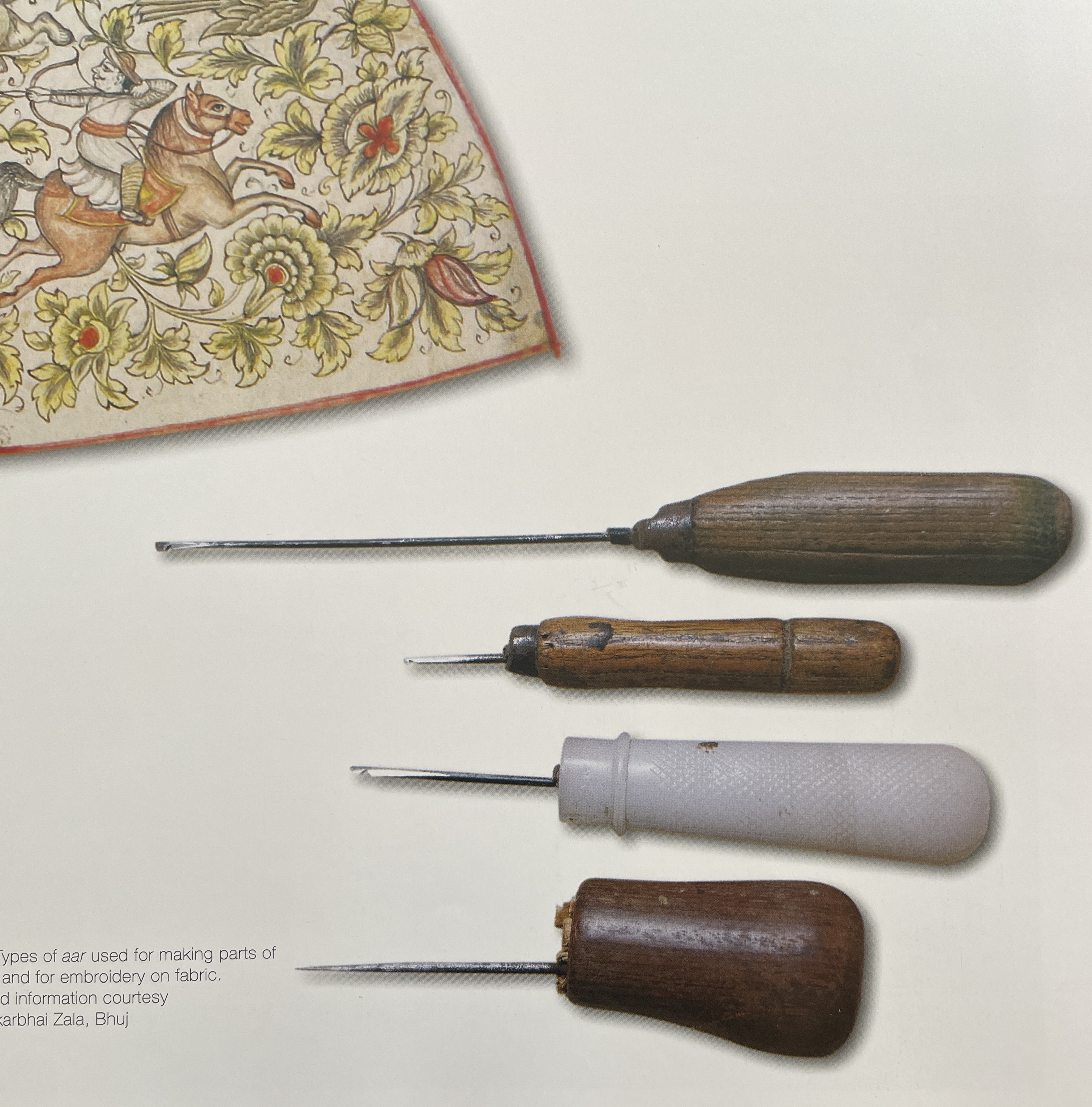
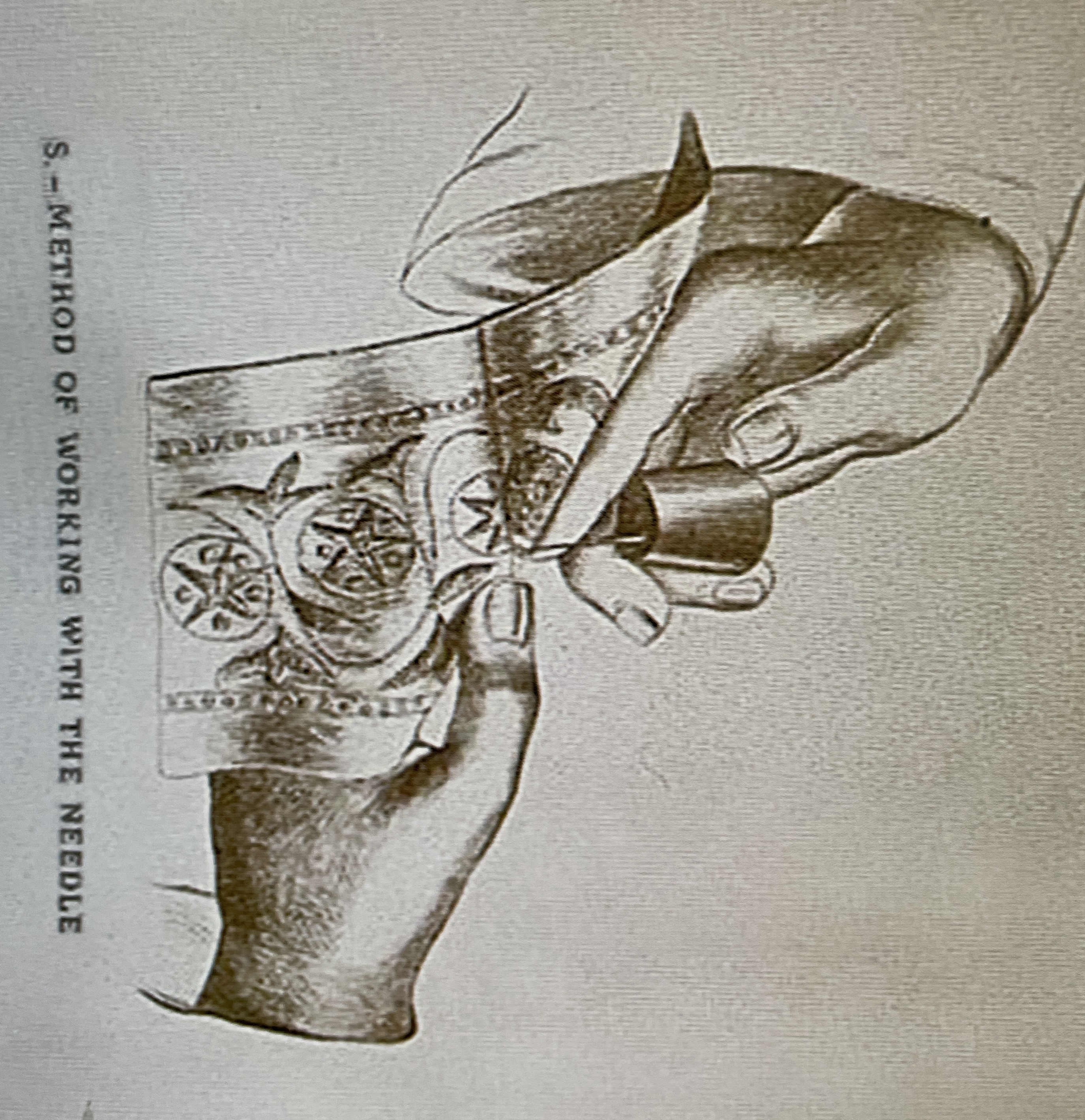
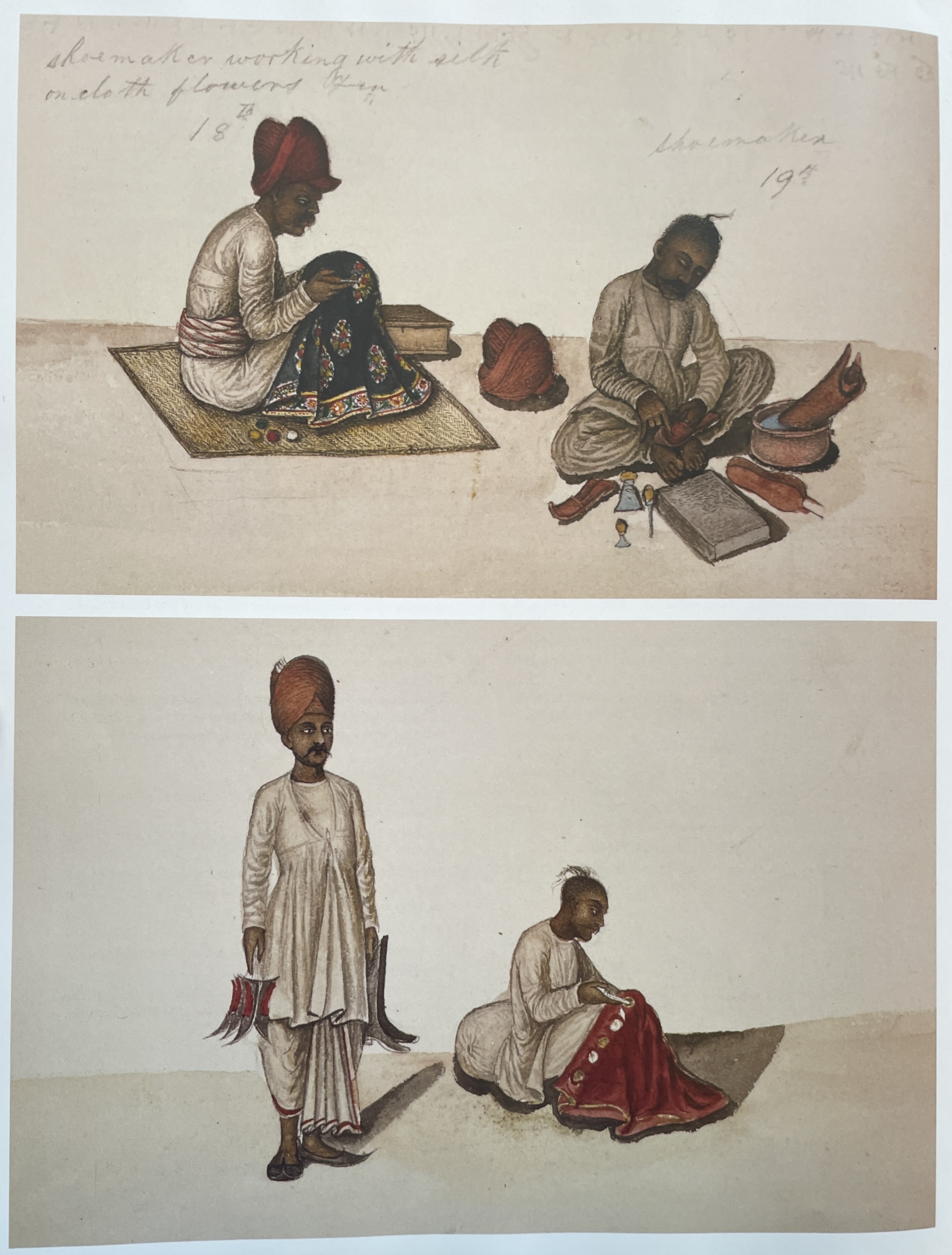
Evidence of Mochi embroidery across India is found in its depiction in the company paintings of the 1830s! At the 1851 Great Exhibition, London, Mochi embroidered textiles pieces that were sent were loved by William Morris and John Ruskin, and in 1856, the ‘Grammar of Ornament’ published by Ewan Jones mentions of the V&A’s Kutchi skirt cloth (which must have reached there from the 1851 exhibition).
But what about the embroiders?
The Kutch rulers were known for being avid patrons of arts and crafts; they promoted not only the products but also sent their craftsmen across the world to learn. The most popular of them was Ram Singh Malam, a craftsman who turned into an architect during his 18-year-old stay in Holland, under the patronage of Maharao Lakhpatji (1941-80) of Kutch.
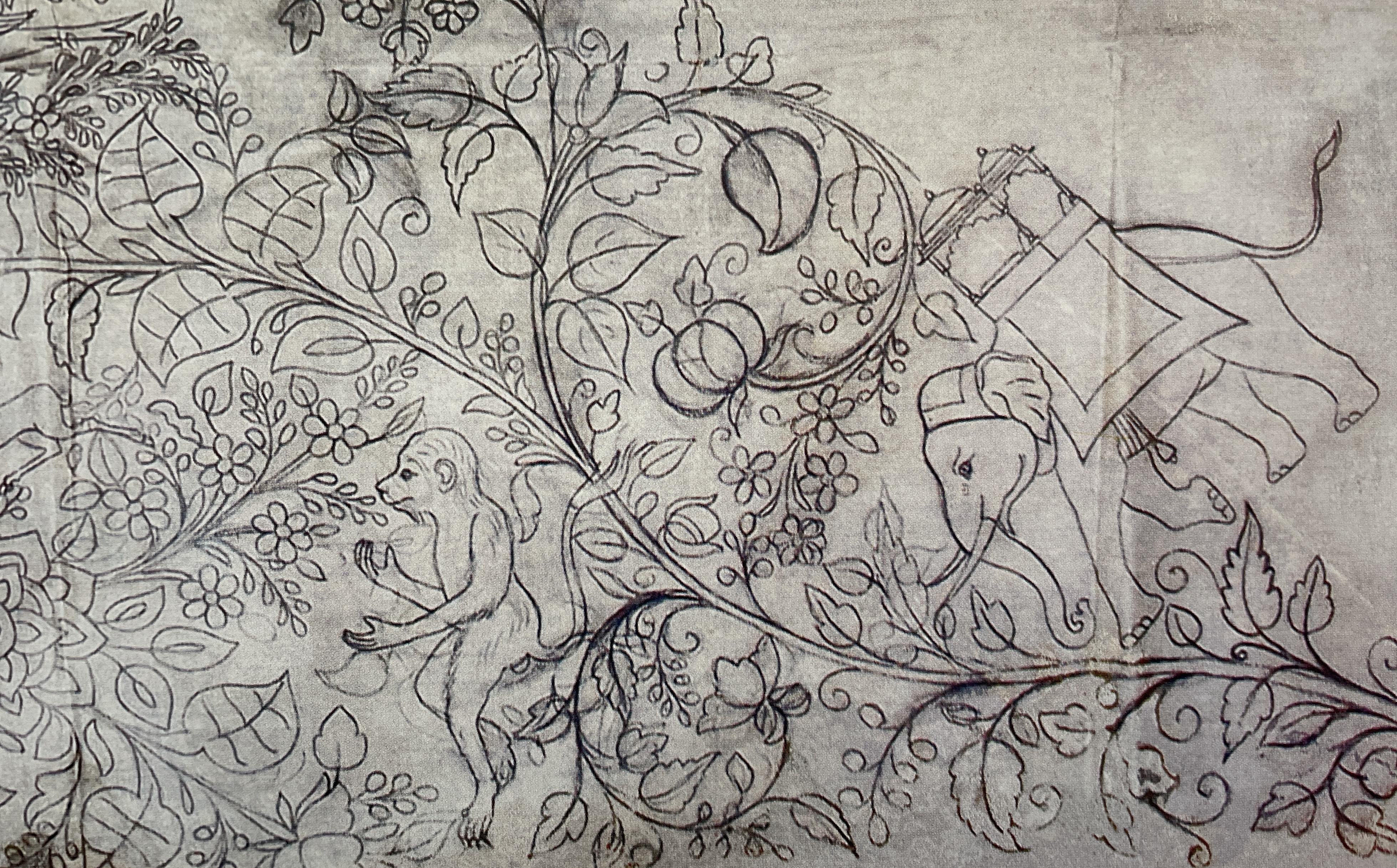
It is interesting to note, from the book, that floral and animal patterns entwined within scrolling views are visible across decorative arts of Kutch. This exchange of designs and patterns took place as the Mochis lived on Mochi Sheri (street) and nearby lived wall painters, ivory carvers, and wood workers, zardozi, silver and gold ornament workers. Their own family members crafted repoussé silver, gold and enamel ware, we are aware that Oomersi Mawji – made Kutch work internationally acclaimed in silverware.
The book informs that initially most of them were Muslim men, later even Hindu men joined. The ‘Gazetteer of the Bombay Presidency’, 1880, mentions there were 1, 237 ‘Mochis’. In the 1930s, the royal states of Mysore, Ramnad, Tellicherry and Travancore presented gold medals to Mochi embroiderers.
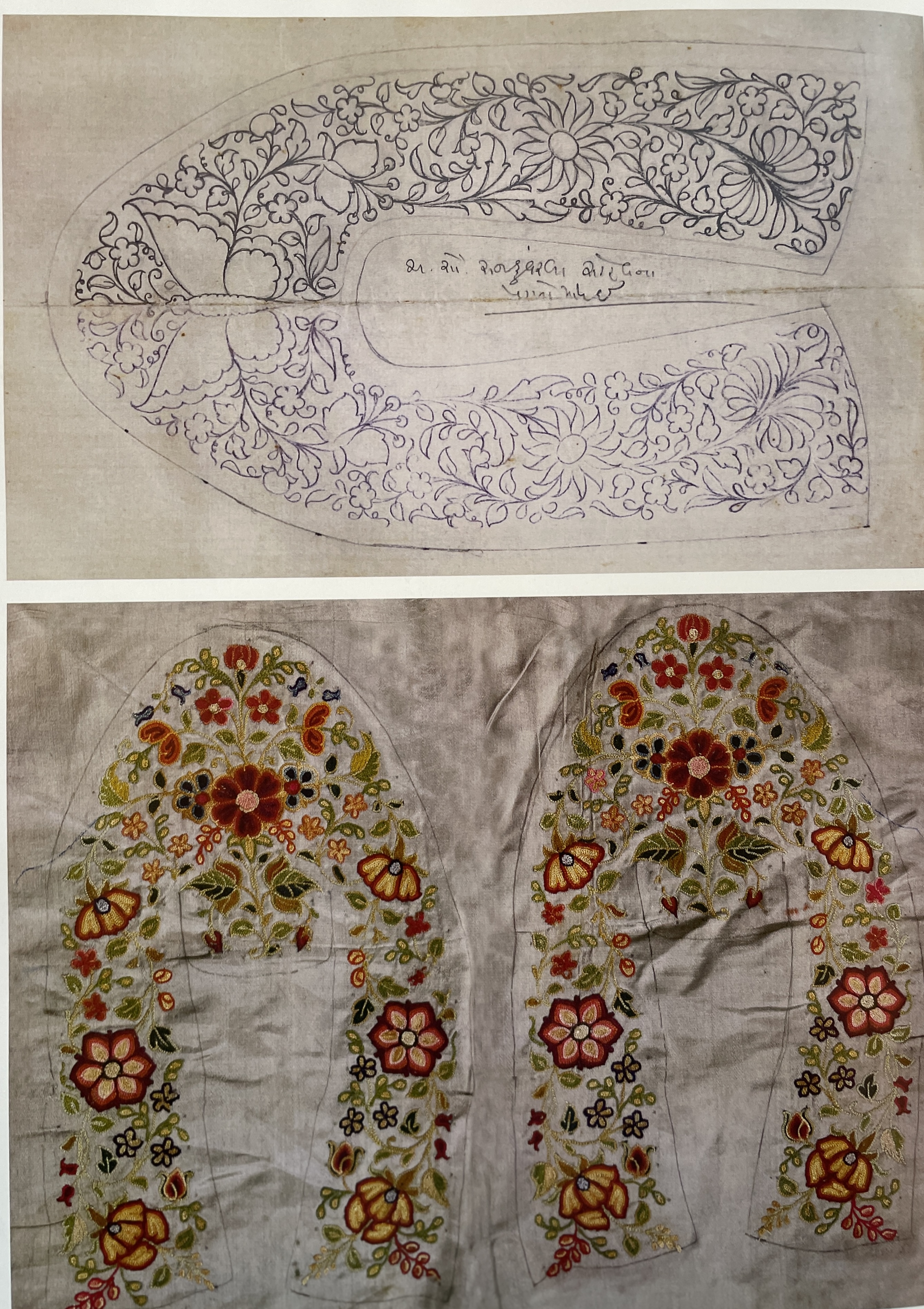
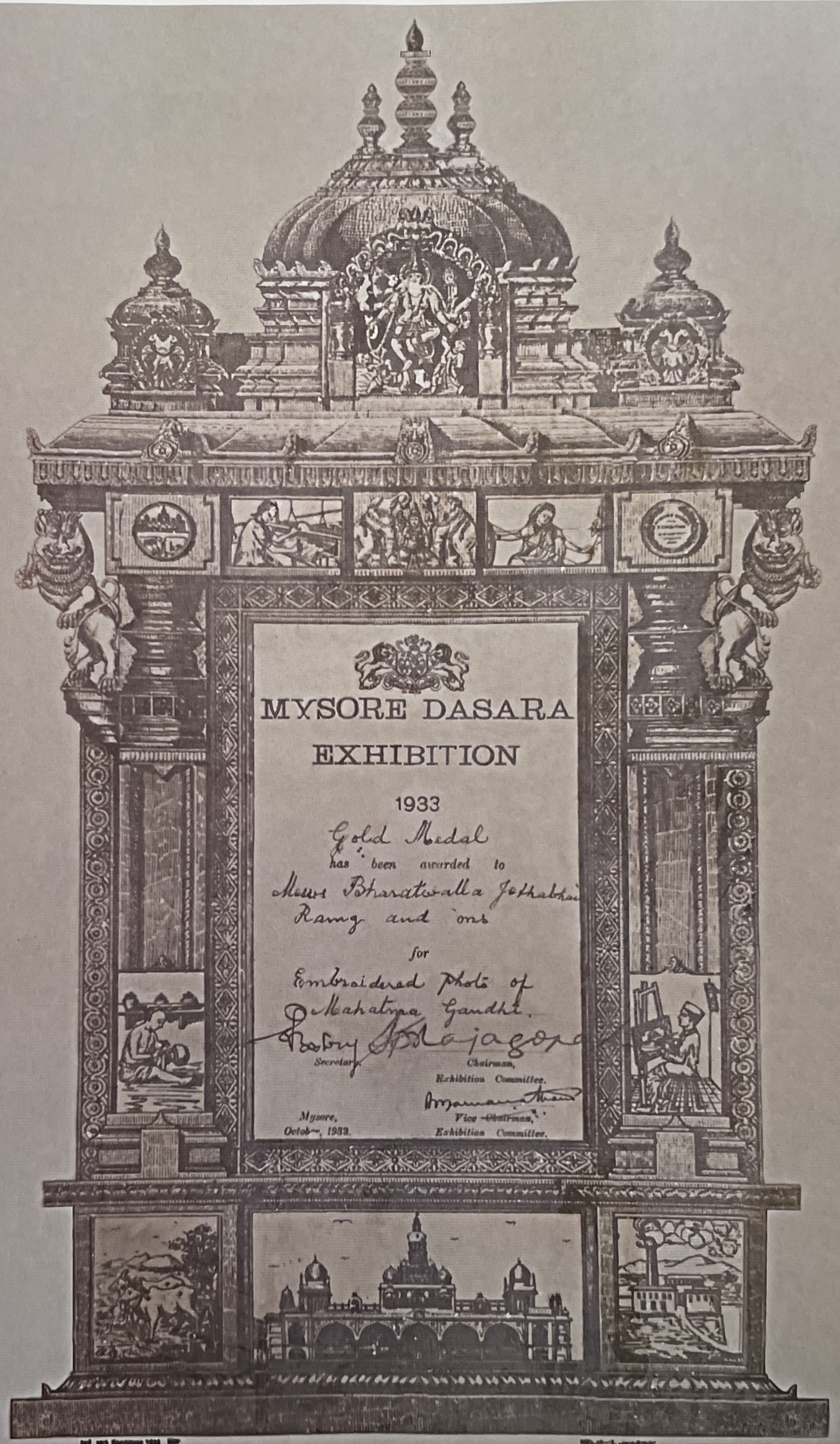
What happened next?
The book travels to the next phase of the embroidery, during and post independence era and records the names of Kavisandas Gopalji Hansari (1843 – 1937/8) as the last Mochi embroiderer in service of Kutch Maharao Kheryarji III. It also tells us that the last professional was Hansraj Jethabhai Bharatwala in1966. The shop made by his grandfather Ramji Parshootam’s in 1866 still stands! Don’t miss it in your next trip to Kutch.
We are immensely grateful to Mubhankar Zala who runs the oldest shoe shop in Bhuj and had compiled a list of female workers. We learn from it that Jethiben, wife of Jethabhai Ramjibhai Bharatwala, taught women and was the only woman to receive royal commissions!!!
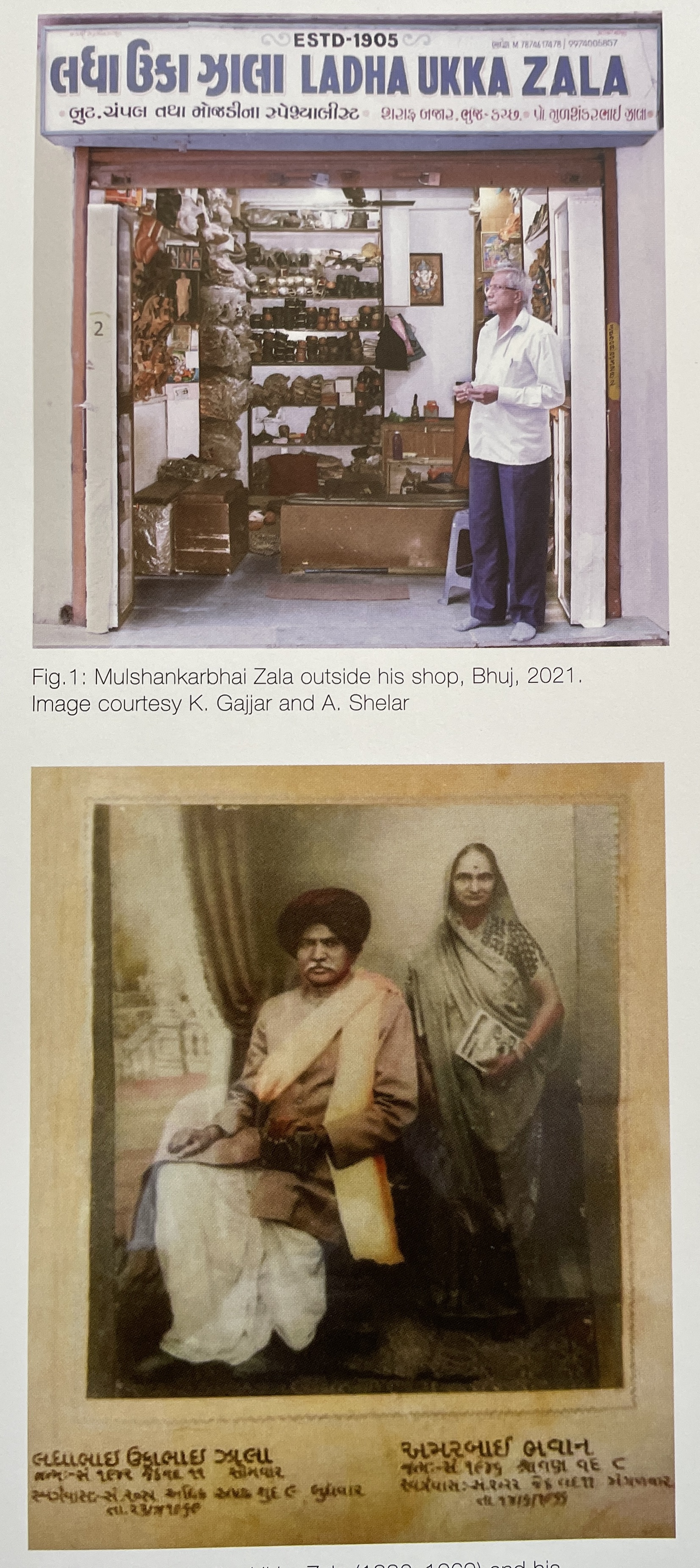
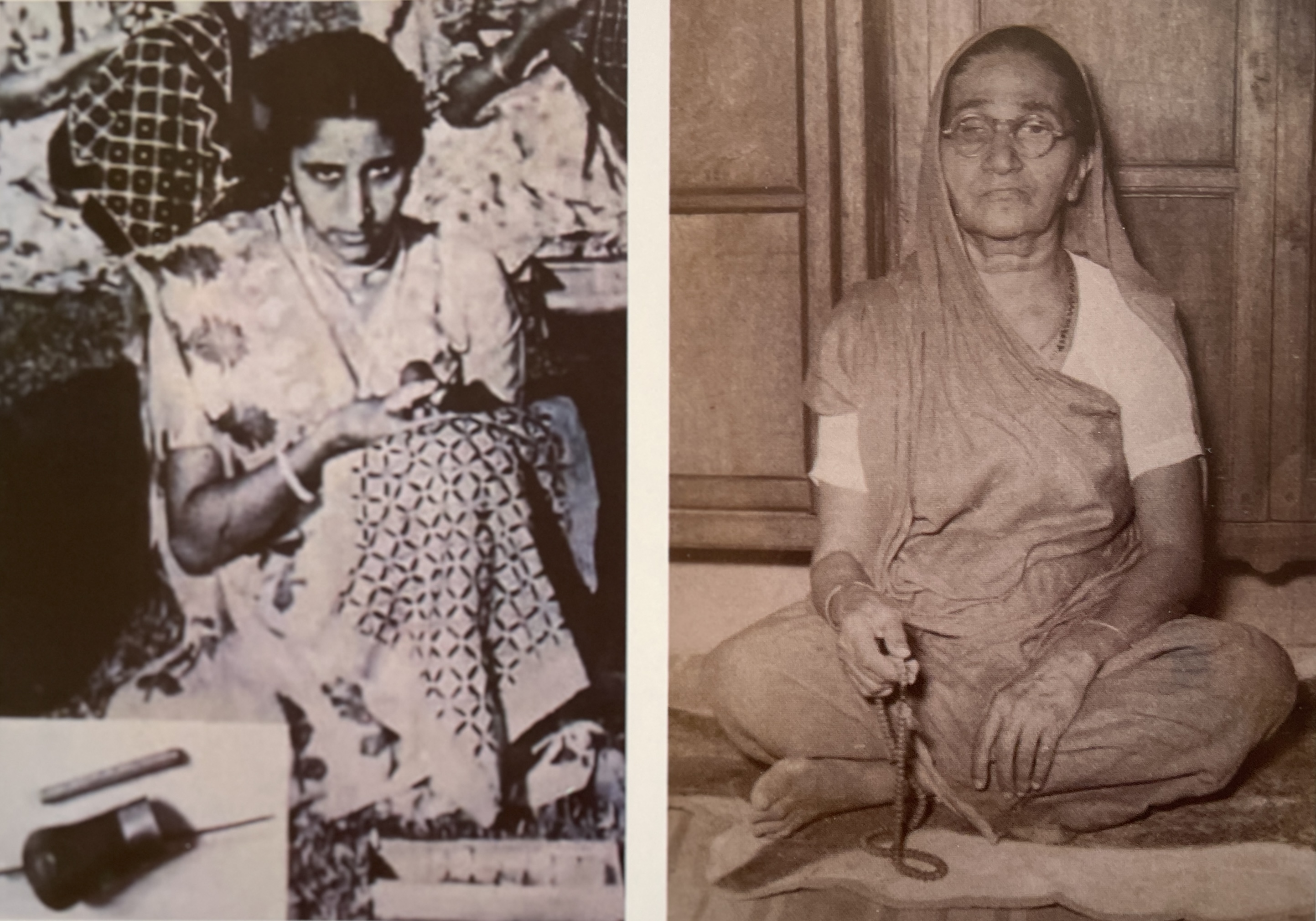
It was quite a revelation to learn that the Mochi Sheri had 30 – 40 families living there prior to 2001 earthquake – now has none. The families that once competed with the world’s best embroidery craftspeople no longer practice this technique and most are not associated with the original profession of Mochi or cobbling anymore.
This leads us to the difficult question – has this exquisite embroidery died out???
But, the book delights us with the names of the contemporary embroiders spread across Rajasthan and Gujarat. I am really lucky to have seen and admired the fantastic creations of both Asif Shaikh and Arun Virgamya. Interestingly, Asif is a trained interior designer but a self-taught embroiderer! Arun mainly works in ‘aari – bharat’ embroidery – both Asif and Arun operate their ‘karkhana’ or workshops in Ahmedabad, Gujarat.
We are also informed that Adam Sangar, another non Mochi, had successfully set up his workshop in Kutch, where he embroidered narrative elements into his chain stitch composition. Presently his sons, widow and daughter also are integral to the workshop. Tariq Khan is based in Japan, he is the son of Chamar Khan, a traditional craftsman.
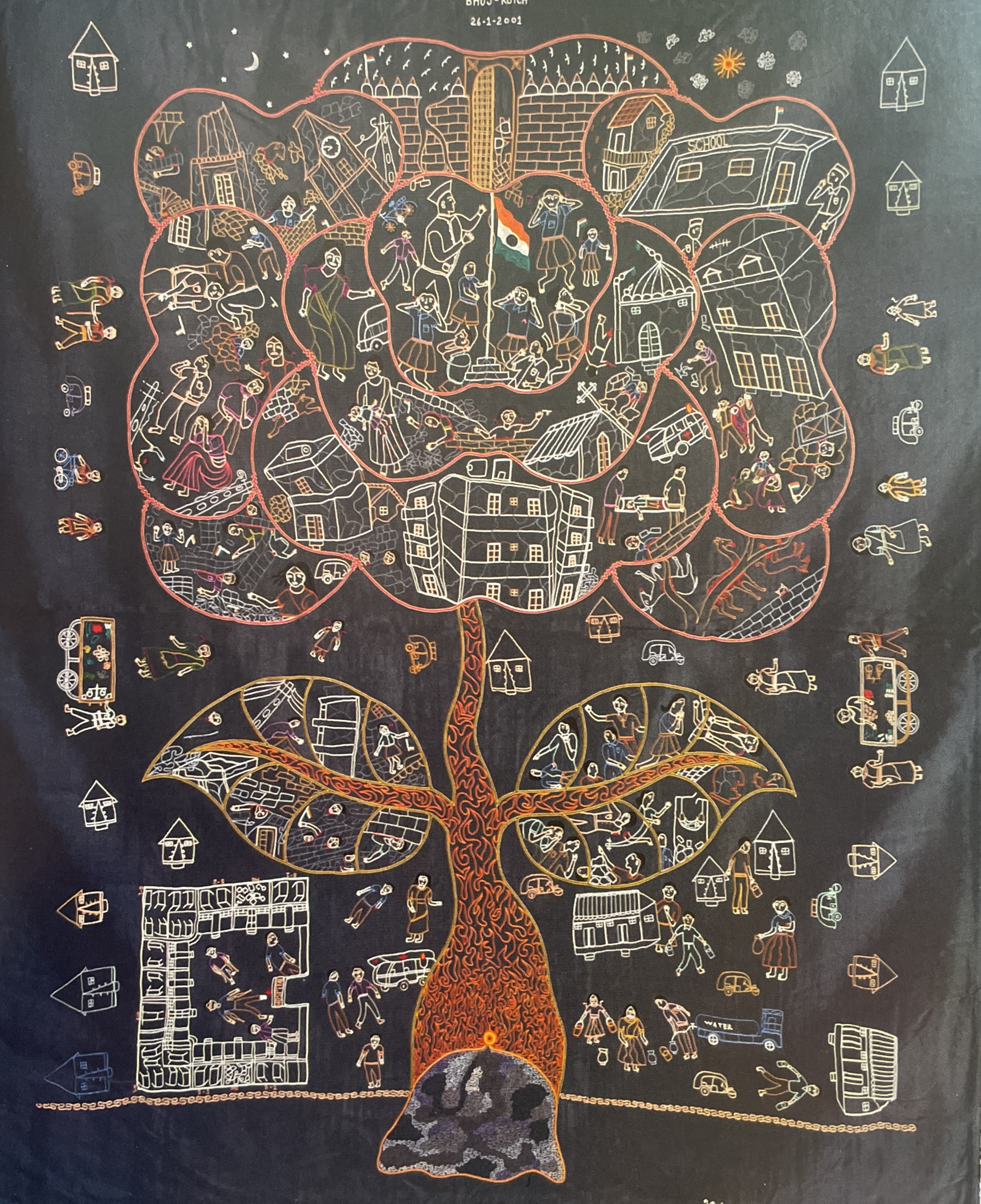
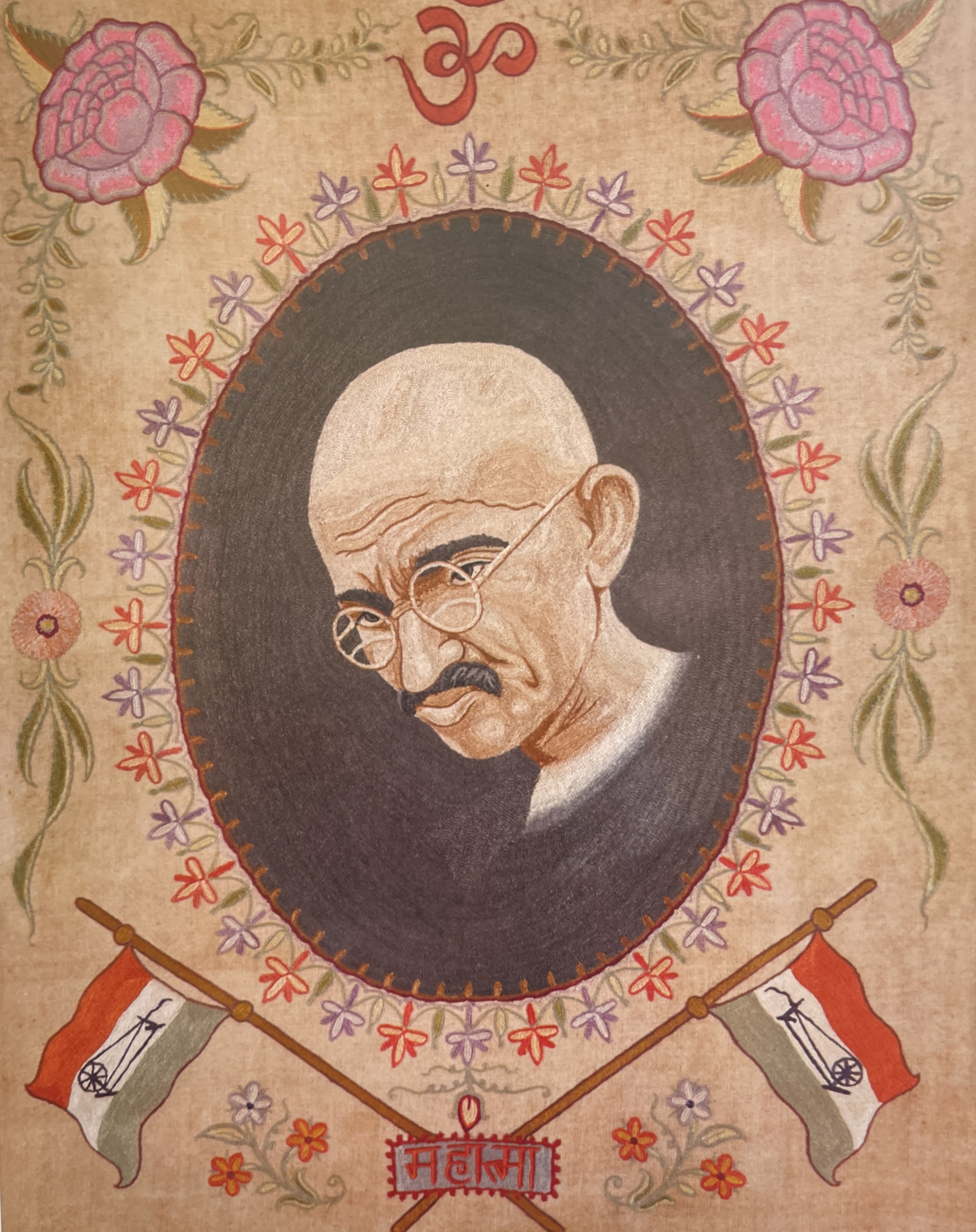
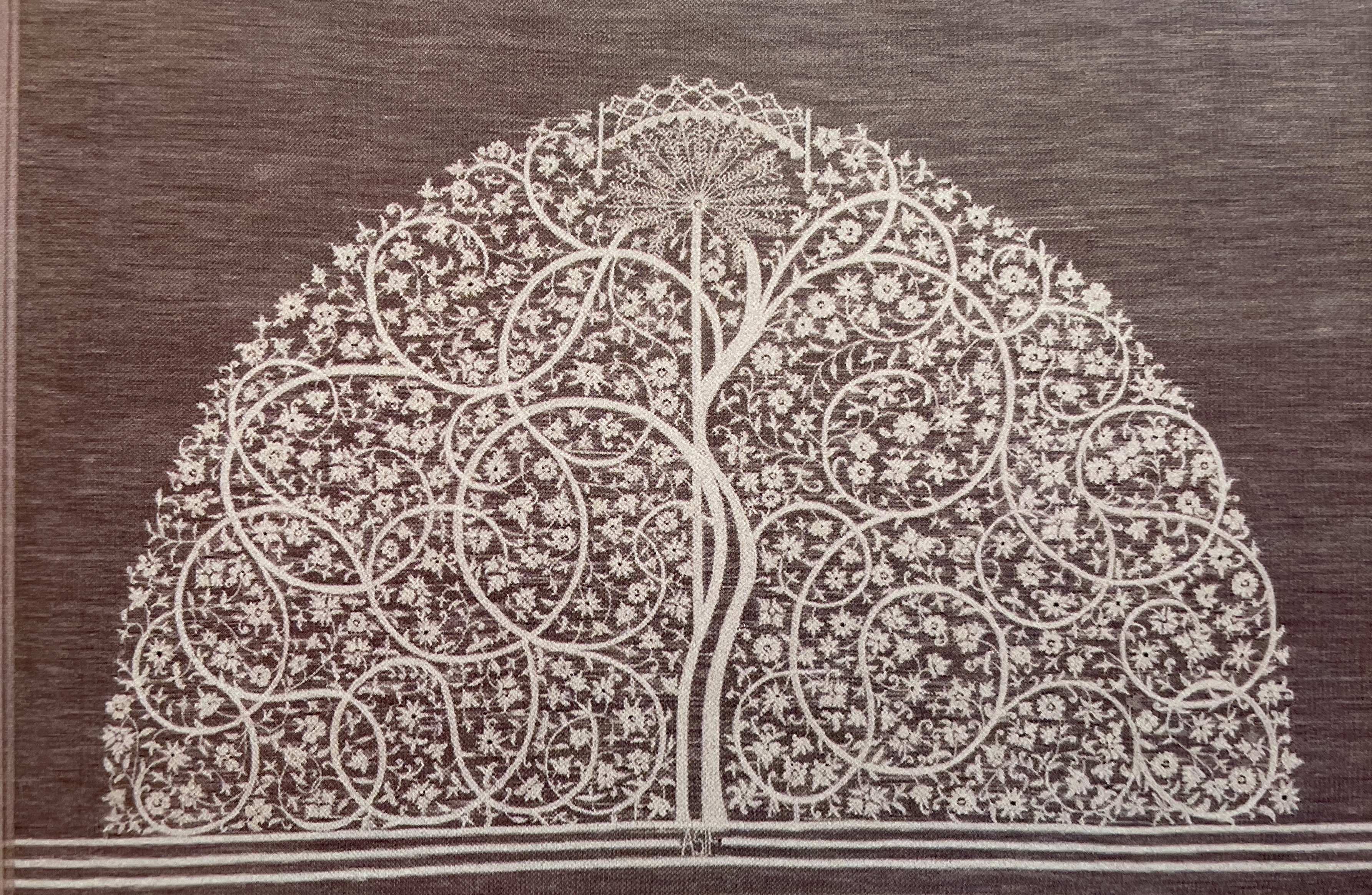
We are extremely fortunate that museums like Calico, Ahmedabad, and Living and Learning Design Centre, Kutch, have their work. However, I would like to add that museums like Shreyas, the Gallery of Family Heirlooms at House of MG – both at Ahmedabad, and the Crafts Museum, New Delhi, also have some striking examples of the traditional Mochi embroidered textiles, made a few centuries back.
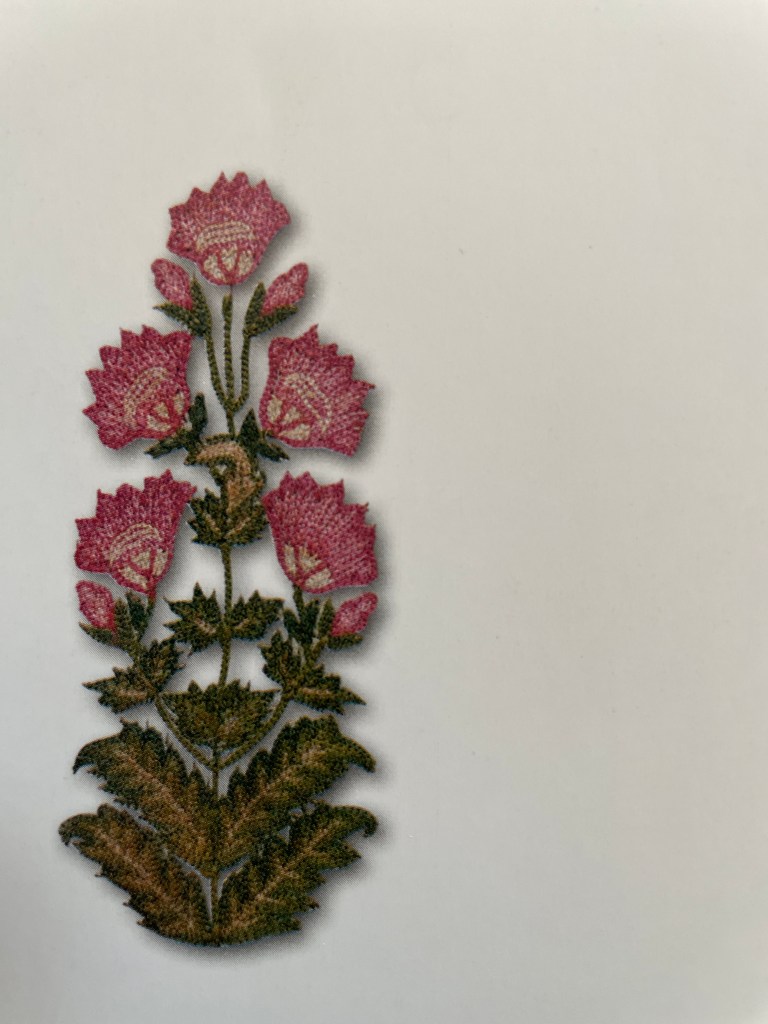
I recommend libraries and individuals to purchase this book to study the evolution of Mochi embroidery, to appreciate the incredible work done by the embroiderers, for the super awesome photographs of old textiles that will help students and crafts communities build their design repertoire, and residing in their own places find inspiration.
I especially thank the authors Shilpa Shah and Rosemary Crill for their hard work and dedication in bringing alive this technique through meticulous research. The book is written in a style that is easy for everyone to understand and designed such that the photographs and text beautifully coordinate. The bibliography of the book is a treasure like the book itself.
Gratitude to Niyogi Books for publishing yet another masterpiece and, to Shilpaben for requesting me to review it.
Future is bright:
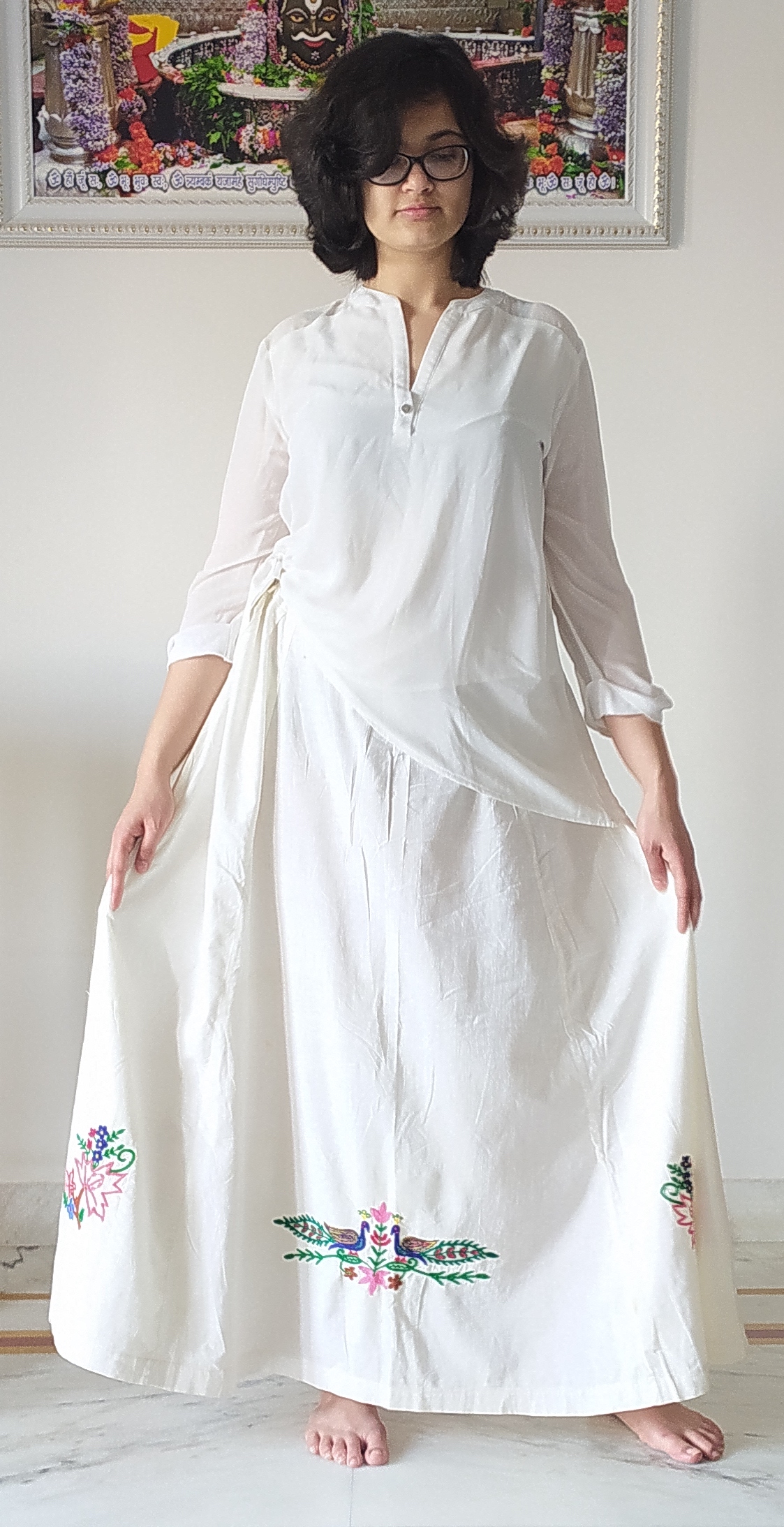
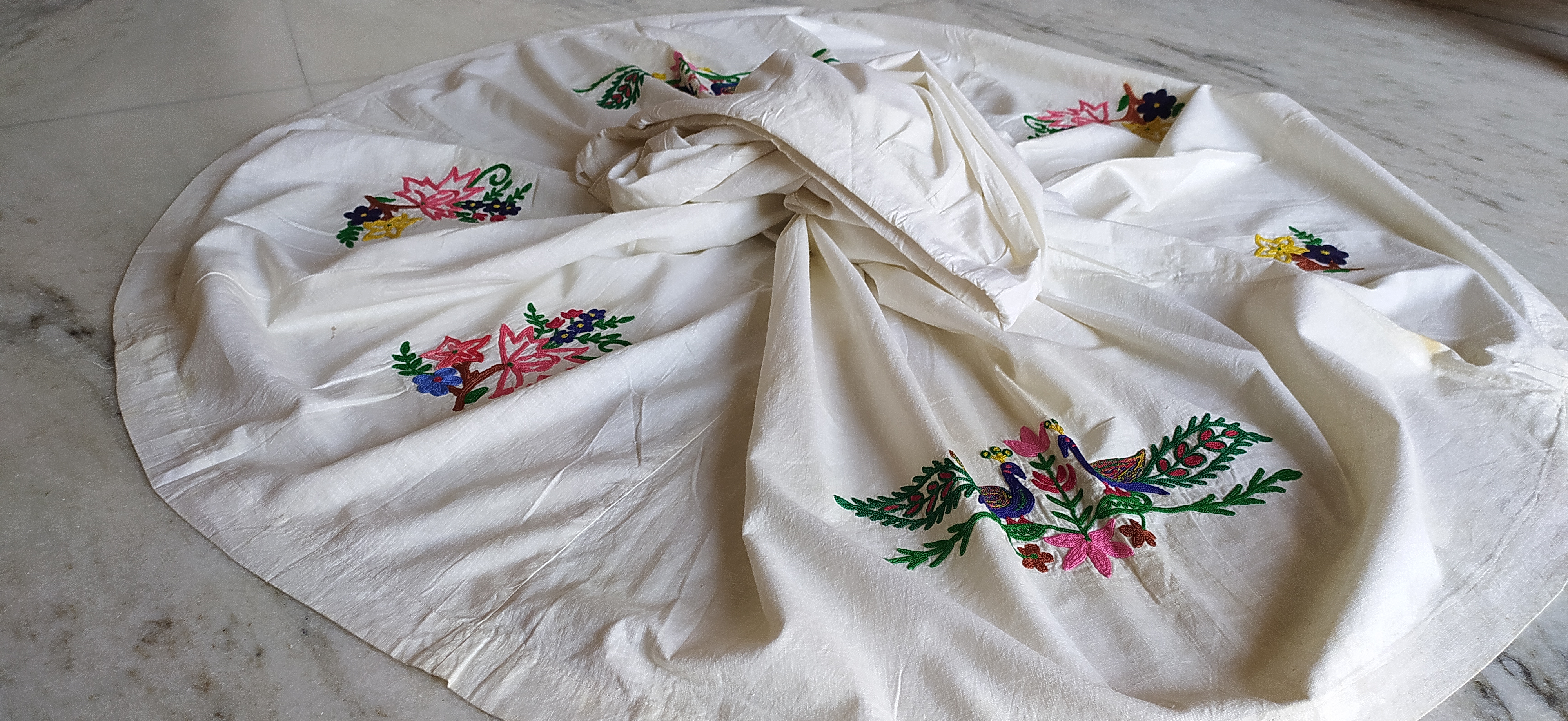
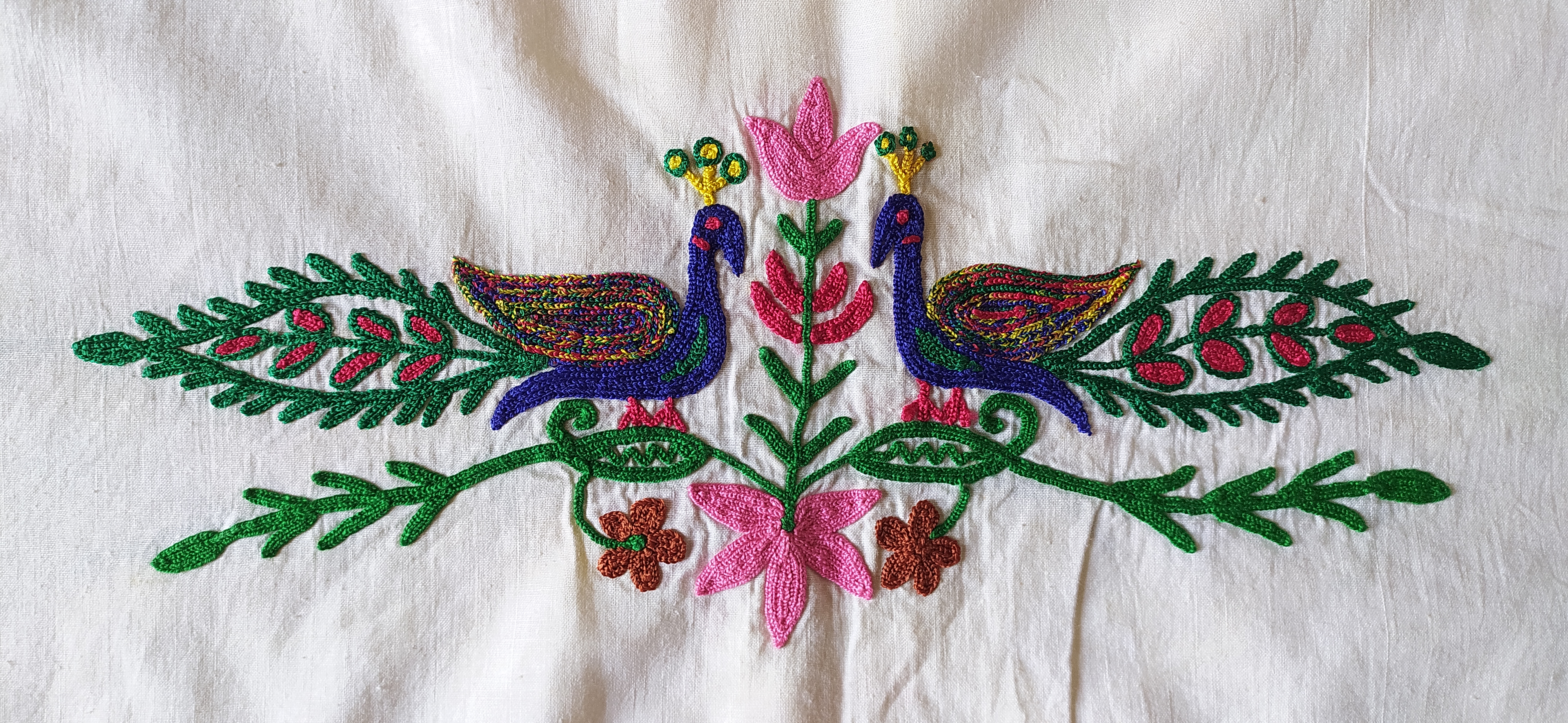
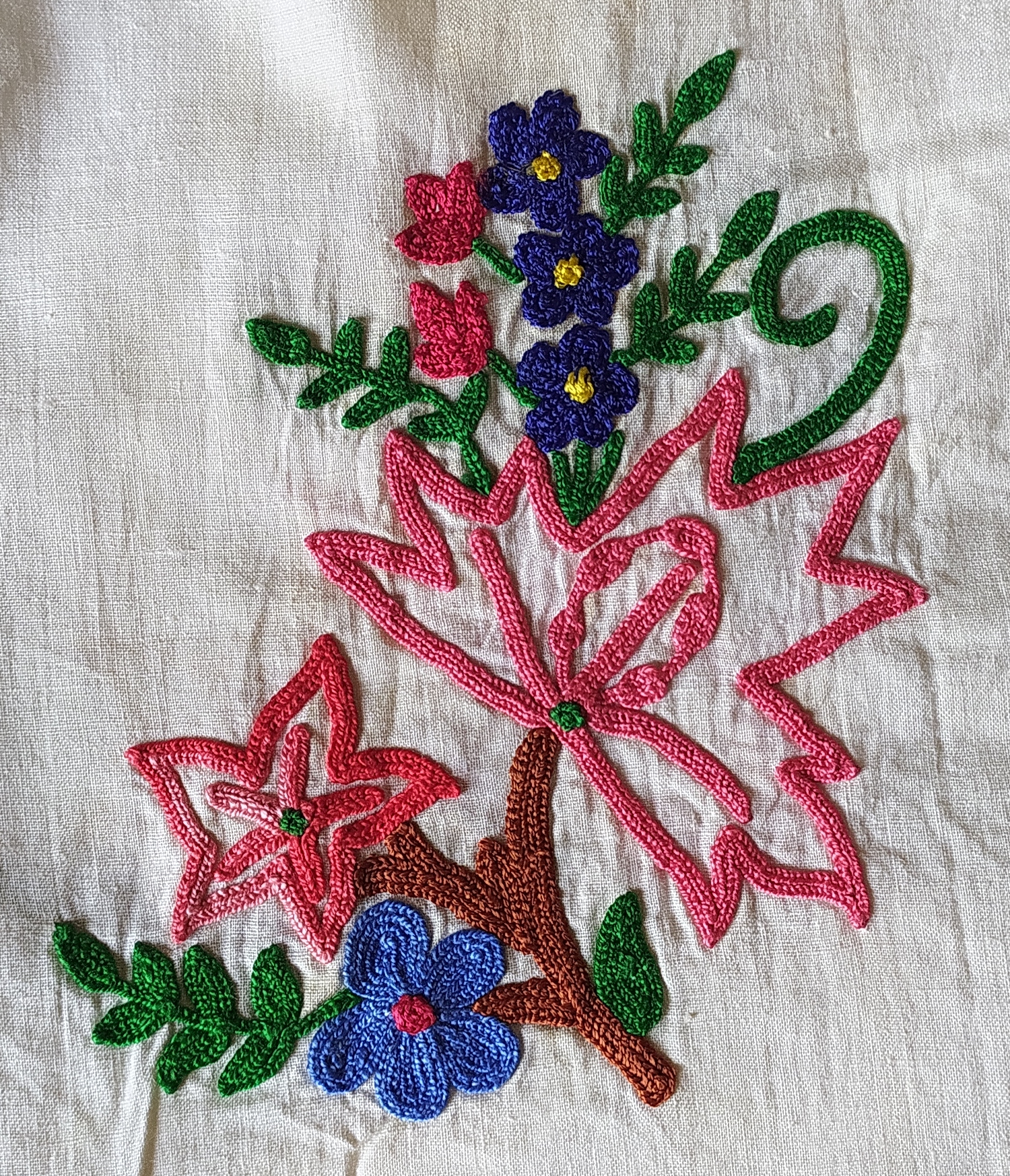
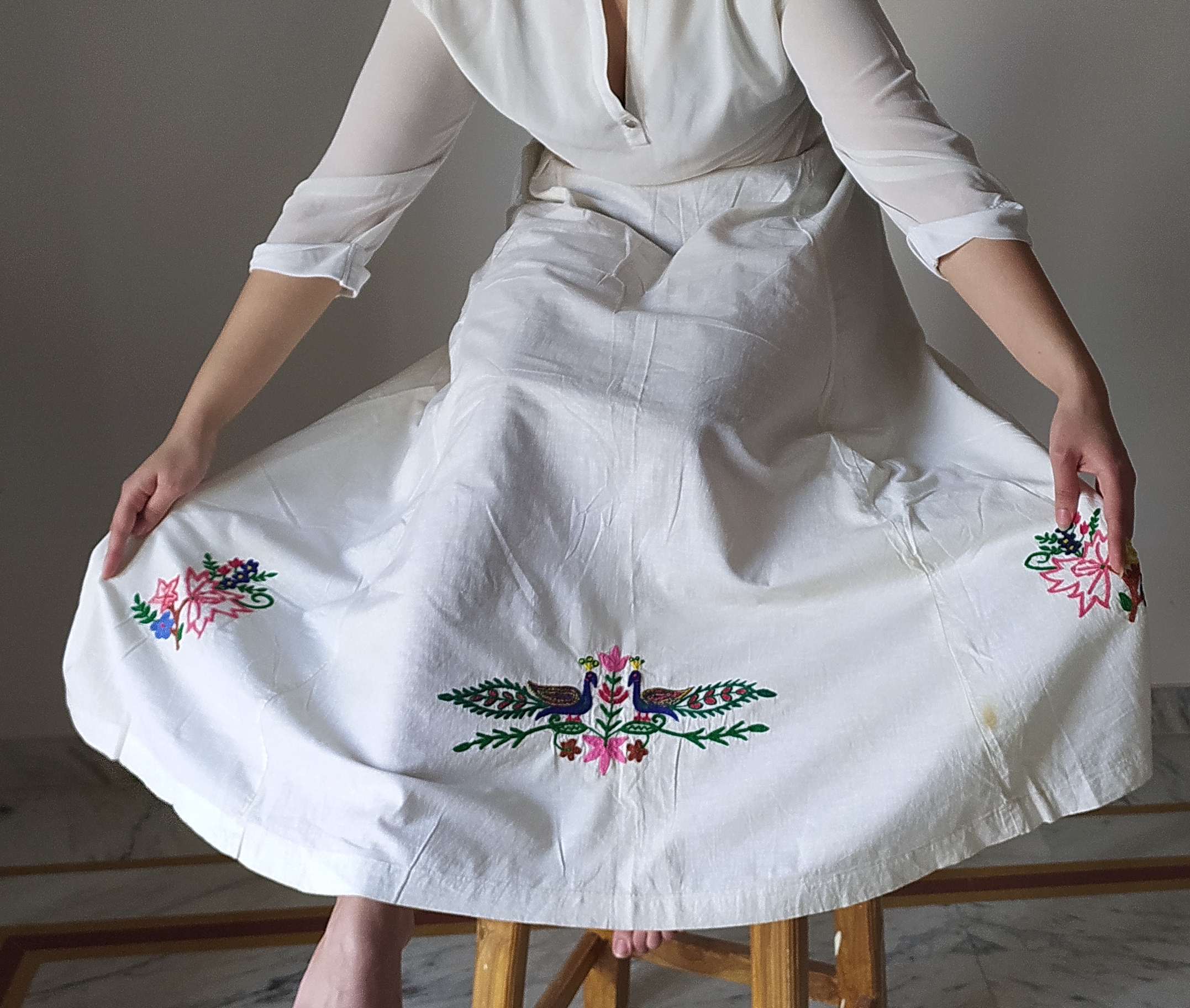
Last year, long before this book was published, I was teaching a course at NIFT Jodhpur where a student called Dimple Barod discussed about a petticoat embroidered by her maternal grandmother using the ‘Mochi’ technique. On research, she found her maternal great grandparents were traditionally cobblers and had their own shoe making shop. Her grandmother had learnt the embroidery technique from there and had made this petticoat which she used to wear under transparent saris, reserved for special occasions. Dimple was so impressed by her finding and the historical context that she went on to design her final collection with this petticoat as her inspiration. She is presently reworking on designing a new collection, with the same inspiration. Below are photos sent by her of the original petticott – thank you Dimple ❤